(1822–1916).
British plantsman and author on botany and gardening.
Ellacombe, the son of Henry Thomas Ellacombe, was born at Bitton, Gloucestershire in 1822. He attended Bath Grammar School and Oriel College, Oxford, graduating in 1844. In 1847 he was ordained and spent a year as a curate at Sudbury, Derbyshire, before returning to Bitton as his father’s curate. In 1850 he succeeded his father as vicar of Bitton. Two years later he married Emily Aprila Wemyss with whom he had ten children. A keen botanist and gardener, Ellacombe grew a wide range of plants at Bitton and exchanged plants and seeds with Kew and other botanical gardens across Europe.
Sir Joseph Dalton Hooker dedicated volume 107 of the Botanical Magazine to him.
In 1897 he was one of the first 60 recipients of the Victoria Medal of Honour.
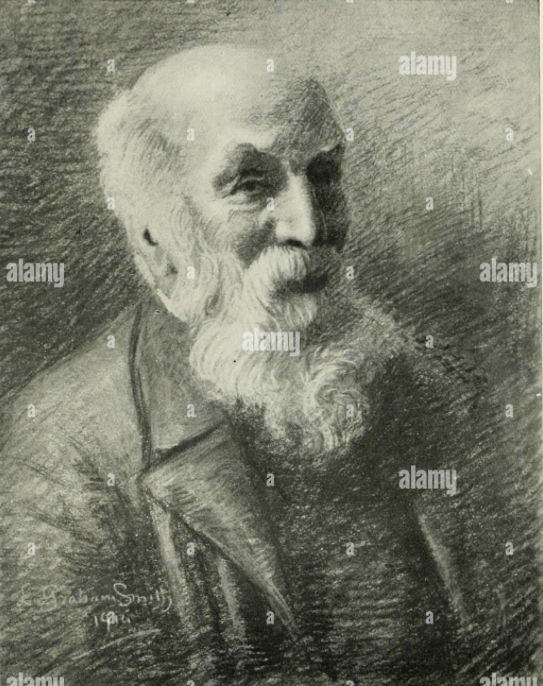
Henry Nicholson Ellacombe. Photo: alamy.com
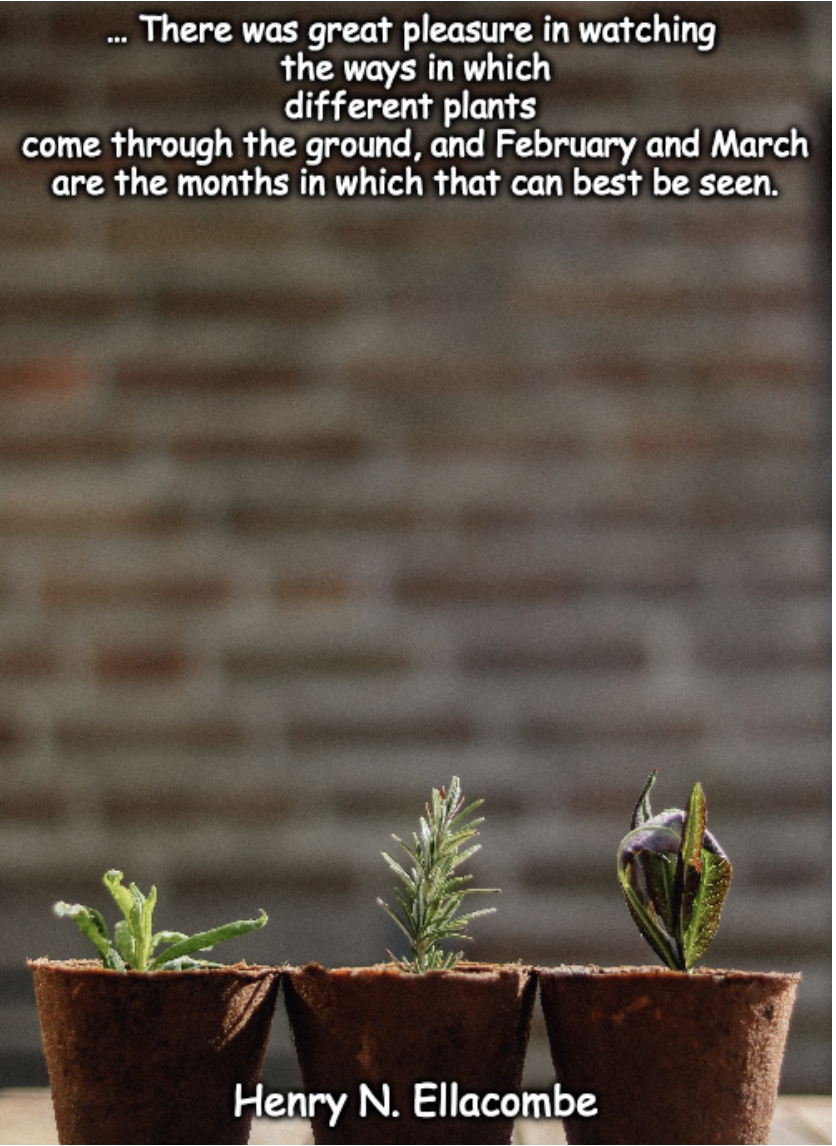
… There was great pleasure in watching the ways in which different plants come through the ground, and February and March are the months in which that can best be seen.
Photo: Christine. Meaning: The sentence describes the pleasure people derive from observing plants emerging from the ground in February and March. This refers to the beginning of spring, when nature awakens and new life becomes visible. It symbolizes hope, renewal, and the cycle of life. Origin and Author: Although the style of the sentence is reminiscent of an older, perhaps literary text, it is difficult to find an exact origin or author that can be specifically linked to Henry N. Ellacombe. Henry N. Ellacombe (1829–1916) was indeed a well-known British clergyman and horticultural writer, whose works often dealt with the beauty and observation of plants and gardens. He wrote books such as “In a Gloucestershire Garden” and “The Plant-lore and Garden-craft of Shakespeare”. It is certainly possible that such an observation originated with him, given his expertise and love for nature. However, the sentence as cited appears more like a general description than a specific saying or quote known as such and attributed to a single person. It is more likely that it is a description from one of his longer texts or a general observation that fits well with his themes. Without further context (such as the source from which you obtained this sentence), it is virtually impossible to say definitively whether it is a direct quote from Ellacombe or a translation of a thought that was common in his work or in that period. Conclusion: The sentence emphasizes the joy of observing the natural world, particularly in early spring. It fits perfectly with the themes Henry N. Ellacombe addressed in his works, but it is not a widely known “saying” with a clear, established origin and author.
Door Pieter
Mensenmens, zoon, echtgenoot, vader, opa.
Spiritueel, echter niet religieus.
Ik hou van golf, wandelen, lezen en de natuur in veel opzichten.
Onderzoeker, nieuwsgierig, geen fan van de mainstream media (MSM).