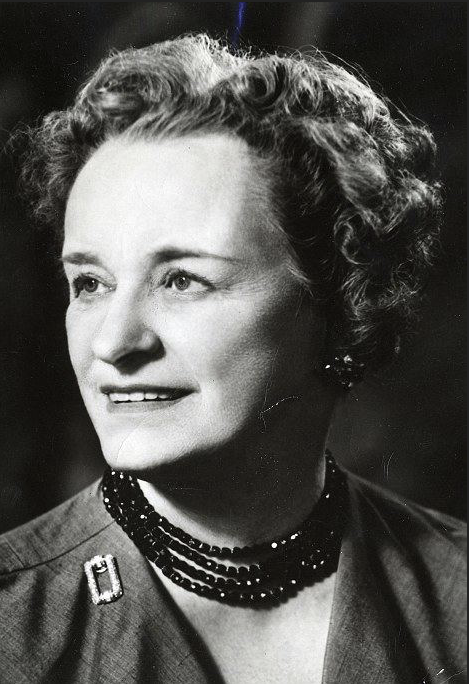
(27 October 1889 – 31 March 1981).
British writer and playwright best known for the 1935 story National Velvet.
Born on 27 October 1889 in Rochester, Kent, daughter of Colonel Arthur Henry Bagnold and his wife, Ethel (née Alger), and brought up mostly in Jamaica. Her younger brother was Ralph Bagnold.
She attended art school in London, and then worked as assistant editor on one of the magazines run by Frank Harris, who became her lover. Harris and Bagnold are both portrayed in Hugh Kingsmill’s novel The Will to Love (1919).
Enid Bagnold. Photo: alchetron.com
It was March. The days of March creeping gustily on like something that man couldn’t hinder and God wouldn’t hurry.
Photo: Pat Whelen. Meaning 📖: The statement “It was March. The days of March crept on impetuously like something man could not stop and God would not rush” evokes a sense of inexorable time and human powerlessness. “The days of March crept on impetuously”: This suggests a chaotic, uncontrollable progression. March is known for its fickle weather and the transition from winter to spring, which emphasizes this impetuosity. The days do not seem to wait for man, but to follow their own hasty path. “like something man could not stop”: This emphasizes the limitations of human influence on natural cycles and the passage of time. Regardless of our wishes or attempts, time simply moves on. “and God would not rush”: This phrase adds a deeper, philosophical layer. It suggests that even a divine entity would not accelerate or slow down the haste of the March days. This can be interpreted as: Divine indifference: The natural world follows its own course, regardless of divine intervention. Divine wisdom: Time unfolds exactly as it should, according to a greater plan that need not be rushed. A reflection of human experience: We feel rushed by time, but from a larger, divine perspective, there is no rush. Together, it creates an image of a natural force (the time in March) that stands above human will and seems to operate even outside the direct influence of God, bringing about a sense of humility and acceptance. 📚 Origin and Author: The quote comes from Enid Bagnold’s famous novel “National Velvet,” published in 1935. Author:Enid Bagnold (1889–1981) was a British writer and playwright, known for her vivid prose and profound character analyses. “National Velvet” is her most iconic work, which was later adapted into a film starring a young Elizabeth Taylor. Context in the book: In the novel, this sentence is used to set the atmosphere and tone of a specific period in the story, often linked to the turbulent youth and dreams of the protagonist, Velvet Brown. The turbulent days of March often reflect the wild, uncontrollable energy and anticipation experienced by the characters. It is a powerful opening sentence that immediately immerses the reader in the atmosphere of the story and the themes of time, nature, and human ambition.🐴🍃
Door Pieter
Mensenmens, zoon, echtgenoot, vader, opa.
Spiritueel, echter niet religieus.
Ik hou van golf, wandelen, lezen en de natuur in veel opzichten.
Onderzoeker, nieuwsgierig, geen fan van de mainstream media (MSM).