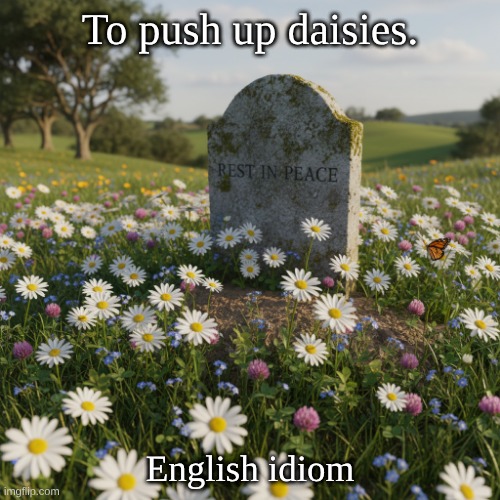
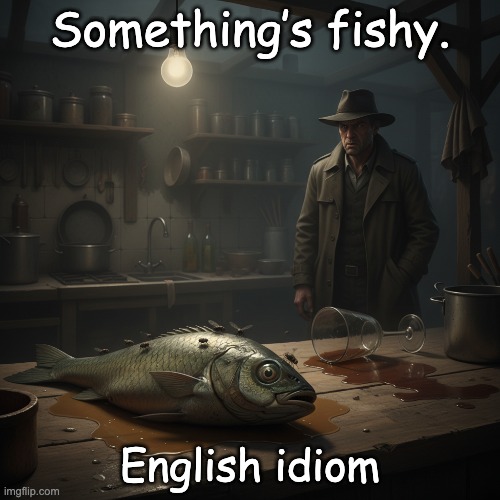
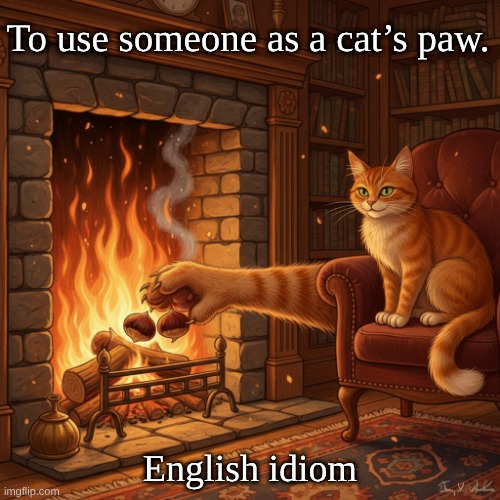
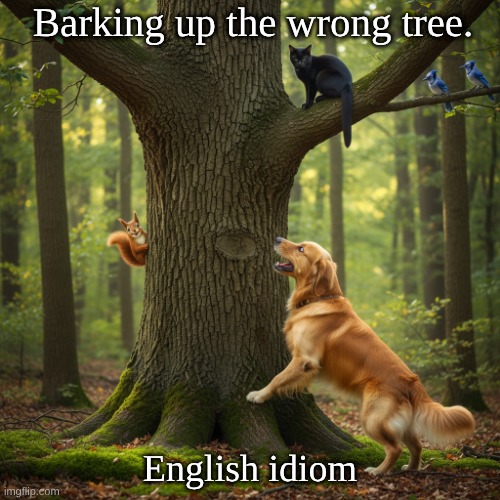
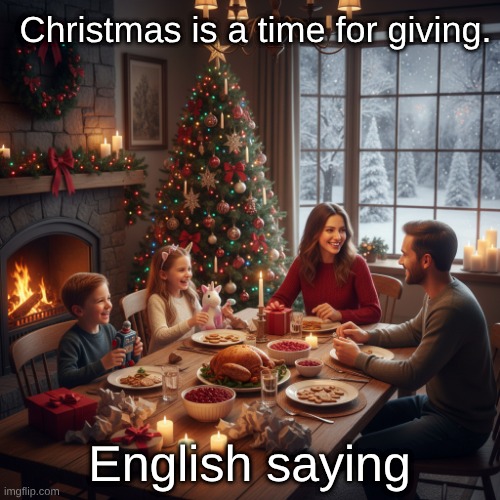
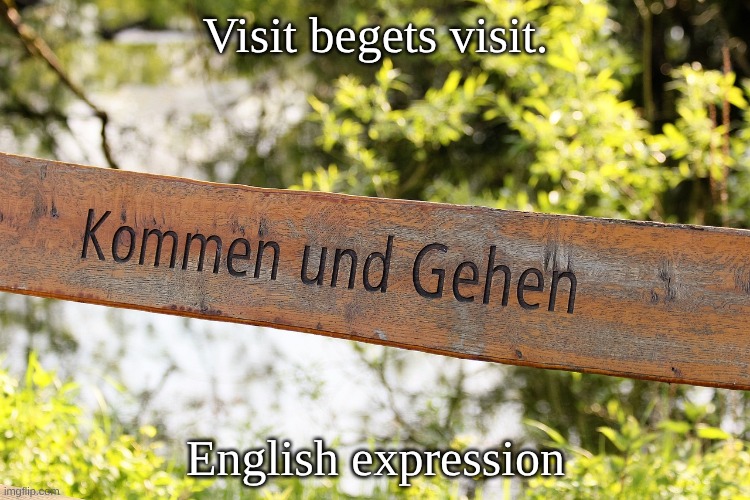
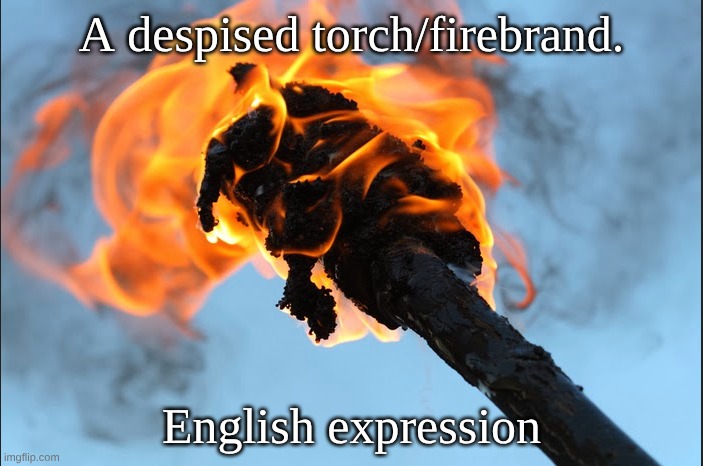
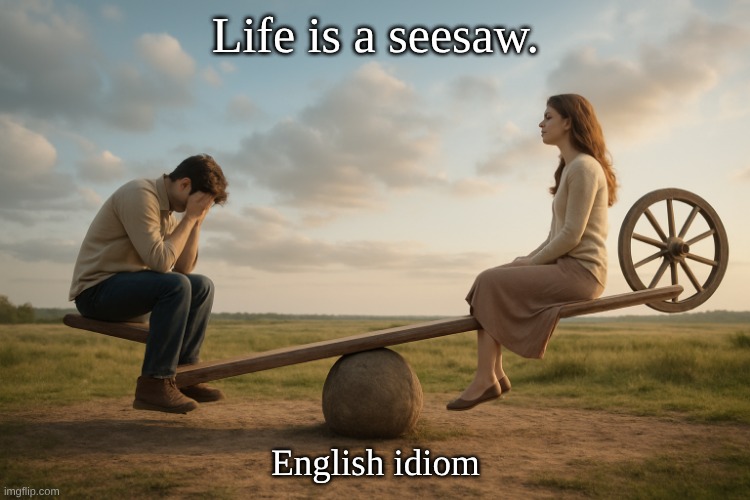
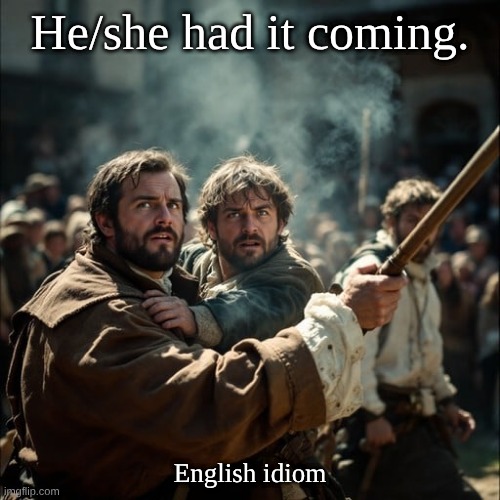
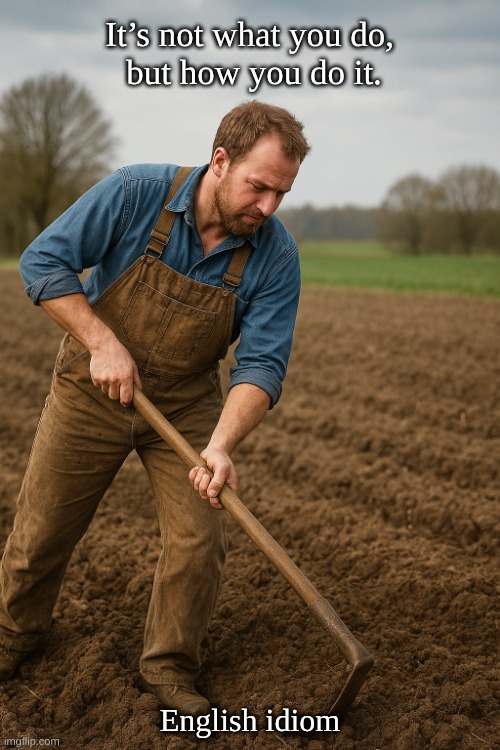
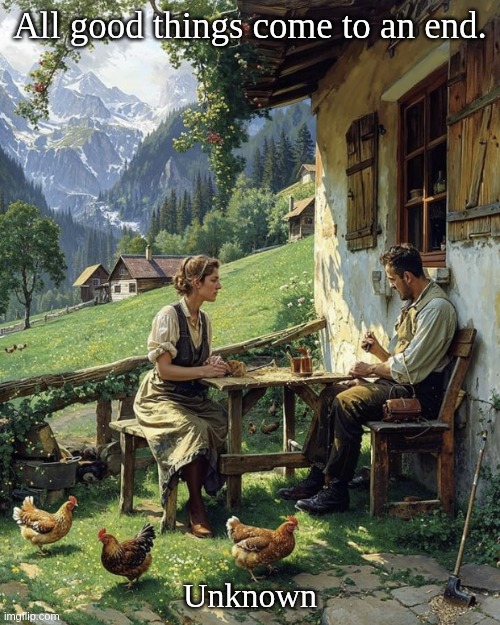
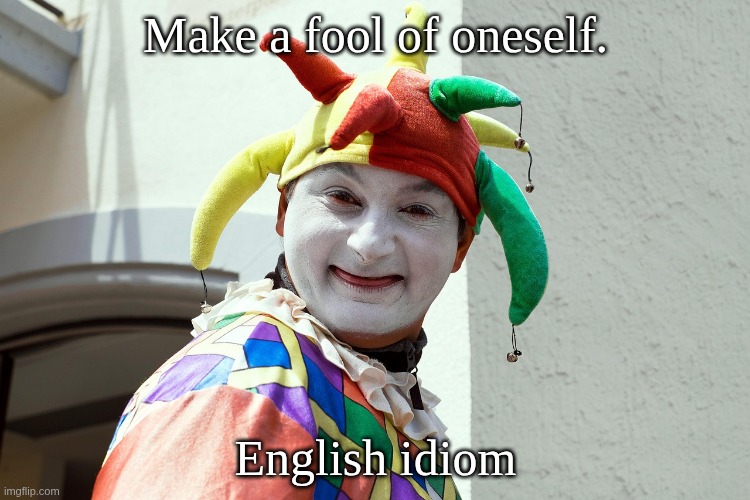
The lawyers who agree the most make the best living.
Image: Peter van Geest AI. Meaning💡📝 📚: This is a ‘cynical proverb about the legal profession’. It suggests that: – ‘Lawyers often benefit when they cooperate with each other’, even if they appear to be on opposite sides. – In many cases, ‘mutual understanding between lawyers’ can lead to: – more cases being processed smoothly, – more settlements, – more billable work, – and therefore ‘better income’. In simple words: – The saying implies that ‘lawyers who know how to work together profit more’ than those who constantly fight everything. – It can also carry a ‘slightly critical tone’ 😏 — suggesting that the legal system may sometimes reward professional cooperation more than conflict. 🌍 Origin: Most likely origin: – This is generally treated as an ‘old legal saying / proverb’ rather than a clearly sourced literary quotation. – It appears to be part of ‘legal folklore’, especially in English-speaking legal circles. Important note: – There is ‘no widely accepted, definitive original source’ for this line. – It is often repeated ‘without citation’, which usually means its origin is ‘uncertain or traditional’. ✍️ Author: – ‘Unknown anonymus’ – There is ‘no firmly established author’ for this quotation. – It is best described as: – an ‘anonymous proverb’, – or a ’traditional saying about lawyers’.
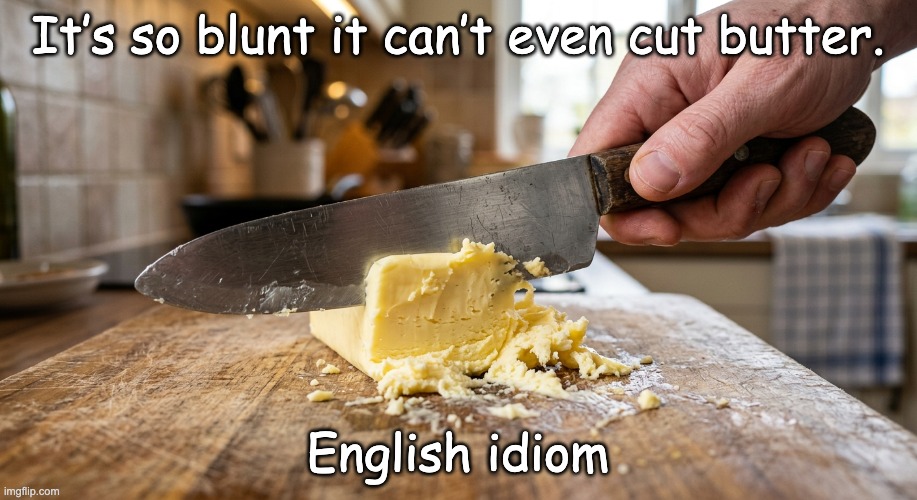
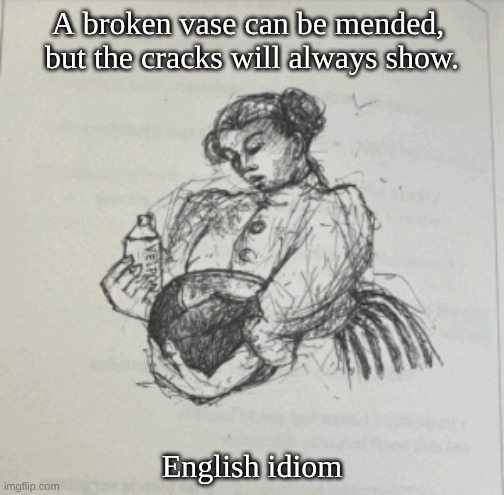
It’s so blunt it can’t even cut butter.
Image: Peter van Geest. Meaning 🧈: This expression means: – Literally: a knife, blade, or tool is ‘extremely dull’ – Figuratively: something or someone is ‘ineffective, weak, or lacking sharpness´. Simple idea: Butter is ‘soft and easy to cut’, so if something ‘can’t even cut butter’, it is being described as ‘uselessly blunt’. Example: – ‘This knife is so blunt it can’t even cut butter.’ – Figurative use: ‘His argument was so blunt it couldn’t even cut butter’ — meaning it lacked force or precision. 🕰️ Origin: The phrase is a ‘common idiomatic exaggeration’ based on everyday experience: – ‘Butter is soft’ – A normal knife should cut it easily – So saying a blade “can’t even cut butter” is a ‘hyperbolic way’ of saying it is ‘very dull’. Likely origin type: – ‘Colloquial / folk expression’ – Developed naturally in everyday English speech – Not known to come from a famous literary source Related forms: You may also hear variants like: – “It wouldn’t cut butter” – “Too blunt to cut butter” – “So dull it can’t cut butter” 👤 Author:There is ‘no known single author’. This is best understood as: – a ’traditional common saying’ – part of ‘everyday spoken English’ – a phrase that likely evolved through common usage rather than being coined by one identifiable person.
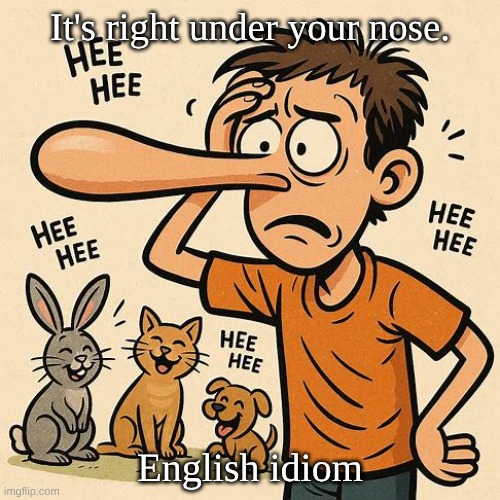
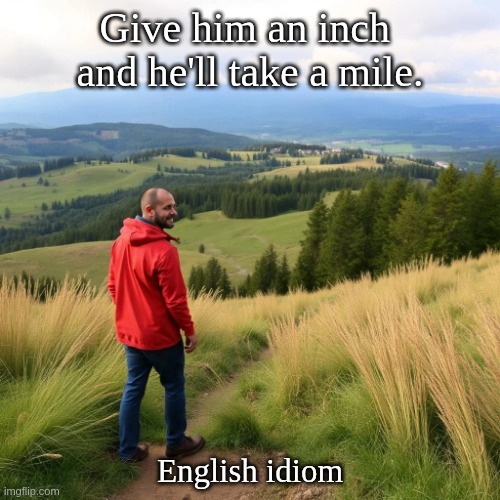
Give them an inch and they’ll take a mile.
Image: Peter van Geest AI. Meaning: If you give someone a small amount of freedom, power, or advantage, they will greedily take far more than was intended. It’s a warning about people who abuse generosity or leniency. Origin: The expression is much older than the “mile” version — it originally used “ell” (an old unit of measurement, roughly 45 inches in England): > “Give him an inch and he’ll take an ell.” This version appeared as early as 1546 in John Heywood’s “A Dialogue of Proverbs”, one of the first major collections of English proverbs. The sentiment was already considered a well-known saying by then, suggesting it predates even that. As the “ell” fell out of common usage, it was gradually replaced by “mile” for clarity and impact — the contrast being more vivid to modern ears. By the 17th and 18th centuries, both versions were in circulation. Author: There is ‘no single author’. It is a ’traditional proverb’ of English origin, meaning it evolved anonymously through common speech over centuries. John Heywood is the earliest ‘recorder’ of the “inch and ell” form, but he didn’t coin it — he was simply documenting existing folk wisdom. Notable uses: – John Smyth (c. 1607) used the ell version in writing. – Daniel Defoe and other 17th–18th century writers used variations of it. – The “mile” version became dominant in ‘American English’ during the 19th century, likely because miles were more familiar than ells to everyday speakers.
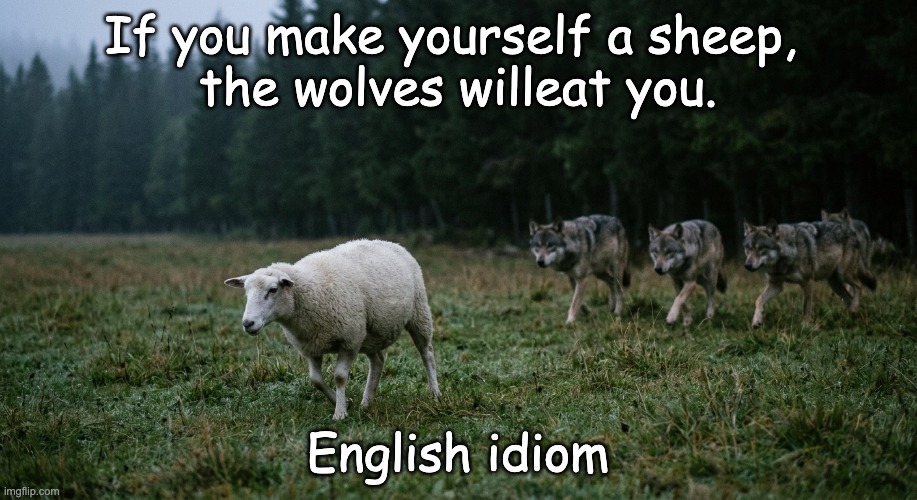
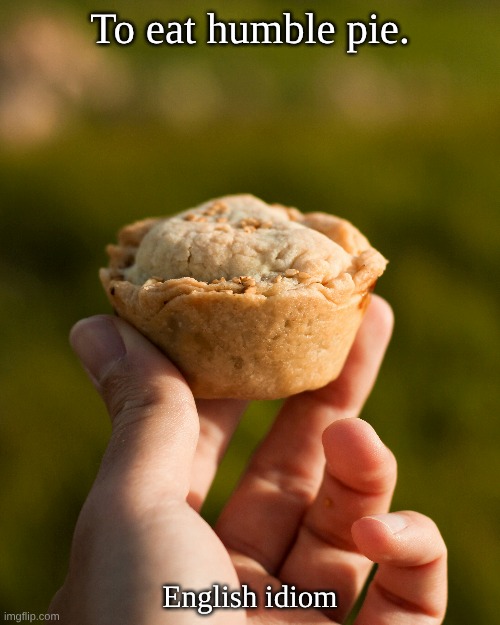
If you make yourself a sheep, the wolves willeat you.
Image- Peter van Geest AI. Meaning 🐑 : – ‘If you act too weak, submissive, or naïve, others may take advantage of you.’ – It warns against: – excessive passivity – lack of boundaries – making yourself an easy target In simple words: > ‘If you let people treat you like prey, predators will exploit you.’ ✍️ Author: The quote is “commonly attributed to Benjamin Franklin’. Famous wording: > “If you make yourself a sheep, the wolves will eat you.” 🕰️ Origin: Although many people credit ‘Benjamin Franklin’, the idea is ‘older than Franklin’. Most accurate explanation: – Franklin ‘popularized’ the saying in English. – But it is likely based on an ‘older European proverb’, with similar versions existing before him. Related older form: A very similar proverb existed earlier in English and French, such as: – “He that makes himself a sheep shall be eaten by the wolf.” So, Franklin may not have ‘invented’ it, but he is the ‘best-known source’ for the modern quote. 📚 Attribution note: So if you want to cite it carefully, you can say: – ‘Commonly attributed to Benjamin Franklin’ – ‘Probably derived from an older proverb’ 💡 Usage: Example: – In business, if you never stand up for yourself, people may exploit you — as the saying goes, “If you make yourself a sheep, the wolves will eat you.”
You made your bed, now lie in it.
Image- Peter van Geest AI. Meaning 🛏️ : – ‘You must accept the consequences of your own actions.’ – If you created a difficult situation, ‘you are responsible for dealing with it’. ✅ Simple explanation: If someone makes a choice that leads to trouble, others may say: > “You made your bed, now lie in it.” Meaning: – ‘It’s your own doing’ – ‘Now you have to live with the result*’ 🗣️ Example: – He ignored everyone’s advice and quit his job without a plan. ‘Now he has no money — he made his bed, now he has to lie in it.’ 🏛️ Origin: The expression is ‘very old’ and comes from a ‘proverbial idea’ rather than a modern saying. 📚 An older version is: > “As you make your bed, so you must lie on it.” This form has been used in English for ‘centuries’. 🌍 Deeper roots: – The idea appears in ‘European proverb traditions’ – Similar expressions existed in ‘other languages’, especially in ‘French’ and ‘Germanic’ traditions – It developed from the literal image of ‘making a bed for yourself’ and then having to sleep in whatever condition you created ⏳ Historical note: Versions of this proverb are recorded from around the ’16th century’ in English, and the thought may be even older in continental Europe. ✍️ Author:There is ‘no single known author’. – This is a ’traditional proverb/idiom’ – It was passed down through ‘common speech’ – Like many idioms, it ‘evolved over time’ and was not invented by one identifiable person 🧠 Nuance: This idiom is often used: – to emphasize ‘personal responsibility’ – sometimes in a ‘harsh or unsympathetic’ tone – when someone wants to say: “You caused this, so don’t expect others to fix it.”
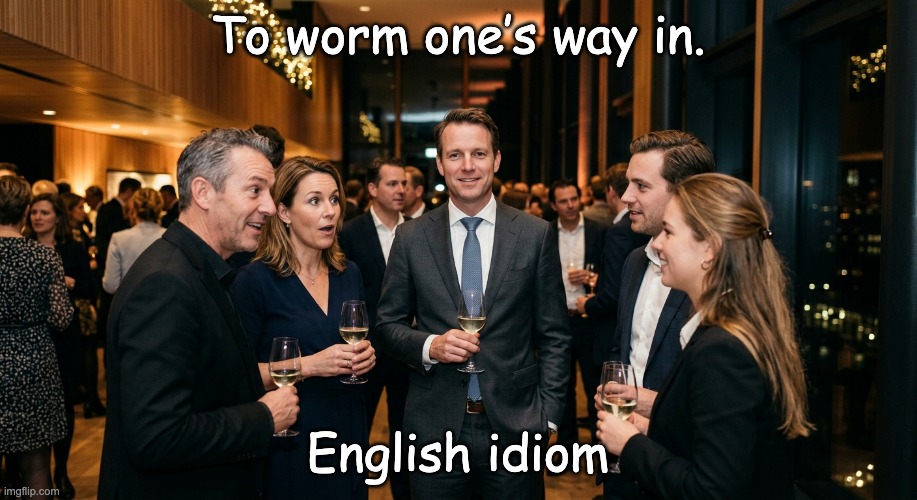
To worm one’s way in.
Image: Peter van Geest AI. Meaning 🪱: – to ‘gain access’ to a place, group, or person’s trust – to do it ‘slowly, cleverly, and often secretly’ – sometimes with a sense of ‘cunning or manipulation’ Example: – ‘He wormed his way into the company by flattering the boss.’ – ‘She wormed her way into their confidence.’ 🏛️ Origin: The idiom comes from the image of a ‘worm’: – a worm moves ‘slowly’ – it ‘wriggles its way through small spaces’ – so the phrase became a metaphor for someone who ‘gets in gradually and slyly’. Language background: – “Worm” has been used as a ‘verb’ in English for centuries, meaning: – to ‘move slowly’ – to ’twist or wriggle’ – to ‘make one’s way gradually into something’ So “worm one’s way in” likely developed naturally from this physical image. ✍️ Author: There is ‘no known single author’ of this idiom. – It is ‘not credited to one writer’ – It grew out of ‘common English usage’ – Like many idioms, it probably evolved over time rather than being invented by one person 📚 In simple words “To worm one’s way in” = to get into a place, position, or someone’s trust gradually and cleverly, often in a sneaky way.
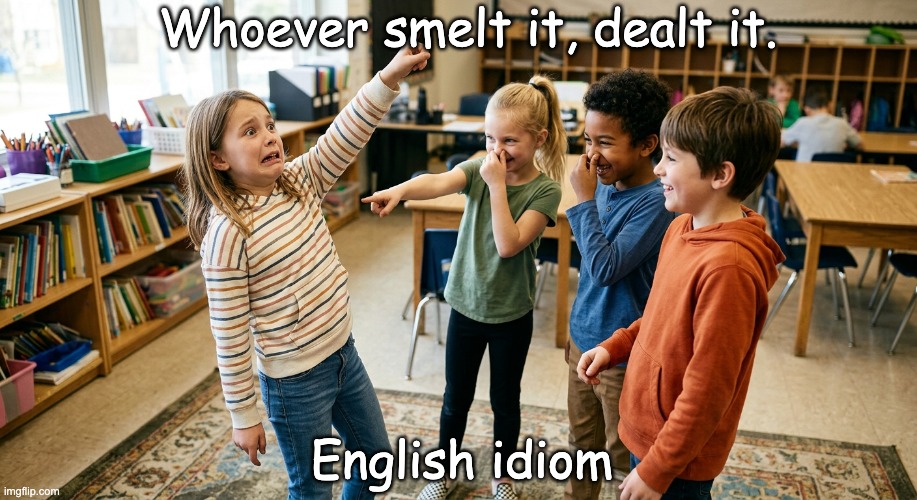
Whoever smelt it, dealt it.
Image: Peter van Geest AI. Meaning 📖 💨: This is a ‘humorous childish rhyme’ used when someone notices a ‘bad smell’, especially a ‘fart’. – “Smelt it” = smelled it first / noticed it – “Dealt it” = caused it / produced it 👉 Overall meaning: It jokingly means: > “The person who first mentions the bad smell is probably the one who caused it.” It is usually said as a ’teasing comeback’, not as a serious accusation. 🧠 How it is used: People say it in informal, playful situations: – Someone says: “Ew, what’s that smell?” – Another person replies: “Whoever smelt it, dealt it!” It works because of the ‘rhyme’ and the quick joke. 🕰️ Origin: The exact origin is ‘uncertain’. – It is part of ‘English-speaking playground / schoolyard humor’ – It has likely been used ‘orally for many years’ – It became popular as a ‘children’s taunt’ and comic expression – Variants exist, such as: – “He who denied it, supplied it” – “The one who said the rhyme did the crime” Important note: There is ‘no single verified historical source’ or exact first documented inventor that scholars universally credit. So the phrase is best described as: – folk humor – anonymous – traditional slang / playground rhyme ✍️ Author: There is ‘no known individual author’.
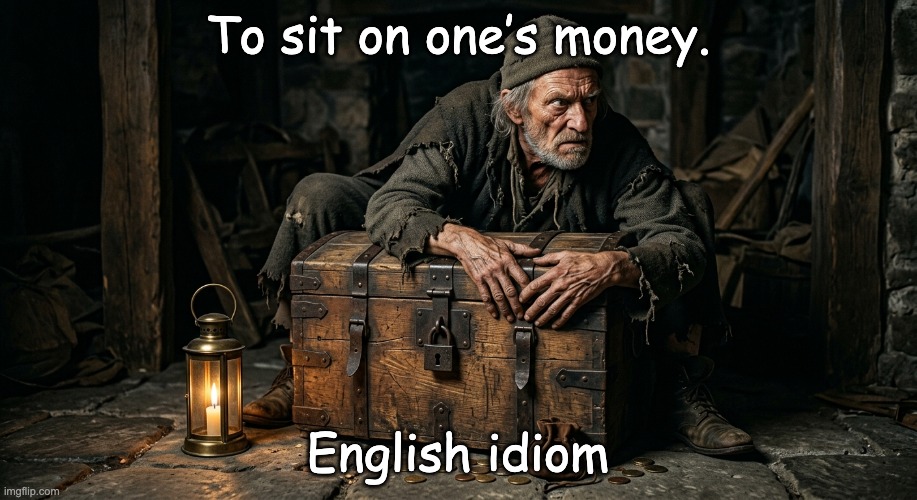
To sit on one’s money.
Image: Peter van Geest AI. Meaning: To refrain, decline, or refuse to spend one’s money. It describes someone who holds onto their wealth without spending or investing it — hoarding it, essentially. It can apply to cautious saving, excessive frugality, or missed investment opportunities. Examples in use: – “I thought about buying a new car, but I decided to sit on my money for now.” – “Her family is wealthy, but you’d never know it from the way her parents sit on their money.” Origin: No single named author coined this phrase — it is an ‘anonymous idiomatic expression’ that evolved organically in English over time, as most idioms do. Its roots lie in the broader “sit on” construction, which in English has long meant to ‘hold something back’ or ‘suppress it’ — as in “to sit on a report” (delay its release) or “to sit on an idea.” Applied to money, it carries the image of physically sitting atop one’s wealth, keeping it pinned down and inaccessible, rather than letting it circulate. There is also likely a folk image at play: that of a “brooding hen sitting on her eggs”, a bird that wants nothing more than to sit on a clutch of eggs until they hatch — guarding them jealously, going nowhere, and producing nothing new. In slang, “sit on it” has come to mean waiting or hoarding/holding onto something until the right time to sell it or let it go. This connects idiomatically to the related expression “nest egg” — a sum of money tucked away in savings, an expression that apparently dates back to 1686. – Tone: | Often mildly critical — implying missed opportunity or excessive caution |
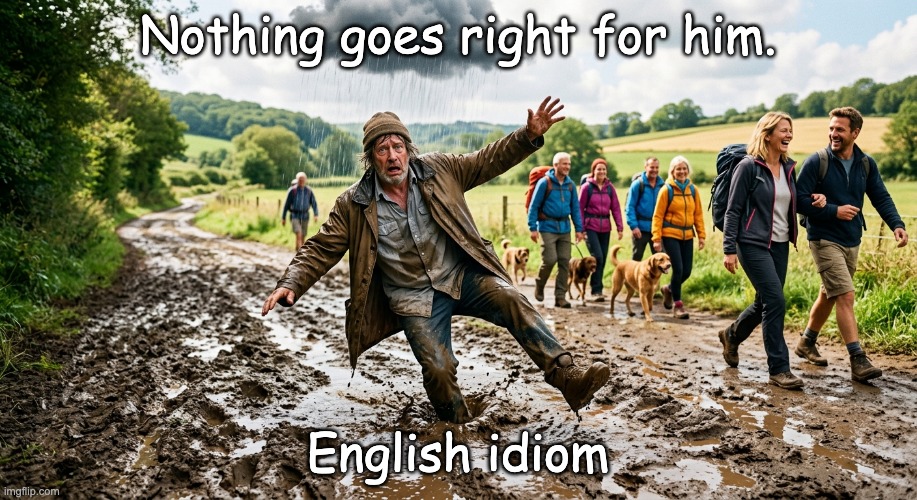
Nothing goes right for him.
Imag: Peter van Geest AI. Meaning: This idiom means that a person experiences a continuous streak of bad luck, failure, or misfortune — nothing they attempt succeeds, and circumstances consistently work against them. It expresses a sense of persistent, unavoidable adversity across multiple areas of life. It’s used to describe someone who seems cursed by bad fortune, where even simple or routine things turn out badly. Similar expressions include “everything that can go wrong, does go wrong” or “he can’t catch a break.” Origin: The phrase stems from the very common idiom “to go right”, meaning to proceed correctly, smoothly, or successfully. Its opposite — things not going right — has been a natural part of English expression for centuries. The construction reflects a broader family of idioms built around “right” as a synonym for correct, proper, or fortunate (e.g., “set things right,” “put it right,” “right as rain”). This usage dates back to Old and Middle English, where “right” carried strong moral and functional connotations of things being in their proper order. Phrases like “nothing goes as planned” or “fortune is against him” appear in classical literature and folk sayings across many cultures, and the English version solidified during the 17th–19th centuries as everyday idiomatic speech developed. Author: This is not attributed to a single author. It is an anonymous, organic idiom that evolved naturally in everyday spoken English, as most common idioms do. It belongs to the general folk wisdom of the language rather than to any literary or philosophical source. In a Sentence: “He missed the bus, spilled his coffee, and lost his wallet — nothing goes right for him lately.”
He’s done for.
Image: Peter van Geest AI. Meaning 📘: – ‘He is finished’ – ‘He is ruined’ – ‘He is in serious trouble’ – In some contexts,’he is likely to die’ or ‘cannot recover from a bad situation’. 🔹 Example uses: – ‘After the scandal, he’s done for in politics.’ → His career is probably over. – ‘When the boat started sinking, they thought he was done for.’ → They thought he would not survive. 🧭 Origin: 🔸 Literal background: The phrase comes from the verb “to do for”, an older English expression meaning: – ’to destroy’ – ’to ruin’ – ’to kill’ – ’to finish off’ So “done for” literally suggests someone has been ‘finished of’ or ‘brought to ruin’. 🔸 Historical usage: – The expression “do for” in the sense of ‘ruin/kill’ appears in ‘British English’ from at least the 18th–19th century. – “Done for” developed naturally from that usage and became a common colloquial phrase. 👤 Author: There is ‘no single known author’ of this idiom. – It is a ’traditional English idiom’ – It ‘evolved in common speech’ – It was ‘not invented by one identifiable writer’ Many authors later used it in literature and dialogue, but ‘none can be credited as its creator’. 📝 Nuance: Depending on context, ‘“He’s done for” can sound: – 😟 ‘serious or tragic’ — ‘He won’t survive.’ – ⚠️ ‘dramatic’ — ‘He’s in big trouble.’ – 😬 ‘informal/slang-like’ — ‘His chances are over.’
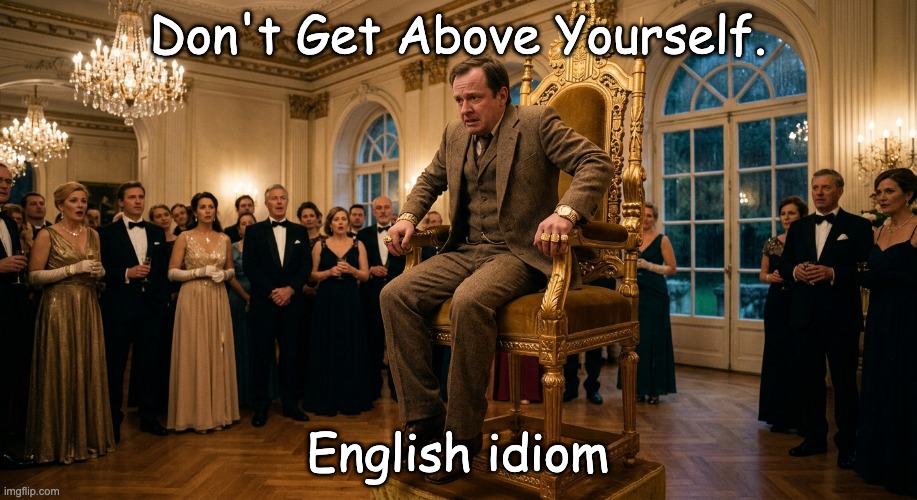
Don’t Get Above Yourself.
Image: Peter van Geest AI. Meaning: This idiom means ‘don’t become arrogant, conceited, or think more highly of yourself than you should’. It’s a warning against excessive pride or ambition — a reminder to stay humble and know your place. It can also imply: don’t overstep your social station, authority, or abilities. It’s often used as a gentle rebuke or caution, e.g.: “She’s been getting a bit above herself since the promotion.” Origin: The expression draws on a very old concept in English culture: the idea that society has a natural order, and that trying to rise ‘above’ one’s rightful level is presumptuous or dangerous. Related thinking can be found in: – “Medieval notions of the “Great Chain of Being” — a divine hierarchy where everyone had a fixed place, and to overreach it was sinful. – “The sin of pride (hubris)” — prominent in both classical Greek thought and Christian tradition, where pride was considered the root of all sin. The phrase itself belongs to a wider family of English expressions using ‘above’ to denote inappropriate elevation — such as “above one’s station” or “too big for one’s boots.” These were particularly common in ‘British English from the 18th and 19th centuries’, when class consciousness was strong and social boundaries were fiercely observed. Authorship:No single author coined it. It is an ‘anonymous folk idiom’ that evolved organically in everyday English speech. Like most proverbs and idioms of this type, it reflects a shared cultural attitude rather than one person’s invention. A thematically close sentiment appears in the Bible — ‘Proverbs 16:18’: “Pride goes before destruction, a haughty spirit before a fall” — which likely reinforced the idiom’s moral weight over centuries.
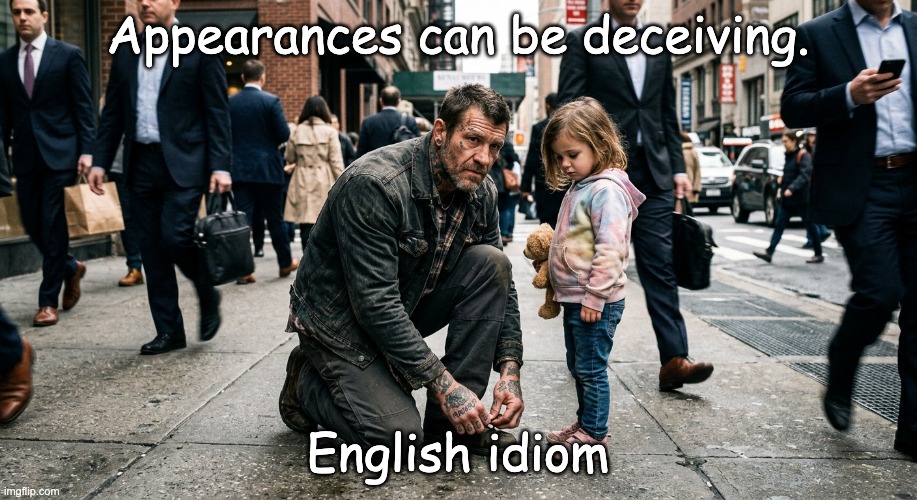
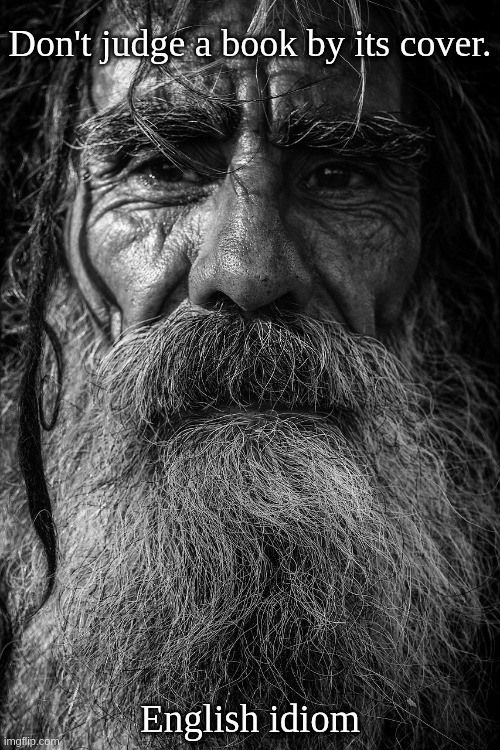
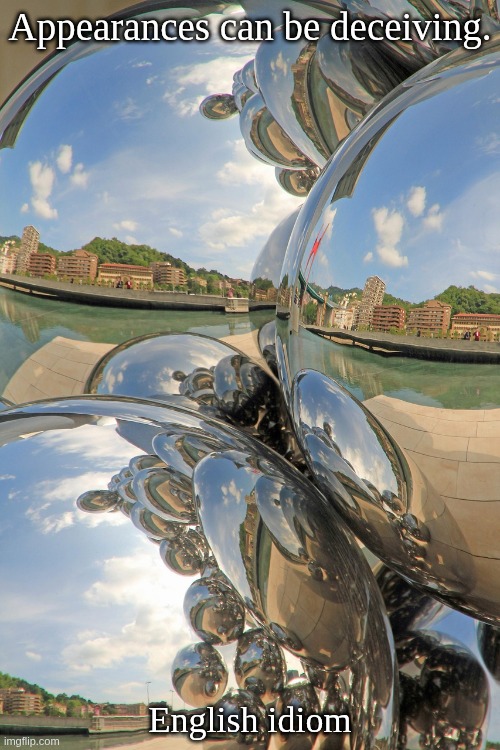
Appearances can be deceiving.
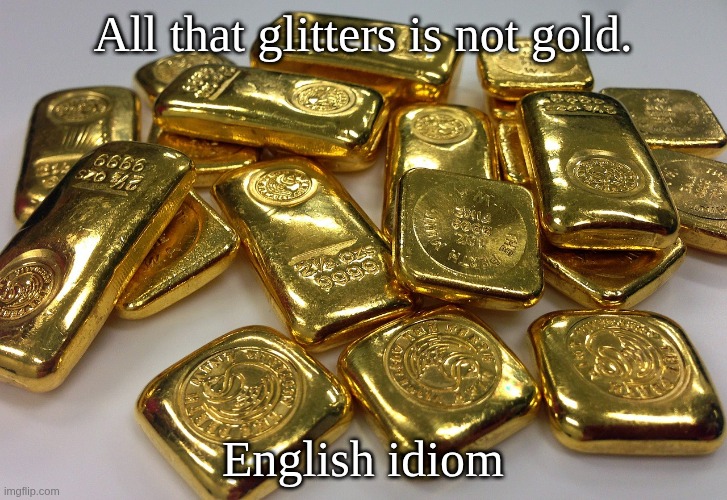
Image: Peter van Geest AI. Meaning 📘 ✨ : Things are not always what they seem. A person, situation, or object may ‘look one way on the outside’ but be ‘very different in reality.’ You should ‘not judge only by looks or first impressions’ 📝 Simple example: – Someone may look unfriendly, but actually be very kind. – A cheap-looking item may turn out to be very valuable. 🏛️ Origin: This is a ’traditional proverb / common saying’, not a modern coined phrase by one identifiable person. 📚 Background: The idea behind it is ‘very old’ and appears in many cultures and writings. Similar older expressions include: “All that glitters is not gold” . Popularized by William Shakespeare in “The Merchant of Venice”. Meaning: something that looks valuable or good may not really be so. Earlier versions of that idea existed even ‘before Shakespeare’, so the concept is much older than the exact modern wording. ✅ So the origin is: – Ancient/common folk wisdom – The exact phrase became common in English over time – The idea has existed for centuries 👤 Author: There is ‘no single known author’ of “Appearances can be deceiving.” – It is considered a ‘proverb / idiomatic saying’ – Such expressions usually develop through ‘common usage’ – Unlike a quotation from a book or speech, it is ‘not firmly credited to one person’. 🌍 Similar expressions: – ‘Don’t judge a book by its cover’ – ‘All that glitters is not gold’ – ‘Things are not always as they seem’.
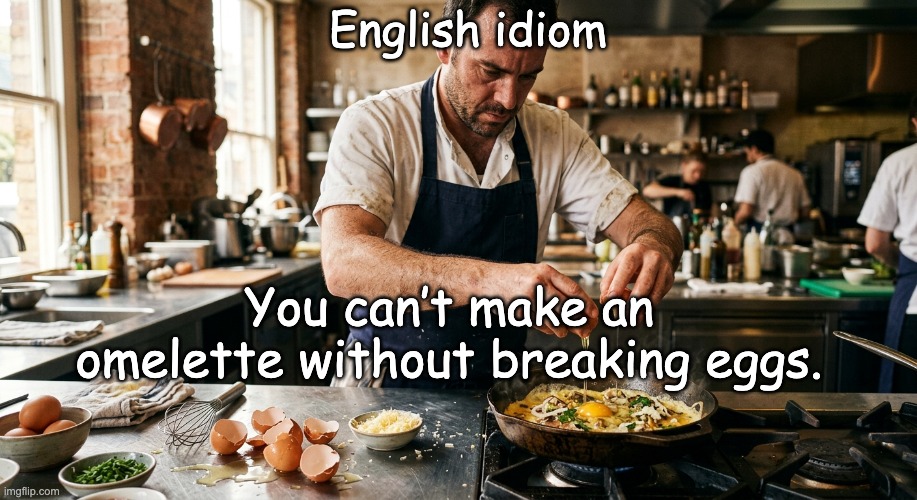
You can’t make an omelette without breaking eggs.
Image: Peter van Geest AI. Meaning 📖 🥚: ‘You cannot achieve something important without causing some loss, difficulty, or sacrifice.’ In other words, ‘results often require unpleasant actions or consequences’. ✅ Simple idea: To make an omelette, you must first ‘break eggs’. So figuratively, to reach a goal, you may have to accept that ‘something will be damaged, lost, or given up’. 💬 Example:‘The new manager made many changes, and some employees were unhappy—but you can’t make an omelette without breaking eggs.’ 🌍 Origin: The saying is ‘very old’ and is believed to come from a ‘French proverb’: “On ne fait pas d’omelette sans casser des œufs.” (“You can’t make an omelette without breaking eggs.”) 📚 Historical background: The expression has been used in ‘French for centuries’. It later became common in English as a proverb. It has often been used in ‘politics, war, and reform’ to justify harsh actions taken in pursuit of a larger goal. ✍️ Author: There is ‘no single known author’. Important note: This is a ‘proverb / idiom’, not a quotation invented by one clearly identified person. So the ‘author is considered unknown’. ⚠️ Common confusion: Some people wrongly attribute it to historical figures such as: – Napoleon – Lenin – French Revolution figures But these people may have ‘used’ the saying—they did ‘not necessarily create’ it.
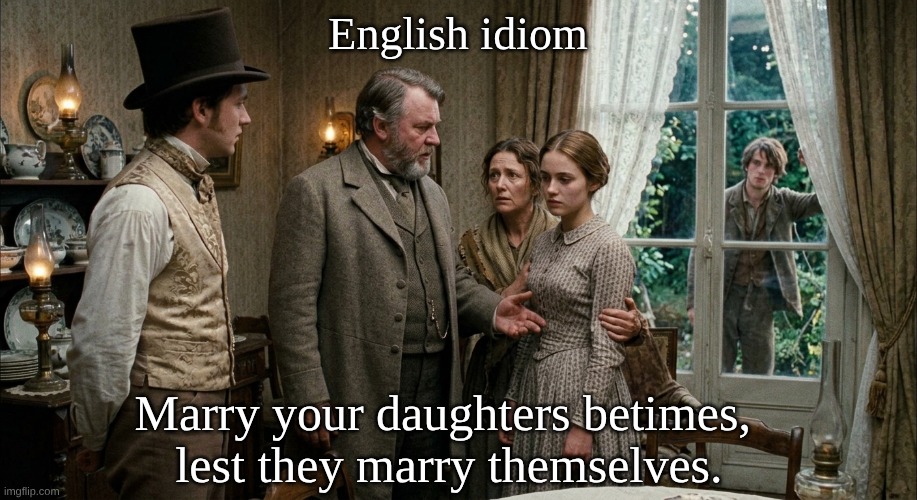
Marry your daughters betimes, lest they marry themselves.
Image: Peter van Geest AI. Meaning 📜:“Betimes” = ´early´ or ´in good time´. The proverb advises parents to ´arrange or approve a daughter’s marriage early´. Otherwise, she may ´choose her own husband without parental control´. In simple modern English: “Get your daughters married early, or they will choose for themselves.” 🧭 What it implies: This saying reflects an ´old-fashioned social attitude´ in which: daughters were expected to marry under ´family supervision´, parents, especially fathers, were seen as responsible for arranging marriage, a woman choosing for herself was viewed as risky or improper. ⚠️ Today, the idea sounds ´patriarchal and outdated´, because it assumes daughters should not control their own marriage choices. 🏛️ Origin: This is generally treated as an ´old English proverb´ rather than a modern idiom. Likely background: It comes from a time when ´marriage was strongly controlled by families´. It reflects the customs of ´early modern England´. The wording uses the archaic word “betimes”, which points to an ´older proverb tradition´. ✍️ Author: Most accurate answer: ´No single confirmed author is firmly established.´ It is usually considered an ´anonymous traditional proverb´ Important note: It is ´sometimes linked to old collections of English proverbs´. Because of that, people may loosely associate it with writers such as ´George Herbert´, who recorded many proverbs. However, the ´exact wording´ is best treated as ´proverbial/anonymous´, not securely authored. 🧾 Short interpretation: ´Parents should marry off their daughters early´, otherwise the daughters may ´take matters into their own hands´.
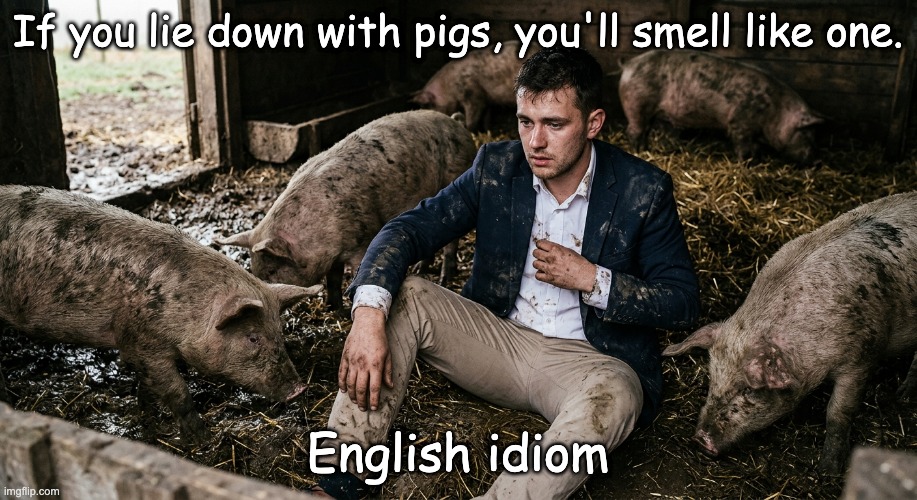
If you lie down with pigs, you’ll smell like one.
Image: Peter van Geest AI. Meaning 📖 🐖: ‘The people you associate with influence you.’ If you spend time with ‘dishonest, rude, immoral, or low-quality company’,you may: start behaving like them, be judged as one of them, or suffer damage to your reputation.In simplewords: ‘Bad company rubs off on you.’ ‘You become like the people you keep around you.’ 💡 Figurative sense: The image is very direct: If you literally lie down with pigs, you will end up smelling like pigs. Figuratively, if you surround yourself with people of poor character, their habits or reputation will “stick” to you. 🏛️ Origin: Is this an old proverb? Yes — but the ‘exact wording with “pigs” is not a famous classical proverb with a clearly traceable first source’. It appears to be a ‘folk-style variation’ of older proverbs such as: “He that lies down with dogs shall rise up with fleas.” “If you lie down with dogs, you get up with fleas.” These older forms have been known for ‘centuries’ and express the same idea: close association with undesirable people brings unpleasant consequences. Likely background: The “pigs” version seems to be: a ‘modern adaptation’, more rustic or colorful, and based on the same traditional moral lesson. ✍️ Author:‘No single confirmed author is known’ for the exact phrase: “If you lie down with pigs, you’ll smell like one.” It is best described as a ‘proverbial or anonymous saying’, not a quotation with a definite author. 📚 Related sayings: Here are similar idioms and proverbs: “If you lie down with dogs, you get up with fleas.” “Bad company corrupts good morals.” from ‘1 Corinthians 15:33’ in the Bible: “A man is known by the company he keeps.” “He who touches pitch shall be defiled.” an older proverbial idea meaning contact with corruption stains you.
Too lazy to wipe his own ass.
Image: Peter van Geest AI. Meaning📘: This is a ‘vulgar, insulting expression’ used to say that someone is: ‘extremely lazy’, ‘unwilling to do even the most basic things for themselves’,‘helpless by choice’, not by necessity. Plain-English meaning: Someone is so lazy that they won’t even handle the simplest personal task. It is usually meant ‘humorously, harshly, or sarcastically’, but it can also sound ‘very rude’. 🗣️ Is it an idiom? Not really a ‘fixed traditional idiom’ in the same way as: “lazy as a dog”, “couch potato”, “bone idle”. Instead, it is more of a ‘crude figurative insult’ or ‘hyperbolic expression’. ‘Hyperbole’ = exaggeration for effect. The phrase exaggerates laziness to an absurd level. 🕰️ Origin: Likely origin: This phrase does ‘not appear to have a single traceable literary or historical origin’. It seems to come from: ‘colloquial speech’, ‘working-class / everyday insult language’. ‘English profanity traditions’ where bodily functions are used for emphasis. The structure follows a common English pattern: “too lazy to ___”, with an intentionally shocking or degrading action added for emphasis. So its origin is probably ‘folk speech’, not a known quotation from one author. ✍️ Author: There is ‘no known single author’ of this expression. It is best understood as: a ‘common vulgar saying’, developed in ‘spoken English’, used by many people over time, rather than coined by one identifiable person. 🧠 Tone and usage: ‘very informal’, ‘vulgar’, ‘offensive in polite settings’. Example: “He won’t even wash his dishes—he’s too lazy to wipe his own ass.” 🔁 Cleaner alternatives: If you want to express the same idea more politely, you could say: ‘He’s extremely lazy.’ ‘He won’t even do the basics for himself.’ ‘He’s helpless by choice.’ ‘He can’t be bothered to do anything.’ ‘He’s too lazy to take care of himself.’
To land on one’s feet.
Image: Peter van Geest AI. Meaning 📘 ✅ : to ‘come out of a difficult situation successfully’,’to recover quickly after trouble, danger, or bad luck’, to ‘end up in a good position despite problems.’Example;‘Even after losing his job, he landed on his feet and found a better one within a month.’ 🧭 Origin: This idiom is generally linked to the old observation and belief that ‘cats usually land on their feet’ when they fall. Cats became a symbol of ‘agility, survival, and recovery.’ From that image, the phrase came to mean a ‘person who can escape trouble well’ or ‘recover advantageously’. Historical note: The expression has been in English for ‘centuries’. Variations of it appear in 19th-century English writing. It likely developed from common speech rather than being invented in one text. ✍️ Author: There is ‘no single known author’ of this idiom. It is a ’traditional idiomatic expression’. Like many idioms, it arose ‘gradually in everyday language’. So it cannot be reliably credited to one specific writer.
Only by pride cometh contention.
Image: Peter van Geest AI. Meaning: Pride causes quarrels and conflict. Origin:Bible,Proverbs 13:10. Author: Traditionally attributed to Solomon.
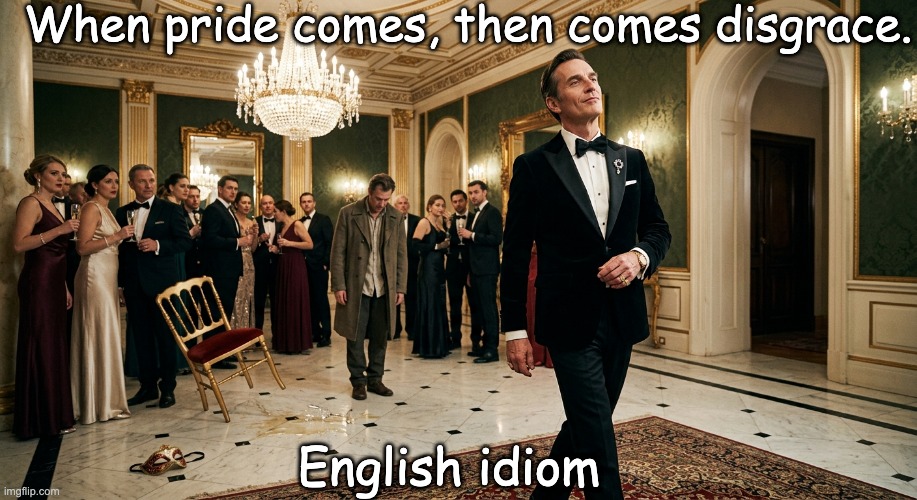
When pride comes, then comes disgrace.
Image: Peter van geest AI. Meaning 📖 : Too much pride or arrogance often leads to humiliation. When a person becomes ‘conceited, boastful, or overconfident’, they may act foolishly. As a result, they may later face ‘shame, failure, or disgrace.In simple words: ‘Pride can cause a person to fall.’🏛️ Origin: This is ‘not originally an idiom’, but a ‘Biblical proverb’.Source: Book: Proverbs: Proverbs 11:2. Common English wording: “When presumptuousness comes, dishonor will follow, But wisdom is with the modest ones.” This is from the Bible, especially known through English translations such as the New World Translation (NWT) and others. ✍️ Author: Traditional author: King Solomon is traditionally credited with much of the Book of Proverbs. However: The Book of Proverbs is a collection of wisdom sayings. Not every verse was necessarily written personally by Solomon. But ’traditionally’, Solomon is the main associated author.💡 Deeper idea: The proverb teaches that: Humility brings wisdom. Pride brings downfall. A modest person learns and grows. An arrogant person may ignore advice and make mistakes. 📝 Example: A student boasts that he will easily top the exam and refuses to study. He performs poorly. This illustrates: “When pride comes, then comes disgrace.”
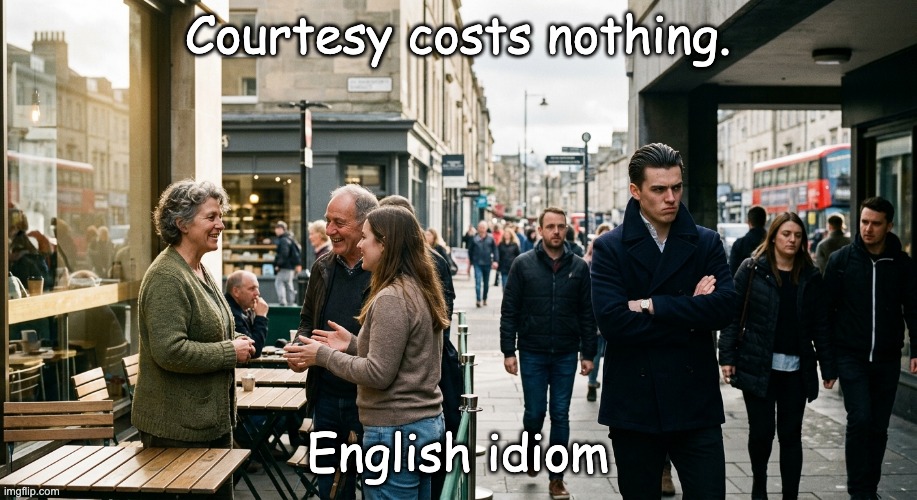
Courtesy costs nothing.
Image Peter van Geest AI. Meaning 🌼:“Courtesy costs nothing” means: Being polite, kind, and respectful requires no money. Good manners are easy to give but can make a big positive difference. There is no excuse for rudeness, since courtesy is free. In simple words: It costs nothing to be polite. 🧠 Usage / Sense of the Saying: People use this proverb to remind others that: kindness is easy, politeness should be natural, respect is valuable even though it is free. Example: ‘You can at least say thank you—courtesy costs nothing’. 📚Origin: This is generally considered a ‘proverb’ or ‘common saying’, not a fixed idiom. Likely origin: It comes from the long tradition of English proverbs praising ‘good manners’. The wording has appeared in English for a long time in slightly different forms. It is tied to the older idea that ‘civility and manners are signs of character’, not wealth Related older sentiments: Similar thoughts have existed for centuries, such as: politeness is free, fair words cost little, good manners cost nothing. So, the saying is probably ’traditional’ rather than invented as a modern quotation. ✍️ Author: There is ‘no single known author’ for “Courtesy costs nothing.”. It is a ’traditional proverb’. Proverbs usually develop through ‘common usage over time’. Many people repeat them, but they are not always traceable to one original writer.
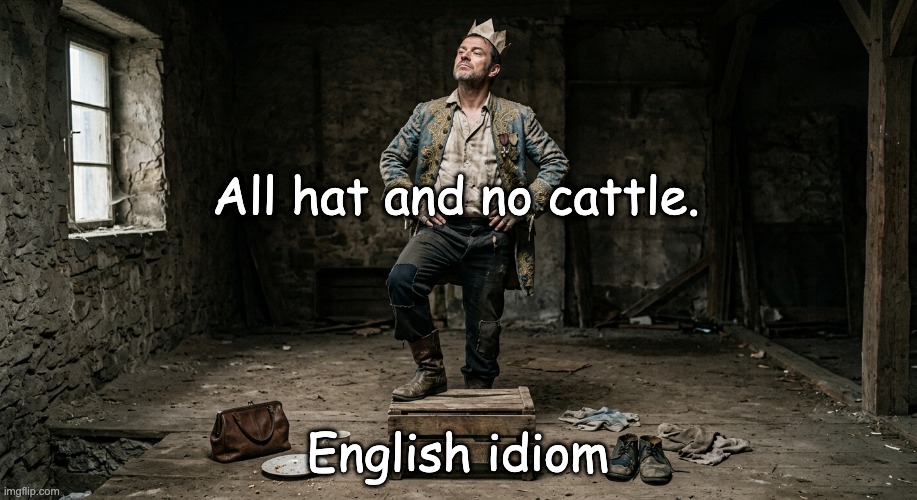
All hat and no cattle.
Image: Peter van Geest AI. Meaning 📖 🤠: “All hat and no cattle”is an idiom used to describe someone who: Talks big. Looks impressive on the surface. Claims status, skill, or experience. But does not have the real substance, results, or credibility. In simple words: It means ‘someone is more show than substance’. Similar expressions: All talk and no action. Big hat, no cattle. Full of hot air. Style over substance. 🧭 Origin: This idiom comes from the American West, especially ‘Texas cowboy/ranch culture. In ranching culture’. A ‘big cowboy hat’ (or crown) suggests the image of a rancher or tough Westerner (or king).‘Cattle’ represent the ‘real thing’ — actual ranching, property, richness, work, and substance. So if someone has “all hat and no cattle,” they may ‘look like a rancher (or king)’ but ‘don’t actually own cattle’ — meaning they only have the appearance, not the reality (no possessions). Historical background: The phrase is generally considered a Western/Texan folk expression. It became widely recognized in ‘Texas political speech’. A common variant is “big hat, no cattle”. ✍️ Author: There is ‘no known single author’ of this idiom. Important note: It is a ’traditional regional saying’. It likely developed ‘informally in spoken language’. Like many idioms, it was ‘not invented by one clearly documented person’. So the best answer is: Author:Unknown. It is a ‘folk idiom from the American West/Texas’, not a quotation traceable to one writer. 🗣️ Famous usage: The phrase became especially famous in ‘Texas politics’. Often associated with: Ann Richards, former Texas governor, who helped popularize colorful Texas expressions. It has also been used about politicians and public figures who seem impressive but lack depth or results. However, ‘she did not create the idiom’ — she was just one of the public figures who used that style of language. 📝 Example sentence: “He talks like a successful businessman, but he’s all hat and no cattle.”
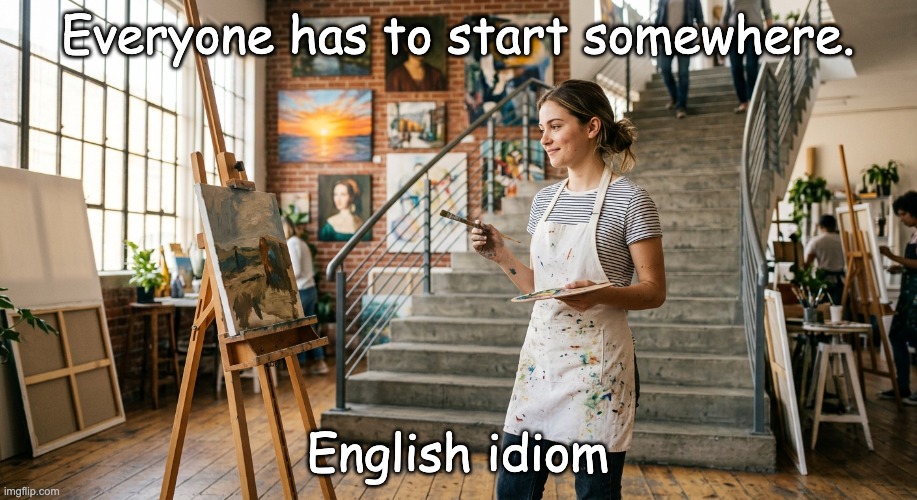
Everyone has to start somewhere.
Image: Peter van Geest AI. Meaning ✅ 📘: Every skilled or successful person was once a beginner. It is normal to begin with little experience. Starting small or imperfectly is better than not starting at all.💡 Simple idea: Nobody is born an expert. Whether in work, art, study, business, or life, ‘everyone begins at the first step’. 🧠 Tone / Use:People usually say this to: encourage a beginner 🤝, reduce embarrassment about being inexperienced, remind someone that progress takes time ⏳ Example: “Don’t worry if your first painting isn’t great—everyone has to start somewhere.”🏛️ Origin: This is considered a ‘common proverb / idiomatic expression’, not a quote with a clearly known single source. What is known: It has been used in ‘everyday English for a long time’. It likely developed as a ‘folk saying’. A close and very common variant is: “You have to start somewhere.” So, the phrase does ‘not usually have a specific literary or historical origin’ that can be confidently assigned. ✍️ Author: ‘No single known author’. This expression is generally treated as: a ’traditional saying’, a ‘popular idiom’, ‘not attributed to one definite person’. If someone uses it in a book, speech, or film, they are usually repeating a well-known expression rather than inventing it. 🌟 Similar Expressions: ‘You have to start somewhere’, ‘Every expert was once a beginner’, ‘The journey of a thousand miles begins with a single step’, ‘Practice makes perfect’.
Set a beggar on horseback, and he’ll ride to the devil.
Image: Peter van Geest AI. Meaning📘 🔹: If a person suddenly gains power, wealth, or high status without the judgment to handle it, they may become arrogant, reckless, or corrupt. It warns that ‘people who were once deprived may sometimes misuse new privilege’ when they get it. 🔹 Simple explanation: A “beggar” represents someone poor or powerless. Being put “on horseback” symbolizes being raised to a higher social position. “Ride to the devil” means heading toward ruin, bad behavior, or moral downfall. ✅ In modern words:‘Give someone sudden power or status, and they may abuse it.’🏛️ Origin: This is an ‘old proverb’, not a phrase invented by one clearly known modern writer. Likely background: It comes from a long tradition of ‘European proverbial wisdom’about sudden elevation in status’. A horseback rider historically suggested ‘rank, authority, and prestige’, since owning and riding a horse was associated with higher social standing. The saying reflects an old moral idea: ‘rapid social rise can expose vanity and lack of self-control’.Related older proverb: A very close earlier form is: “Set a beggar on horseback and he will ride to the devil.” This proverb has been recorded in English for ‘centuries’ and appears in collections of proverbs rather than as a quotation from a single author. ✍️ Author: Short answer: ‘No single definite author is known.’ It is generally treated as a ’traditional proverb / anonymous saying’. Proverbs usually develop through ‘oral tradition’. Later writers may quote them, but that does ‘not’ make them the original author. 📚 Earliest known use: The proverb is often traced in English to ‘early modern proverb collections’. It is associated with ‘John Ray’s’ proverb collections in the 17th century, though he is considered a ‘recorder/compiler’, not necessarily the creator. 🧠 Tone and usage: It can sound ‘critical or cynical’. It suggests that ‘newly gained power may reveal bad character’.Modern caution: Today, some people may see it as: ‘classist’, ‘unfairly generalizing about poor people’. So in modern writing, it is often best used: in ‘historical discussion’, when analyzing ‘power, corruption, or social mobility’, with awareness of its negative stereotype. 📝 Example: ‘After getting promoted, he started treating everyone badly — set a beggar on horseback, and he’ll ride to the devil.’
Power reveals character.
Image: Peter van Geest AI. Meaning: The idea is that how a person behaves ‘once they have power’ — authority, wealth, influence — tells you far more about who they truly are than how they behave in ordinary circumstances. Anyone can seem decent when they have little to lose, but power removes social constraints, creates temptation, and opens up choices. What someone does in that moment is their real character laid bare. It’s the opposite of the famous Lord Acton line (“power corrupts”) — instead suggesting that power doesn’t ‘change’ you, it ‘exposes’ you. Origin & Author — a complicated history: The idea has several important sources: 1.Robert G. Ingersoll (1883) — the true originator of the modern phrasing. The original version of the quotation came on January 16, 1883, during a speech in Washington, D.C., by the prominent writer and orator Robert Ingersoll. He said it ‘about’ Abraham Lincoln: “Most people can bear adversity. But if you wish to know what a man really is, give him power. This is the supreme test.” For a few decades, Ingersoll’s praise of Lincoln was widely cited and correctly attributed in American newspapers, but the subject of the quotation appears to have been conflated with its author beginning in the 1930s, and in the present day Ingersoll’s original authorship has been almost entirely eclipsed. 2.Wrongly attributed to Abraham Lincoln. The condensed version — “Nearly all men can stand adversity, but if you want to test a man’s character, give him power” — is today most commonly (but incorrectly) attributed to Lincoln. In reality, Lincoln never uttered or wrote those words, or words to that effect. Rather, they were said about him. 3.Thomas Carlyle (1841). A precursor was crafted by Thomas Carlyle in 1841, making the philosophical observation a recurring theme in 19th-century thought. 4.Robert A. Caro (modern reformulation). The crisp version “power doesn’t corrupt, it reveals” is strongly associated with the celebrated biographer Robert A. Caro. Caro wrote: “We’re taught Lord Acton’s axiom: all power corrupts, absolute power corrupts absolutely. I believed that when I started these books, but I don’t believe it’s always true anymore.” His decades of research into Lyndon B. Johnson led him to conclude that power is more of a revealer than a corruptor. The sentiment is ancient (Plato touched on it too), but the punchy modern form belongs most accurately to Ingersoll and Caro.
The higher they climb, the harder they fall.
Image: Peter van Geest AI. Meaning 📖 💡: People who reach ´great success, power, or status´ can suffer a ´more dramatic’ failure. if they lose it. The more someone has to lose, the ´greater the consequences´ when things go wrong. It can also imply that ´pride, ambition, or overconfidence´ may lead to a serious downfall. 🧠 Simple Explanation: If someone rises very high—socially, professionally, or emotionally—their fall can be more painful because: expectations are higher, more is at stake, and the contrast between success and failure is bigger. 📝 Example: A famous CEO becomes extremely successful, then loses everything after a scandal. → ´The higher they climb, the harder they fall.´ 🌍 Tone of the Saying:This quote can sound: warning-like ⚠️; philosophical 🤔; critical of arrogance 👑; or simply ´realistic about success and failure’ 📉
People who live in glass houses shouldn’t throw stones.
Image: Peter van Geest AI. Meaning 🏠:Self-Reflection: This idiom advises individuals not to criticize or judge others for their faults or mistakes, especially if they themselves have similar or other vulnerabilities. Hypocrisy Check: It highlights the hypocrisy of calling out others’ shortcomings when one’s own character, actions, or circumstances are equally or more susceptible to scrutiny. Avoid Vulnerability: By attacking others, one might inadvertently expose themselves to retaliation or investigation, potentially causing more harm to their own reputation or situation. Origin: The idiom is believed to have originated in the late 18th century.The literal meaning is self-evident: if you live in a house made of fragile glass, throwing stones would likely result in breaking your own windows and causing significant damage. Over time, this literal image was applied metaphorically to human behavior and the consequences of criticizing others while ignoring one’s own weaknesses. Author:Attributed to: The most commonly cited figure associated with the coining of this idiom is Benjamin Franklin. He is often credited with including it in his famous compilation of aphorisms, “Poor Richard’s Almanack,” published under the pseudonym Richard Saunders between 1732 and 1758. However: There is debate among scholars about whether Franklin actually originated the phrase or simply popularized an existing saying. Some evidence suggests similar proverbs existed even earlier in other languages or cultures. 🌟 Key Takeaway: Before pointing fingers at others, consider your own flaws and vulnerabilities. Practice self-awareness and empathy, and avoid judgmental behavior that could potentially come back to haunt you.
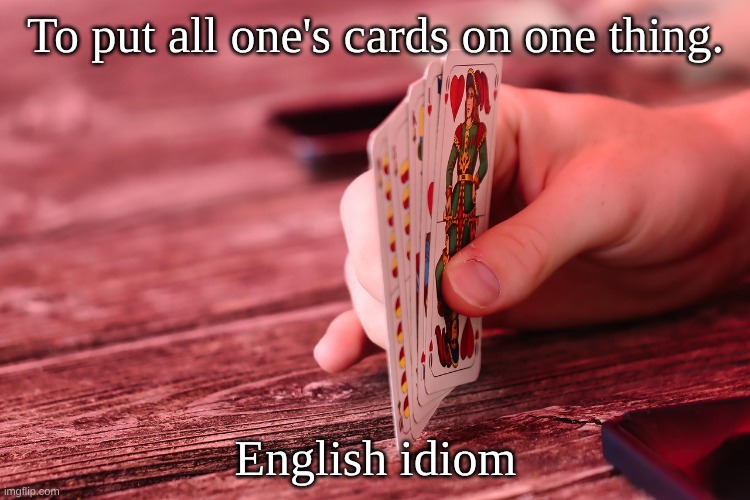
To put all one’s cards on one thing.
Photo: Alexander Fox. Meaning: This common English idiom, a variations of “to put all one’s eggs in one basket”, means to “risk everything on a single venture, idea, or possibility.”Gambling Imagery: The idiom is heavily influenced by card games, particularly poker or other betting games. A player holding their cards might decide to bet all their money or chips on the outcome of a single hand, or even a single card. This action represents a high-risk, all-or-nothing approach. Complete Focus: It signifies that a person is concentrating all their effort, resources, and hopes on one specific outcome. This leaves no room for backups or alternatives in case the primary plan fails. ‘Potential for Big Win or Big Loss’: Just like in gambling, this approach can lead to significant success if the chosen option proves fruitful. However, it also carries the risk of total failure, as there’s no backup plan. Origin:Ancient Concept: The general concept of “to risk everything” has existed throughout history and across various cultures. Similar proverbs like “don’t put all your eggs in one basket” date back to at least the 16th century in English.19th Century and Card Games: The specific phrasing “to put all one’s cards on one thing” seems to have gained traction in the 19th century, likely coinciding with the popularity of card games like poker. The expression’s clear gambling imagery makes its connection to card playing very likely. Author:Anonymous Origin: As is common with many idioms, there is no single known author who can be credited with inventing this specific phrase. It likely evolved gradually through usage in speech and writing over time. Idiomatic Evolution: Idioms often emerge as figurative expressions that become widely understood and adopted. Their origin is rarely traced back to a specific individual unless they are direct quotes from a famous literary work or historical figure. In summary, “to put all one’s cards on one thing” is a powerful idiom that captures the essence of taking a significant risk with potentially high rewards but also substantial consequences. Its origin is linked to the world of card games and their associated risks and rewards, though no single author can be identified as its creator.
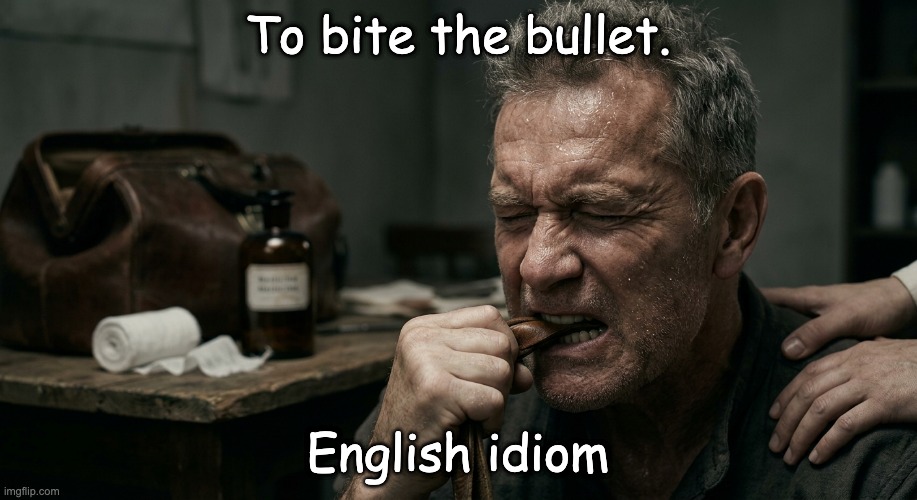
To bite the bullet.
Image: Peter van Geest AI. Meaning: To endure a painful or difficult situation that cannot be avoided, often with fortitude and resignation. Origin: This idiom originated in the 19th century, likely during wartime. Before anaesthetics were widely available, soldiers often had to endure surgeries and other painful procedures without pain relief. Soldiers would bite down on a bullet or other hard object to help them cope with the pain and prevent themselves from crying out. Author: There is no specific author credited with creating this idiom. It is a phrase that has been in use for centuries and has evolved over time.
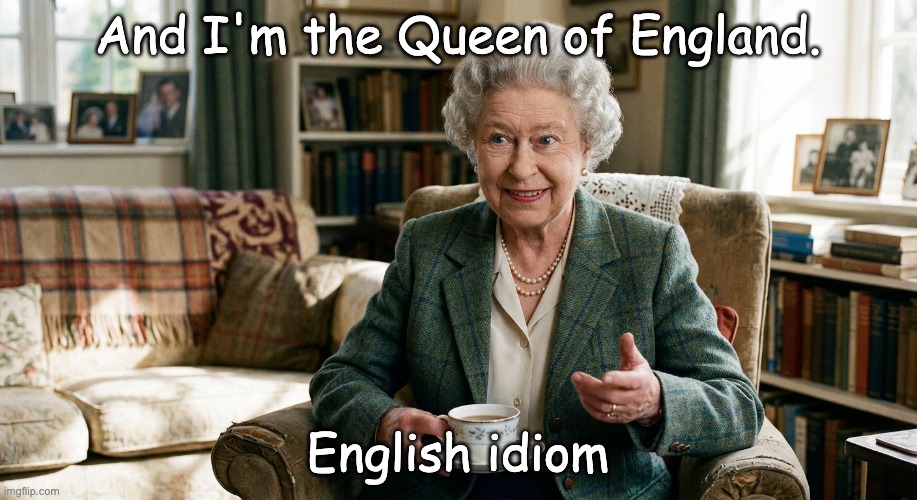
And I’m the Queen of England.
Image: Peter van Geest AI. Meaning: This idiom is used to express strong disbelief or skepticism in response to a statement or claim that is perceived as highly improbable or unlikely. It’s often used in a sarcastic or humorous way to mock the credibility of the statement. Example: A: “I’m going to win the lottery tomorrow!” B: “And I’m the Queen of England!” In this example, B is expressing their strong disbelief that A will win the lottery, implying that A’s claim is just as unlikely as B being the Queen of England. Origin: The idiom is believed to have originated in the late 19th or early 20th century. While the exact origins are unclear, it’s likely that the phrase gained popularity due to the prominent figure of the Queen of England, who represents an unattainable or highly unlikely role for most people. Author: The author of this idiom is unknown. Like many common idioms and phrases, it’s the result of collective usage and has evolved over time.
She is wearing the trousers.
Photo: bonprix. Meaning 📖 :Literal Meaning: This means a woman is wearing trousers (pants), which was historically considered male attire. Idiomatic Meaning: In a couple, the woman is the one in charge, making all the important decisions and controlling the household and finances. It often implies a role reversal from traditional expectations.💡 Origin: The idiom “she wears the trousers” (or pants) originates from a time when trousers were almost exclusively worn by men. In the 19th century and earlier, trousers were a symbol of masculinity and authority, while women wore skirts and dresses. The phrase emerged as a way to describe a woman who was taking on the traditionally male role of authority within a relationship or household. It was often used critically, as a form of social commentary or even mockery, suggesting that the woman was overstepping her bounds and the man was not being sufficiently dominant. 📝 Author: There is no single author associated with the phrase “she wears the trousers.” It is a common idiom that developed organically over time, reflecting cultural and societal shifts. However, the general sentiment behind the idiom is prevalent in classic literature and plays. For example, in Shakespeare’s works, you can find similar expressions of women taking control and challenging traditional gender roles. 🌐 Cross-Cultural Context: This idiom reflects the historical and cultural expectations of gender roles within a relationship. As these roles continue to evolve and become more fluid, the meaning and usage of “she wears the trousers” may change over time. It’s important to be mindful of this context when using or encountering this idiom.
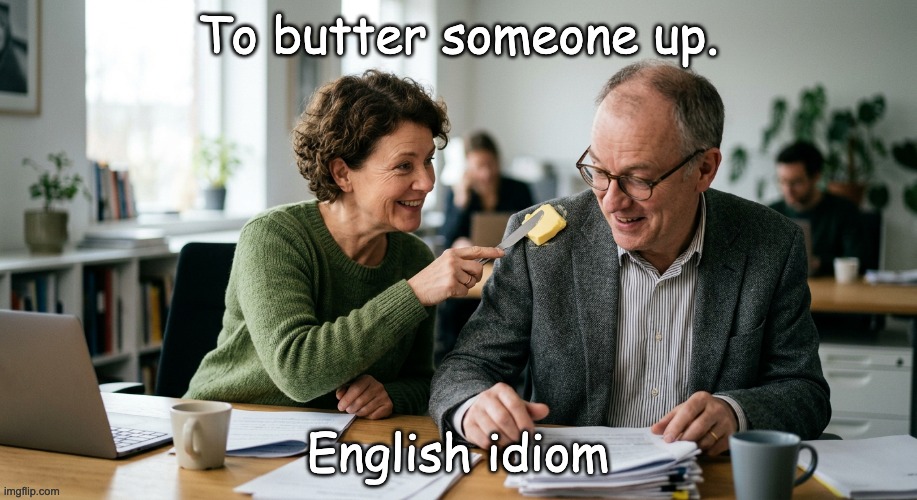
To butter someone up.
Image: Peter van Geest AI. Meaning💡 🧈: This idiom is quite common in the English language and has a fascinating, albeit slightly debated, history. Here’s a breakdown of its meaning, potential origin, and why assigning an author is tricky: Definition: To flatter someone generously, typically in an attempt to gain favor or a desired outcome. Think of it as laying on praise to make someone more receptive to your requests. Action: Involves excessive praise, compliments, and pleasing behavior, often with a slightly insincere undercurrent. It’s about making someone feel good and well-disposed towards you. Common Context: In the workplace: Asking for a raise or promotion, trying to get a better project assignment. In relationships: Softening the blow before delivering bad news, trying to win someone’s affection. In negotiations: Softening up the other party to get a better deal. 🗺️ Origin: There’s no single definitive source for this idiom, but rather a few competing theories that have gained traction over time. Here are the most prevalent ones: 1.Religious Rituals (Ancient India): This is a popular theory, particularly in online circles. It suggests a connection to the ancient Hindu practice of offering ghee (clarified butter) to deities as a sign of respect and to curry favor. While the ‘act’ of offering something valuable to gain favor is similar, the direct linguistic link from an ancient Indian practice to a modern English idiom is difficult to trace and might be a later interpretation. 2.Bread and Toast Metaphor (18th Century England): This is a strong contender, linking the phrase directly to the sensory experience of butter and bread. Metaphor of Smoothening and Making Pleasing: The action of spreading butter onto bread makes it easier to eat and enhances its flavor. Similarly, “buttering someone up” is seen as making them more “palatable” and receptive, easing the process of interaction and potentially making them more agreeable to your wishes. The idiom effectively uses the idea of smoothing out edges and making something more desirable as a metaphor for manipulating someone’s mood. Early Usage in English: The first recorded usages of “to butter up” in English date back to the late 18th century, making this timeframe crucial for understanding its development. Examples can be found in 18th-century writing and dictionaries, with meanings relating to flattery and excessive praise becoming firmly established. ✍️ Author and Specific Text: It is generally accepted that this idiom is a colloquialism that arose organically within the English language, primarily as a metaphor relating to a common culinary practice (spreading butter on bread). Therefore, it cannot be attributed to a single author or a specific text. Collective Language Development: Idioms typically evolve through widespread usage over time within a language community. The phrase gained popularity because the metaphor was clear, relatable, and resonated with people’s shared experiences. The Metaphor is Key: The success of the idiom lies in its metaphorical power. The physical act of buttering bread provided a perfect analogy for the social act of softening someone up with flattery. No one person “invented” the concept; rather, the language naturally adopted a metaphor that was universally understood and easy to grasp. Attributing to an Author: Sometimes idioms are mistakenly attributed to famous authors, but in this case, there’s no evidence pointing to any single figure. It’s a testament to the dynamic and collaborative nature of language that such common expressions can emerge from the collective imagination of a people.
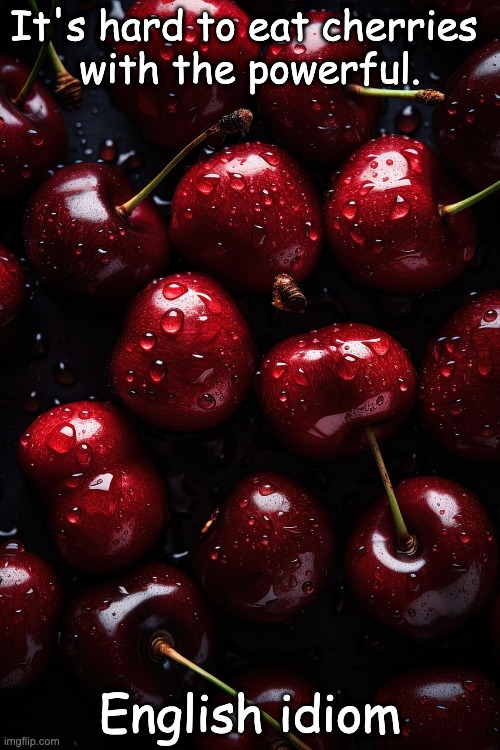
It’s hard to eat cherries with the powerful.
Photo: Hansuan Fabregas. Meaning: This evocative idiom, “It’s hard to eat cherries with the powerful,” serves as a stark warning about the inherent dangers and inevitable difficulties of interacting with individuals in positions of high authority and influence. It encapsulates the dynamic where the less powerful, despite temporary proximity, can never truly compete or emerge unscathed. Origin and Background: The proverb’s origin is a tapestry woven from multiple threads, but its most recognized source is rooted in European folk wisdom, particularly from Germanic and English cultural traditions. Ancient Metaphorical Connections: While the exact wording evolved, the metaphor of eating with powerful or divine figures being perilous is an ancient theme. For example, in Greek mythology, Tantalus’s hubris at a feast with the gods led to eternal punishment. Folk Tales and Proverbial Lore: The idiom solidified in common parlance through collections of proverbs and folk tales during the Renaissance and early modern periods. It frequently appeared in varying forms across Europe, highlighting the dangers of associating with those in power. For example, similar proverbs like “He that eats cherries with a great man will have his eyes spat out with the stones” convey a related warning. The “Powerful” Element: The proverb specifically refers to “the powerful” rather than generic figures. This points to the distinct power imbalance and the inherent risks associated with it, transcending a mere caution about interacting with important people. Literary Usage: Authors like Cervantes, known for incorporating proverbs into their works, may have referenced or used similar themes. While it’s difficult to definitively attribute this precise wording to a single author, its widespread appearance in literature and folklore suggests it became embedded in the cultural lexicon over centuries. The Role of Cherries and Power Dynamics: The choice of cherries as the symbolic fruit is deliberate and multifaceted: Deceptive Nature: Cherries are attractive, sweet, and associated with enjoyment and indulgence. This mirrors the alluring prospects or benefits that initially seem to come with associating with powerful people. Hidden Danger: The pits in cherries, seemingly insignificant, represent the potential pitfalls, hidden agendas, or consequences that are often overlooked. Eating cherries together suggests a shared, seemingly benign activity, yet the hidden pit provides a potent symbol of potential harm. Unequal Consequences: When powerful people “eat cherries,” they have the resources, influence, or status to easily discard the pits and potentially even use them to their advantage. Conversely, the less powerful may get choked on the pits, symbolizing the disproportionate negative impact they face. This underscores the lack of reciprocity and the ultimate inequality of the dynamic. The Power Factor: The crux of the idiom lies in the inherent risks of dealing with “the powerful.” Their authority and influence can easily twist a shared experience into one that is detrimental to those lacking such power. Similar Proverbs across Cultures: This universal theme is echoed in equivalent proverbs and expressions in various cultures: “When the sun shines too bright, even the shadows can get burned.” (African); “Don’t eat with your superior, because he will give you the neck of the chicken to eat and eat the body himself.” (Chinese); “A small bird should not build a large nest.” (Japanese); “If you put your hand in a bear’s mouth, don’t blame the bear if it bites.” (Yiddish). These diverse expressions reiterate the fundamental principle: proximity to power can bring unforeseen and often disastrous consequences for those with less influence. A Timeless Lesson: “It’s hard to eat cherries with the powerful” serves as a timeless reminder about the complexities of navigating relationships with those who hold significantly more power. It encourages caution, discernment, and awareness of the inherent power dynamics that can make shared activities or endeavors perilous for the less influential.
Lose trach of.
Photo: boschwegsetoneelgroep.nl. Meaning 🔹📘: To stop being aware of something; to forget the count, progress, time, or location of something/someone; to no longer follow what is happening. ✅ Common uses: Lose track of time → forget what time it is; Lose track of money/spending → no longer know how much has been spent; Lose track of someone → no longer know where they are or what they are doing. 📝 Examples: ‘I was reading and lost track of time.’ ‘She lost track of how many pages she had finished. ‘We lost track of* our old school friends. The word “track” literally means a ‘path’, ’trail’, or ‘mark left behind’ Figuratively, it means ‘following progress’, ‘keeping a record’, or ‘staying aware’. So “losing track” means ‘failing to continue following something’. 🔹 Origin: The expression comes from the older meaning of “track” as: a ’trail’ ; a ‘course to follow’ ; a ‘set of marks’ ; something that helps you ‘keep your way’. 🌿 How the meaning developed: Originally, if you were ’tracking’ something, you were literally following its trail. Over time, English speakers began using ’track’ more figuratively: keep track = keep count / remain informed; lose track = stop following / forget / become unaware. So the phrase likely developed naturally from the idea of: ‘following a trail → following information/progress/time.🔹 Author: ❌ There is ‘no known single author’ of “losing track” or “lose track of.” It is ‘not a quotation invented by one writer’. It is a ‘common English expression’ that evolved gradually in everyday usage. Important note: Many idioms in English: do ‘not’ have one identifiable creator; grow over time through common speech; become fixed expressions after repeated use.
To jump from one thing to another.
Image: Peter van Geest AI. Meaning: It describes the act of ‘switching abruptly between topics, tasks, or ideas’ without proper transitions or sustained focus — often implying a lack of concentration or a scattered, restless mind. A talk described as hard to follow might be so precise because the speaker kept jumping from one subject to another. It can also carry a neutral or positive sense, simply meaning to move rapidly between different matters. Origin: The figurative use of ‘jump’ to mean an abrupt mental or conversational shift is quite old. The meaning “pass abruptly from one state to another”dates to the 1570s, and the noun sense of “abrupt transition from one point to another” is recorded from the 1670s. Fascinatingly, the Oxford English Dictionary traces the exact idiom — jumping from one unrelated thing to another — to a ’16th-century translation of John Calvin’s sermons’. The earliest recorded example appears in L. Tomson’s 1579 English translation of Calvin’s ‘Sermons on Timothy and Titus’, where the French expression ‘ils sauteront du coq à l’âne’(“they will jump from the rooster to the donkey”) was rendered into English as jumping “from the cocke to the asse.” This French phrase — ‘sauter du coq à l’âne’ — was itself a well-established idiom for incoherent, rambling speech, and it is the direct ancestor of our modern expression. Author / Coiner: There is ‘no single author’ credited with coining this phrase. It evolved organically from everyday language and the French idiom above. The word ‘jump’ itself first appeared in English around the 1520s, with no clear source in Old or Middle English — possibly imitative in origin, or borrowed from Gallo-Roman dialects during the Hundred Years’ War. In shorts: This is a centuries-old metaphor rooted in the physical act of leaping — applied to the mind’s tendency to leap erratically between ideas. Its trail leads back to 16th-century France and England, but no single writer invented it; it grew from common speech.
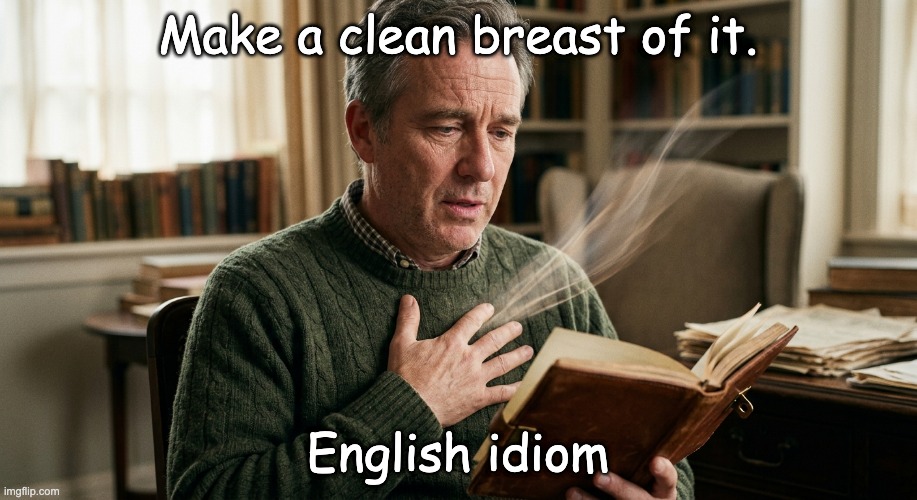
Make a clean breast of it.
Image: Peter van Geest AI. 🌟 Meaning: Full Confession: To “make a clean breast of it” means to fully confess and disclose something you’ve been keeping a secret, typically a wrongdoing or a mistake. Coming Clean: It implies a desire to tell the truth, to relieve oneself of the burden of the secret, and often, to accept responsibility for one’s actions. Unburdening Yourself: Think of it like washing something clean – it’s about clearing away the mess and starting fresh with a clear conscience. Example Sentence: He decided to “make a clean breast of it” and confess to his parents about the party he’d had while they were away. 🔍 Origin:The origin of this idiom isn’t perfectly clear, but there are a few compelling theories: 1.Biblical Origins: This is the most common and widely accepted theory. In ancient Hebrew and Christian traditions, the ‘breast’ (or heart) was often seen as the source of a person’s thoughts, conscience, and morality. In the Old Testament (Hebrew Scriptures), you can find references to having a “clean heart” or a “pure heart” which symbolized being free of sin and guilt. The act of making your “breast clean” would signify a thorough cleansing of your conscience through a sincere and complete confession to God, a religious figure, or to those you have wronged. This idea of purifying your inner self, your “breast,” by removing the weight of a secret is likely where the metaphor comes from. 2.Dueling: Some theories suggest a connection to dueling or personal conflicts. In this interpretation, “making a clean breast of it” might have been a way for a duelist to confess their wrongs or grievances publicly before a duel, perhaps with the hope of avoiding the fight or ensuring a fair one. This is less widely accepted but an interesting perspective. ✍️ Author:There isn’t a single person who is definitely credited with creating this idiom. Like many well-worn phrases, it evolved over time. Earliest Uses: The idiom started to appear in English literature and writing in the 18th century. While there are many early examples, it doesn’t have a specific “inventor.” Common Language: The metaphor of the “breast” or “heart” representing the conscience was already a well-established concept. So, the idiom likely developed naturally as a way to express the act of purging oneself of guilt. Important Note: The phrase “make a clean breast” is much more common than the full idiom “make a clean breast of it,” although both are correct and understandable.💡 Alternative Idioms & Phrases with Similar Meanings:Come Clean: This is a very direct and modern equivalent. Get It Off Your Chest: This emphasizes the feeling of relief that comes with confessing. Spill Your Guts: This is more informal and dramatic, often suggesting a forceful or emotional confession. Spill the Beans: This means to reveal a secret, but not necessarily about a personal wrongdoing. So, when someone says “make a clean breast of it,” they’re encouraging honesty and the courage to face up to one’s mistakes. It’s about letting go of the burden of secrets and moving forward with a clear heart and mind. 🌟
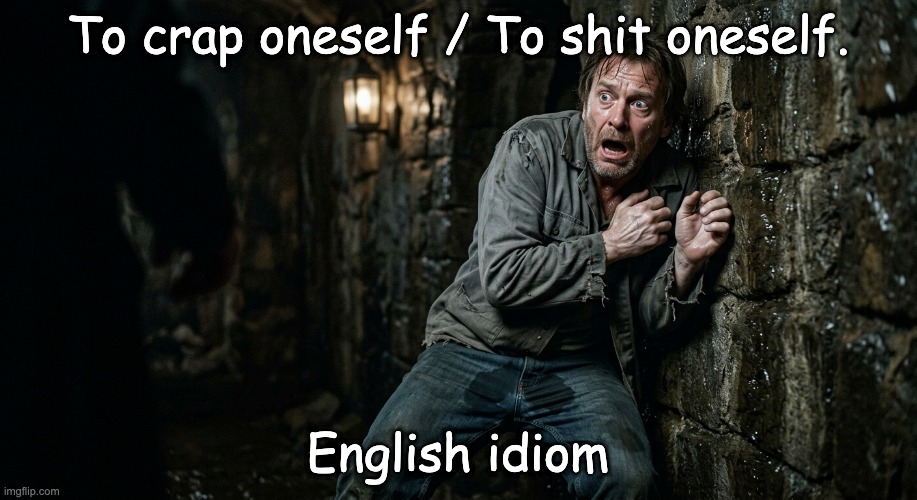
To crap oneself / To shit oneself.
Image: Peter van Geest AI. Meaning: The idiom “to crap oneself” or “to shit oneself” is a vulgar expression that means to have a sudden and uncontrollable urge to defecate, often resulting in accidentally doing so. This idiom is typically used to describe situations where someone is extremely scared, startled, or embarrassed. It can also be used figuratively to express that someone is feeling very fearful or anxious. Origin and Etymology: The exact origin of the idiom is uncertain, but it is believed to have originated in the late 19th or early 20th century.The first recorded usage of the phrase dates back to the early 20th century, and it gained popularity during World War II. It’s plausible that the idiom emerged from the colloquial use of “crap” and “shit” to mean “defecate” or “feces,” combined with the involuntary nature of the act under duress. Author:It is highly unlikely that a single author is responsible for the creation of this idiom. Idioms often develop over time through usage within different social groups or dialects, and their precise origins can be difficult to trace. The development of such idioms often occurs through a combination of social, cultural, and linguistic influences. Usage and Context: This idiom is considered vulgar and is typically avoided in formal settings or when speaking with people one does not know well. It is often used in informal conversations, slang, or to add dramatic effect to a story. The idiom can be used in various contexts, including: Describing extreme fear or panic: “He was so scared when the car skidded, he nearly crapped himself.”Expressing severe embarrassment: “She felt like crapping herself when she realized she’d forgotten her presentation.” Describing an unexpected or surprising event: “The noise was so loud, I practically shit myself.” Cross-cultural Usage: Similar expressions exist in many languages and cultures. For example, in Spanish, the equivalent is “cagarse de miedo” (literally, “to shit oneself with fear”). In German, a comparable idiom is “sich vor Angst in die Hose machen” (literally, “to make into one’s pants from fear”). These expressions often share common themes of extreme emotion leading to involuntary actions. Summary: The idiom “to crap oneself” or “to shit oneself” is a colloquial and vulgar expression that describes a sudden and involuntary act of defecating, typically due to extreme fear, embarrassment, or shock. While its precise origins are unclear, it has become a common idiom in informal English usage. Understanding the appropriate context for using this idiom is crucial, as its vulgarity may not be suitable in all situations.
You can’t take it with you.
Image: Peter van Geest AI. Meaning💰: This idiom simply means that when you die, you cannot take your money, property, or any other material belongings with you. It emphasizes the futility of obsessively accumulating wealth and possessions, as they have no value or purpose beyond this life. It often serves as an encouragement to enjoy life, share wealth, or focus on more meaningful pursuits. Origin and Author:While the exact origin of this idiom is not definitive, it has been used and popularized through various sources over time: Biblical Influence: While not a direct quote, the concept is echoed in several biblical passages, such as Job 1:21 (“Naked I came from my mother’s womb, and naked shall I return there”) and 1 Timothy 6:7 (“For we brought nothing into this world, and it is certain we can carry nothing out”). These passages highlight the idea that we enter and leave the world without any material possessions. 19th Century Usage: The idiom began to gain traction in the 19th century. For example, a similar expression appeared in a letter by British writer Charles Lamb in 1823: “He can’t carry his money with him.”Play and Film: The idiom was further popularized by the successful 1936 play “You Can’t Take It with You” by George S. Kaufman and Moss Hart. This play, which was later adapted into a classic 1938 film directed by Frank Capra, centers around a eccentric and carefree family who prioritize happiness and fulfillment over material wealth. The title of the play and film became synonymous with the idiom’s message. Therefore, while no single author can be definitively credited with coining the idiom, its usage can be traced back to biblical concepts and 19th-century literature, and it was significantly popularized by the well-known 20th-century play and film. Examples of Usage: “He spent his entire life amassing a fortune, but he couldn’t take it with him.” “Don’t be so stingy with your money. Remember, you can’t take it with you.” “Focus on making memories and helping others, because you can’t take your possessions with you when you die.” In conclusion: “You can’t take it with you” is a timeless idiom that reminds us of the fleeting nature of material possessions and encourages us to focus on what truly matters in life.
Time flies.
Image Peter van Geest AI. Meaning:“Time flies” is an idiom that means time seems to pass very quickly, especially when you are having fun or are busy. It is often used to express a sense of surprise or wonder at how quickly time has passed. Origin: The phrase “Time flies” is actually a translation of the Latin phrase “tempus fugit”. The phrase “tempus fugit” was first used by the Roman poet Virgil in his poem “Georgics”, written around 29 BC.Author: The author of the phrase “Time flies” (or rather, the original Latin version “tempus fugit”) is the Roman poet Virgil.
To Roast someone.
Image: Peter van Geest AI. 📖 Meaning: “To roast someone”🔥 is a common slang idiom that is widely used, particularly in comedic contexts and on social media. Definition: To roast someone means to humorously mock, tease, or criticize them in a public and good-natured, yet often sharp and clever, way. It is a form of affectionate insults and “gentle” takedowns, often performed at special events. Key Characteristics:Public: Usually done in front of an audience (physical or online). Humorous: The primary intention is to entertain the audience and even the subject. Insulting but Good-natured: While the insults can be harsh, they are typically not meant to cause lasting harm or offense. Clever & Witty: A good roast relies on smart observations, clever wordplay, and unexpected jokes. Contexts:Friars Club Roasts: The most famous traditional context, where fellow comedians “roast” a guest of honor at a banquet. Comedy Central Roasts: Televised specials following the Friars Club tradition. Social Media: Online platforms like Twitter, TikTok, and Reddit are hotbeds for spontaneous roasts. Friendly Banter: Lighthearted teasing among friends. Difference from Bullying: While both involve insults, the crucial distinction lies in the ‘intent and relationship’. A roast is intended to be funny and is usually delivered within a context of mutual respect or at least shared understanding. Bullying is malicious and intended to cause distress. 🕵️ Origin: The idiom “to roast” in this context is deeply connected to the New York Friars Club and its unique style of celebrity testimonial banquets. The Timeline:1.Late 19th/Early 20th Century: The word “roast” was already used informally in the sense of severe criticism or verbal assault, but not in the formalized, comedic sense we know today. 2.Early 20th Century (1910s-1920s): The New York Friars Club, a private club for comedians and other entertainers, began hosting events called “testimonial dinners.” These started as genuine tributes. 3.The Shift (1940s-1950s): Comedians within the Friars Club started introducing a new comedic element to these dinners. Instead of purely praising the guest of honor, they began using witty insults and good-natured ribbing as a key part of the tribute. 4.Codification (1960s): The tradition of the comedic “roast” became fully established at the Friars Club, with many famous figures being honored in this way. 5.Mainstream Adoption (1970s and beyond):Dean Martin Celebrity Roasts (1974-1984): These highly popular televised specials brought the concept of the roast to a wider American audience. Comedy Central Roasts (1998-present): Revived and modernized the tradition for a new generation, further solidifying the idiom in popular culture. 6.Social Media Age (2000s-present): The term “roast” became widely used online to describe comedic put-downs, and dedicated spaces like the “r/RoastMe” subreddit emerged. The choice of the word “roast” is likely a culinary metaphor. Intense Heat: Just as a physical roast is subjected to intense heat in an oven, the subject of a comedic roast is subjected to “the heat” of witty insults. Gradual Process: A roast takes time, and similarly, the insults are delivered over the course of the event. End Result: The goal of culinary roasting is to produce a delicious meal. The goal of a comedic roast is ✍️ Author: There is ‘no single author’ of the idiom “to roast.” It is an idiom that evolved over decades within a specific community (comedians) and a particular institution (the New York Friars Club). Key Contributing Factors:The Friars Club Culture: The unique environment of camaraderie, friendly rivalry, and comedic tradition at the Friars Club created the perfect conditions for this type of humor to flourish. Collective Effort: Many comedians over many years contributed to the development and refinement of the roast format. Early innovators like Milton Berle, George Burns, and later figures like Don Rickles all played a role. Dean Martinand Televised Roasts: These shows helped define the genre for the general public, but they were building upon the groundwork laid by the Friars Club. In conclusion, the idiom “to roast” is a product of a specific cultural and comedic history, evolving from the informal use of the word into a formalized and celebrated tradition.
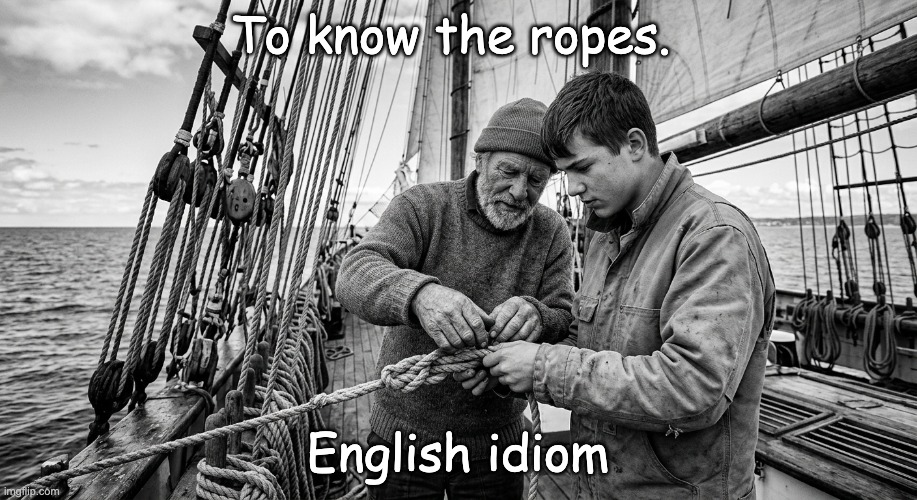
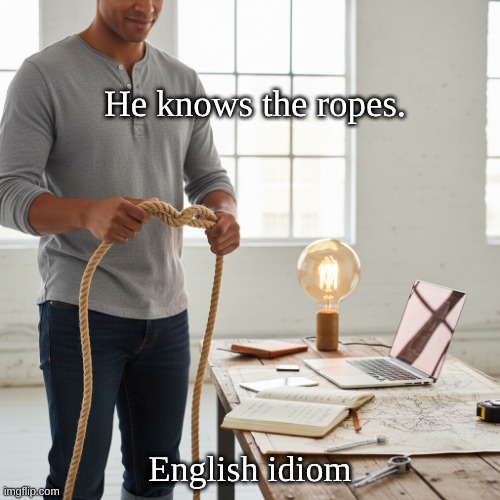
To know the ropes.
Image: Peter van Geest AI. Meaning: To understand how things work. To know the proper procedures and methods for achieving a goal. Origin: The idiom “to know the ropes” originates from the days of sailing ships. The term was used to describe sailors who were experienced and knowledgeable about the intricate network of ropes and rigging used to control the sails. ⚓️ Author: The idiom “to know the ropes” does not have a single, identifiable author. It is a phrase that has evolved over time from a practical, seafaring context to a more general expression used in everyday language.
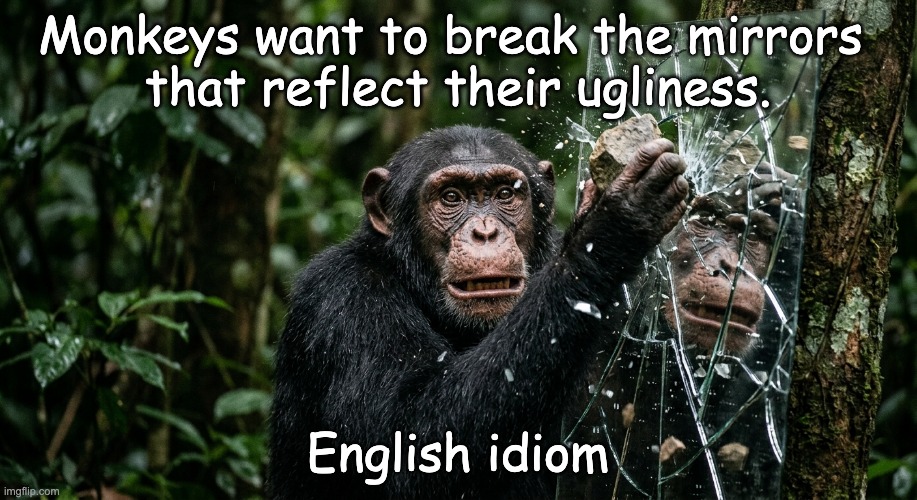
Monkeys want to break the mirrors that reflect their ugliness.
Image: Peter van Geest AI. Meaning 🧐: This is a powerful metaphor about human psychology and the defensive mechanisms people use when facing uncomfortable truths. Here’s a deeper breakdown of what it signifies: Denial of Reality: People often find it painful or embarrassing to confront their own flaws, mistakes, or shortcomings (“their ugliness”). Blaming the Messenger: Instead of addressing their internal issues, they attack the person, situation, or tool (“the mirror”) that reveals or points out those issues. Destroying the Evidence: The act of “breaking the mirror” represents attempting to destroy or silence whatever is forcing them to see themselves clearly, in the hope that the flaw will disappear along with the reflection. Short-sightedness: In the metaphor, breaking the mirror doesn’t make the monkey beautiful; it just removes the ability to see reality. Similarly, suppressing criticism or ignoring truth doesn’t solve the underlying problem. In summary: It is an observation on how people would rather destroy a source of truthful (but unpleasant) information than confront their own defects. 🌎 Origin:Core Concept: The idea of attacking a “mirror” that reflects an unpleasant reality is a recurring theme across many cultures and is often linked to fables about human nature. The fable of the “Monkey and the Mirror” exists in various forms, including collections attributed to Aesop.The Fable Framework: Fables often use animals (like monkeys) as stand-ins for human traits. In this case, the monkey represents human vanity or a defensive ego. Idiomatic Proverb: While the underlying fable is old, this specific phrasing acts as a punchy, idiomatic summary. While difficult to pinpoint a single “first time” it was said exactly this way, it belongs to a category of universal folk wisdom about self-delusion. ✍️ Author:Attributed to Folk Wisdom/Aesop (Traditional):There is no single known individual who can definitively be credited with originating this exact idiom. Like many proverbs, it is considered a piece of collective folk wisdom that has evolved. Due to its fable-like structure, it is often associated with the broad traditions of Aesop, but a specific, traceable original story by Aesop with this exact quote is difficult to verify. Attributed to Arthur Schopenhauer (Often misattributed): In modern online quote databases, this idiom is frequently and incorrectly attributed to the German philosopher Arthur Schopenhauer. The misattribution likely stems from his writing on similar themes, such as vanity and human folly. For example, he did write: “A man is rarely as bad as he makes himself out to be. We tend to judge people on their appearance…” or “Every man takes the limits of his own field of vision for the limits of the world.” While related, these are not the idiom from your image. Therefore, the author is best described as “Traditional,” with the sentiment frequently—though incorrectly—linked to Schopenhauer.
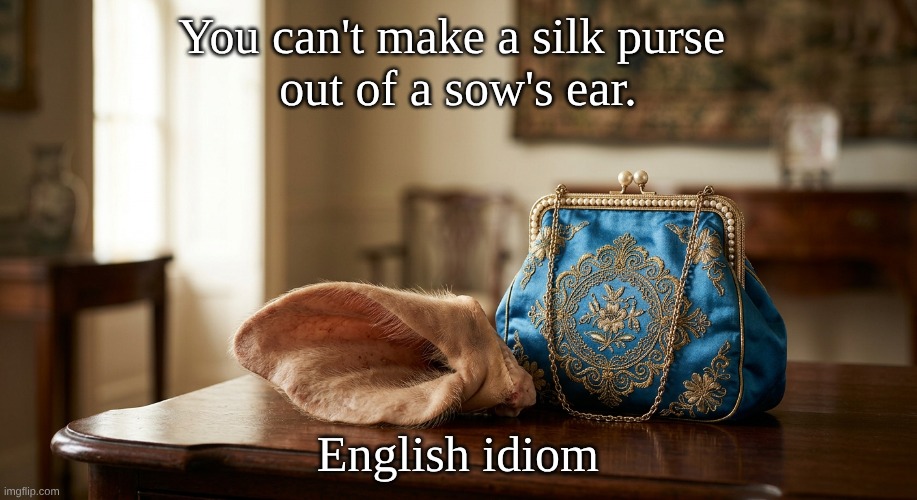
You can’t make a silk purse out of a sow’s ear.
Image: Peter van Geest AI. Meaning 🇺🇸 🤔 🐷 :The meaning of this saying is: Not making something beautiful out of inferior material: It suggests that you cannot make something of high quality out of something that is naturally of low quality or insignificant. Limitations of means: It reminds us that the means we have determine the limits of what we can achieve. Limitations of one’s character or skills: It can also be applied to people, suggesting that you cannot make an expert out of someone if they do not have the necessary talents or motivation. 📜 Origin:The origin of this saying has not been definitively established,but it likely originated in the Middle Ages. Some possible origins are England: The saying is first found in written form in England in the early 17th century. It may have originated as a warning against trying to make something beautiful out of cheap or poor materials. Scotland: The saying is also found in Scotland in the 17th century, and it is possible that it originated there and spread to England. ✍️ Author: No specific author of this saying is known. It is a traditional proverb that has developed over time and is used in many cultures. It has likely been refined and adapted by many over the centuries.
To be on the horns of a dilemma.
Image: Peter van Geest AI: Meaning: 🐂 “To Be on the Horns of a Dilemma “🐂. Stuck Between a Rock and a Hard Place: You’re trapped in a situation with two equally bad choices, and there’s no easy way out. Having to Choose Between Two Evils: Neither option is desirable, but you must select one. Being Faced with a Choice Between Unpleasant Alternatives: The options available are both difficult and have potential negative consequences. Origin:Ancient Greece: The phrase likely originated in ancient Greece, where logic and reasoning were highly valued. Philosophers and rhetoricians would use the concept of a “dilemma” (meaning “two premises” in Greek) to present an argument with two equally difficult choices. Animal Imagery: The “horns” imagery comes from the idea of an animal with two sharp horns, such as a bull or a goat. If you were trapped between two horns, you would have to choose which one to move towards, both of which would be painful. Later Usage: The phrase “to be on the horns of a dilemma” became popular in English literature during the 17th and 18th centuries. Author: There is no single author who coined the phrase “to be on the horns of a dilemma.” It is an idiomatic expression that has evolved over time. While the concept of a dilemma can be traced back to ancient Greece, the specific phrase using “horns” gained popularity later. Example: “I’m on the horns of a dilemma. If I go to the party, I’ll miss studying for my exam. If I stay home and study, I’ll miss my best friend’s birthday celebration.” Conclusion: The idiom “to be on the horns of a dilemma” is a vivid way to describe a challenging situation where you are forced to make a difficult choice between two equally unpleasant options. Its origins in ancient Greek philosophy and the imagery of animal horns highlight the feeling of being trapped and having no easy way out.
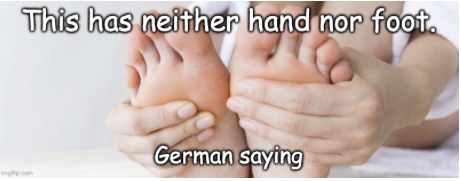
This has neither hand nor foot.
Photo: vitaminesperpost: Meaning: This is unsuitable or ill-conceived.
I’d stake my life on him.
Image: Peter van Geest AI. Meaning 🇺🇸 📖: This idiom expresses an absolute, unwavering confidence and trust in someone. It’s like saying you believe in their abilities, integrity, or character so much that you’d literally put your life on the line for them. Think of it as placing the ultimate bet on someone – a bet where the stakes couldn’t be higher. 📜 Origin:Stake: The word “stake” has its roots in gambling. In traditional betting, a “stake” is the money or item you put forward that you stand to lose if your bet doesn’t pay off. Metaphorical Bet: The idiom uses the idea of a life-or-death bet to convey an extreme level of trust. It’s essentially saying, “I’m so certain this person won’t fail that I’d risk my most valuable possession – my life – as my ‘stake’ in a bet that they will succeed.”No Single Author: This idiom doesn’t have a specific author. It’s an expression that has evolved naturally over time, probably starting with literal situations where someone’s life was genuinely at risk (like in battles or dangerous ventures) and then becoming a common metaphor for intense trust. It likely originated in the 19th or 20th century as gambling terms became more common in everyday speech. Author: As mentioned above, there isn’t a single person credited with creating this idiom. It’s a phrase that became part of the English language through usage. 🗺️ International Variations (with Translations and Emojis): While the idiom itself is unique to English, the concept of complete trust is universal. Here are some interesting ways other languages express a similar idea, with translations and emoji: English | I’d stake my life on him | I would bet my life on him | 🧬❤️ | Spanish | Pondría mi mano en el fuego por él | I would put my hand in the fire for him | 🇬🇧🔥 | French | Je mettrais ma main au feu pour lui | I would put my hand in the fire for him | 🇬🇧🔥German | Für ihn würde ich meine Hand ins Feuer legen | For him, I would lay my hand in the fire | 🇩🇪🔥 | Italian | Ci metterei la mano sul fuoco | I would put my hand on the fire for it (implying trust in him) | 🇮🇹🔥 | Japanese | 命がけで信頼する (Inochigake de shinrai suru) | Trust with one’s life | 🇯🇵❤️ | Korean | 목숨을 걸고 믿다 (Moksum-eul geolgo mitda) | Believe putting life on the line | 🇰🇷💪 | Chinese (Mandarin) | 赴汤蹈火也在所不辞 (Fù tāng dǎo huǒ yě zài suǒ bù cí) | Would not hesitate to go through hot water or tread through fire | 🇨🇳🔥 | 🏆 Key Takeaways: Trust: This idiom is a powerful way to convey the highest level of confidence. Bet: It uses the metaphor of gambling with the ultimate stake – one’s own life. Evolution: It’s an expression that has become part of the English language over time and doesn’t have a single creator. Global Trust: While the exact phrasing is English, many other languages have their own powerful ways of expressing absolute trust, often using dramatic or dangerous metaphors like putting a hand in fire.
To have a fire in one’ s belly.
Image: Peter van Geest AI. Meaning 🔥:Strong Desire/Passion: A deep and fervent interest in a particular pursuit or cause. Enthusiasm: Great excitement and eagerness. Determination/Drive: A resolute will to succeed, often implying a refusal to give up in the face of obstacles. Ambition: A strong desire to do or achieve something. Origin 📜: The exact origin of the phrase “a fire in one’s belly” is not definitively attributed to a single author or moment. However, the imagery of “fire” has long been associated with strong emotions, passion, and vitality in many cultures and languages. Ancient Roots: Concepts like “inner fire” or “burning desire” can be found in ancient philosophical and spiritual texts, associating heat with life force, courage, and intense emotion. For example, in traditional Chinese medicine, fire is one of the five elements and is linked to the heart and spirit. Literary Usage: Over centuries, writers and poets have used fire metaphors to describe passion. While it’s hard to pinpoint the first use of this specific idiom, its components have been used metaphorically for a very long time. Common Evolution: Many idioms evolve over time through common usage rather than being coined by a single individual. It’s likely that the phrase gained popularity because it effectively conveys a powerful and easily understandable image. Author ✍️: As mentioned, there isn’t a single, definitive “author” for the idiom “to have a fire in one’s belly.” It’s more of a naturally evolved phrase within the English language, drawing on universal metaphors. While you won’t find it attributed to Shakespeare or a specific philosopher, its meaning is widely understood and used across English-speaking regions.
To play jokes.
Image: Peter van Geest AI. Meaning 🎭 :To Trick or Tease: The core meaning involves lighthearted deception or making fun of someone without malicious intent. Humorous Intent: The key differentiator from harmful actions is the playful and funny nature of the act. Examples: “My brother loves to play jokes on me by hiding my keys.” “It’s fun to play jokes on April Fool’s Day.”📜 Origin: Unlike a formal quote or a literary saying, “to play jokes”doesn’t have a single, traceable “author” or a precise origin date. It’s an idiomatic expression that likely evolved naturally within the English language over time. “Play”: The verb “play” has been associated with various forms of recreation, games, and lighthearted activities for centuries (e.g., “play a game,” “play a role,” “play music”). “Joke”: The word “joke” itself originated in the 17th century, likely from the Latin jocus, meaning “jest” or “sport.”Combination: The combination of “play” with “joke” to signify engaging in humorous trickery is a very natural linguistic development. Many similar phrases exist where “play” is used with a noun to describe an activity (e.g., “play a trick,” “play a prank”). It’s part of the colloquial fabric of the language, meaning it’s widely understood and used in everyday conversation rather than being a specific literary invention. ✍️ Author:No Single Author: As mentioned, there isn’t one specific person credited with coining the phrase “to play jokes.” It’s a testament to the organic growth and evolution of language. Collective Authorship: One could say its “author” is the collective consciousness of English speakers over generations who have used and passed down this common expression. Therefore, while its meaning is clear and its usage widespread, pinpointing a single origin point or author is not possible for such a fundamental idiomatic phrase.
To drag something in by the hair.
Image: Peter van Geest AI. Meaning 💇♀️: This idiom refers to the act of introducing an idea, argument, or topic into a conversation or discussion in a forced, unnatural, or irrelevant way. It implies that the connection to the main subject is weak or nonexistent, and the speaker is making a strained effort to include it. To introduce a point or argument that is not naturally related to the current discussion. To force an idea into a conversation where it doesn’t really belong. To make a strained or unnatural connection between two things. Origin: While it’s difficult to pinpoint an exact single origin or author for many idioms, the phrase “to drag something in by the hair” likely stems from the vivid and somewhat violent image it conjures. Imagine physically dragging someone or something by their hair – it’s an unwilling, forced, and often painful act. This strong visual metaphor translates well to the idea of an argument or topic being unwillingly or unnaturally forced into a discussion. It evokes a sense of desperation or a lack of more appropriate means to introduce the subject. Similar expressions exist across languages and cultures, highlighting the universal concept of forced relevance. Author: As with many common idioms and proverbial sayings, there isn’t a specific, identifiable “author” for “to drag something in by the hair.” These phrases tend to evolve organically within a language through common usage over time, eventually becoming an accepted and understood part of its linguistic fabric. Example: “I was trying to explain the budget, but John kept dragging in his personal grievances with the catering company by the hair. It had nothing to do with our financial situation!”
That goes below the belt line.
Photo: willingo.com. Meaning: cheating, breaking the rules, dishonest, immoral. Origin: In ecclesiastical Latin, sub cingulo (below the belt) referred to the genitals, the naming of which was rather taboo. In boxing, punches below the navel are considered unsportsmanlike.
The bigger they are, the harder they fall.
Image: Peter van Geest AI. Meaning 📖: This idiom suggests that: Powerful or seemingly invincible entities, individuals, or organizations, when they eventually fail or are defeated, experience a more significant and impactful downfall. It often implies a certain satisfaction or an observation that those who are arrogant or overconfident are particularly vulnerable to a dramatic collapse. It can also be used to encourage an underdog, suggesting that even a formidable opponent has weaknesses. Origin and Author 📜: While the sentiment behind the phrase is ancient, its popularization in the modern form is often attributed to Robert Fitzsimmons, a British boxer. Robert “Ruby Bob” Fitzsimmons (1863-1917) was a world heavyweight champion. He is famously quoted as saying this phrase in reference to James J. Jeffries, another heavyweight champion, before their fight in 1902. 🥊 Fitzsimmons, being smaller and lighter than Jeffries, used the phrase to express his confidence and strategy against his larger opponent. He did, however, lose that particular fight. Earlier Sentiments 🤔:It’s worth noting that the idea itself is much older and can be found in various forms: Biblical Allusion: The story of David and Goliath is a prime example of this principle, where the smaller, seemingly weaker individual overcomes a much larger, more powerful foe, leading to a significant “fall” for the giant. Proverbial Wisdom: Similar proverbs or expressions conveying this idea exist in many cultures, highlighting the universal truth that even the greatest can be brought down. So, while the sentiment is ancient, the exact phrasing “The bigger they are, the harder they fall” is widely credited to Robert Fitzsimmons.
To be out to pasture.
Image: Peter van Geest AI. Meaning 📝:Retired: No longer actively working. Obsolete / Redundant: No longer needed or considered useful in one’s previous capacity. Put aside: Relegated to a less active or important role, often due to age or diminished capability. Origin 🐴: The idiom’s origin is quite literal and stems from equestrian practices. When horses, particularly workhorses or racehorses, became too old, injured, or otherwise unfit for their demanding tasks, they were often “put out to pasture.” This meant they were released from active duty and allowed to graze freely in a field, living out their remaining years without the strenuous work they once performed. The transition from this literal meaning to its metaphorical use for humans likely occurred because of the clear parallel between a horse’s working life ending and a person’s retirement or dismissal from work due to age. Author ✍️: Idioms, by their very nature, are typically not attributed to a single author. They evolve organically within a language over time, becoming common phrases through widespread use. “To be out to pasture” is an example of such an idiom that developed through popular usage rather than being coined by a specific individual or appearing first in a known work of literature.
To let grass grow over something.
Photo: Mary Bettini Blank. Meaning of the Idiom 📜: The phrase essentially refers to the passage of time and the act of forgetting or ignoring a situation until it is no longer relevant or troubling. To Forgive and Forget: Allowing a conflict or a scandal to fade away by not mentioning it for a long time. 🕊️ Deliberate Delay: Choosing not to act on a matter immediately so that the “heat” or intensity of the situation dies down. ⏳ Natural Concealment: Just as grass covers an unused path, time covers memories or past deeds. 🌱 🌍 Origin and Etymology: This expression is a calque (a loan translation) from Germanic languages, where the imagery of nature reclaiming human paths is very common. German Roots: The most direct ancestor is the German phrase “Gras über eine Sache wachsen lassen” (to let grass grow over a matter). 🇩🇪 The Metaphor: It stems from the observation of rural life. If a path is walked upon daily, the grass stays flat or dies. If people stop using the path, the grass grows back, eventually hiding the trail entirely. 👣Timeline: While it is difficult to pinpoint a “Year Zero,” the expression has been documented in German literature and legal contexts since at least the 18th century. ✍️ Author and Sources: Unlike a quote from a play or a novel, this idiom does not have a single “author.” It is a piece of folk wisdom (proverbial) that evolved through common usage. Linguistic Development: It entered the English lexicon primarily through translations of European literature and diplomatic language. Cultural Variants: Dutch: ¨Er gras over laten groeien.¨ 🇳🇱Swedish: ¨Låta gräset gro.¨ 🇸🇪Inverse Usage: You are perhaps more familiar with the English variation: “Don’t let the grass grow under your feet.” This version (meaning “don’t delay”) was popularized in the 16th and 17th centuries, appearing in collections of proverbs by authors like John Heywood. 💡 Usage Examples: To help you use this phrase correctly in conversation: In a Dispute: “We had a huge argument, but we decided to let the grass grow over it before meeting again.” In Politics: “The minister hoped the public would let the grass grow over the scandal before the next election.” ⚖️ Quick Comparison: ¨Let grass grow over it¨ | Let time heal/hide it | Passive / Patient | ¨Let the grass grow under your feet¨ | To waste time/delay | Critical / Active | “Bury the hatchet” | To actively make peace | Intentional / Final
To pull yourself up by your bootstraps.
Image: Peter van Geest AI. Meaning 📖 🧐:Literal Interpretation: The phrase literally describes an impossible feat – trying to lift yourself off the ground by tugging on the small loops (bootstraps) at the top of your boots. It’s physically impossible to gain leverage this way. Idiomatic Meaning: In modern usage, “to pull yourself up by your bootstraps” means to succeed or improve your situation through your own efforts, without any outside help or assistance. It emphasizes self-reliance, hard work, and determination, often in the face of adversity. It suggests overcoming challenges through sheer willpower and initiative. Origin 🕰️:The phrase has an interesting evolution:1.Early Literal Use (18th-19th Century): The earliest uses of “bootstraps” or “boot-straps” often referred to the literal straps on boots. The idea of “pulling oneself up by one’s bootstraps” initially appeared as an example of an absurd or impossible task. One notable early appearance is in an 1834 story in ¨The Marryat Miscellany¨ which describes a character attempting to “lift himself over a fence by the straps of his boots.” The most famous early literary reference comes from Rudolf Erich Raspe’s 1785 book, The Adventures of Baron Munchausen. In one of his exaggerated tales, Baron Munchausen claims to have pulled himself (and his horse!) out of a swamp by his own bootstraps. This cemented the phrase as a symbol of an impossible or ridiculously improbable act. 2.Figurative Use and American Dream (Late 19th – Early 20th Century): Over time, the phrase began to shift from solely meaning an impossibility to taking on its modern figurative meaning, especially in American culture. It became associated with the ideal of the “American Dream” – the belief that anyone can achieve success through hard work and determination, regardless of their starting point. Author ✍️: While the concept of the “bootstraps” and the impossible act appears in earlier works, the most direct and influential popularization of the phrase in the context of an impossible feat is widely attributed to Rudolf Erich Raspe and his character, Baron Munchausen. So, when someone tells you to pull yourself up by your bootstraps, they’re expecting you to be like a modern-day Baron Munchausen, achieving the seemingly impossible through your own grit! 🚀
The higher the monkey climbs, the more he shows his tail.
Image: Peter van Geest AI. Meaning 🐒: The proverb “The higher the monkey climbs, the more he shows his tail” means that the more a person rises in status, power, or prominence, the more their flaws, weaknesses, or true character become apparent. Think of it this way: When a monkey is on the ground, its tail might be hidden or less noticeable. As it climbs higher, it becomes more visible, and so does its tail, which can be seen as a symbol of its true, perhaps less refined, nature. In human terms, it implies that success or power can expose a person’s true self, which might not always be flattering. People who try to conceal their shortcomings will find it harder to do so as they gain more visibility. Origin and Author 🌍: This proverb is widely recognized as an African proverb. It’s difficult to pinpoint a single author because proverbs are typically orally transmitted wisdom that evolves over generations within a culture. They are often anonymous and become ingrained in the collective consciousness of a people. While specific regions or tribes in Africa might have their own variations or slightly different interpretations, the core message is universal and resonated strongly within many African societies that value humility and perceive a connection between character and one’s actions, especially when in a position of authority. So, while we can’t name a single author, its roots are deeply embedded in the rich oral traditions of the African continent.
Don’t be a laughing stock.
Image: Peter van Geest AI. Meaning 🎭: To be a “laughing stock” means to be the object of widespread ridicule or scorn. If you are told “don’t be a laughing stock,” it’s a warning to avoid actions or situations that would lead others to mock you. Origin 📜: The phrase has its roots in the concept of public shame and entertainment. Historically, individuals who committed minor offenses or were deemed eccentric might have been publicly displayed in a “stocks” or “pillory” for the amusement and derision of the crowd. While the exact phrase “laughing stock” might not directly refer to these physical punishment devices, the imagery of public humiliation and mockery is strongly linked. The word “stock” in this context refers to something that is kept in store, or a common object for a particular purpose. So, a “laughing stock” is essentially a person or thing that serves as a common or ready object of laughter. The earliest known uses of “laughing stock” in English literature date back to the 16th century. For example, it appears in: 1535 in Myles Coverdale’s translation of the Bible (Jeremiah 20:7): “I am had in derision dayly, and am become a laughinge stocke for euery man.”1596 in Shakespeare’s The Merchant of Venice : “He hath disgraced me, and hindered me half a million; laughed at my losses, mocked at my gains, scorned my nation, thwarted my bargains, cooled my friends, heated mine enemies; and what’s his reason? I am a Jew. Hath not a Jew eyes? Hath not a Jew hands, organs, dimensions, senses, affections, passions? Fed with the same food, hurt with the same weapons, subject to the same diseases, healed by the same means, warmed and cooled by the same winter and summer, as a Christian is? If you prick us, do we not bleed? If you tickle us, do we not laugh? If you poison us, do we not die? And if you wrong us, shall we not revenge? If we are like you in the rest, we will resemble you in that. If a Jew wrong a Christian, what is his humility? Revenge. If a Christian wrong a Jew, what should his sufferance be by Christian example? Why, revenge. The villany you teach me, I will execute; and it shall go hard but I will better the instruction.” (While not directly using “laughing stock,” the theme of being mocked and derided is central to Shylock’s speech). Author ✍️: As with many idioms that have evolved over centuries, there isn’t a single definitive author for “laughing stock.” Its widespread usage and appearance in various texts, including early biblical translations and Shakespearean works, indicate that it became a common expression through the natural evolution of the English language.
Pigs might fly.
Image: Peter van Geest AI. Meaning 🐖: Skepticism: It suggests that the speaker believes an event or statement is extremely unlikely to happen or be true. Impossibility: It can also be used to imply that something is entirely impossible, akin to pigs literally growing wings and soaring through the air. Origin 📜: The exact origin of “pigs might fly” is somewhat elusive, but variations of the concept have been around for centuries. Early Forms: The idea of animals doing impossible things to signify unlikelihood has roots in ancient proverbs. For instance, some sources suggest early versions dating back to the 16th or 17th century, though not in the exact phrasing we use today. 17th Century English: One of the earliest traceable forms appears in a collection of proverbs by John Ray in 1678, which includes the phrase “Pigs fly in the air with their tails forward.” This already hints at the absurdity and impossibility associated with the idiom. Lewis Carroll’s Influence: While he didn’t invent the phrase, Lewis Carroll’s Alice’s Adventures in Wonderland (1865) popularized a similar concept. In the story, the Duchess tells Alice, “If you didn’t know how to trot, you’d be teaching your grandmother to suck eggs! You’d be teaching a pig how to fly!” While not the exact idiom, it certainly played a role in embedding the humorous image of flying pigs in popular culture. Author ✍️: There isn’t a single, definitive “author” for the idiom “pigs might fly.” Like many idioms, it evolved organically through common usage and oral tradition over time. It’s a product of collective linguistic development rather than the creation of one individual.
You can’t teach an old dog new tricks.
Image: Peter van Geest AI. Meaning and Usage 🐕📖: The phrase is used both literally (in animal training) and figuratively (in human behavior). Fixed Habits: It implies that long-held beliefs or routines are nearly impossible to alter. Learning Resistance: Suggests that older individuals may lack the flexibility or desire to master modern technology or new methodologies. Skepticism: Often used to express doubt when someone attempts a significant lifestyle change late in life. Example:“I tried to show my grandfather how to use social media, but you can’t teach an old dog new tricks.” 🕰️ Origin and History: The idiom has its roots in animal husbandry and the practicalities of training working dogs (herding or hunting dogs). Early 16th Century: The concept first appeared in writing in 1523. The Context: In early agricultural manuals, it was noted that a dog must be trained while it is a “whelp” (puppy). Once a dog reached a certain age, its behaviors were considered permanent. Evolution: By the 18th century, the phrase transitioned from literal farming advice to a common metaphor for human stubbornness. 🖋️ Author and First Citation: While the exact “inventor” of the phrase is difficult to pin down, the first recorded version is attributed to: Author:John Fitzherbert. Work: The Boke of Husbandry (1523). Original Quote: “The dogge must lerne whan he is a whelpe, or els it wyl not be: for it is harde to make an olde dogge to stoupe.” (To “stoupe” in this context meant to obey a command or put its nose to the ground for tracking).
Give a dog a bad name and hang him.
Image: Peter van Geest AI. 📜 Meaning: This proverb means that if someone has a bad reputation, whether deserved or not, they will be treated with suspicion and condemnation, making it difficult for them to prove their innocence or change perceptions. Essentially, once a negative label is attached to someone, it’s very hard for them to escape the consequences, even if they haven’t done anything wrong in a particular instance. It speaks to: Prejudice: People are quick to judge and condemn based on past perceptions rather than present actions. Irreversible Reputation: A damaged reputation can be incredibly difficult to repair. Lack of Fair Trial: Once labeled, someone may not be given a fair chance to defend themselves. 🌍 Origin: The origin of this proverb dates back several centuries, with variations appearing in different cultures and languages. It’s often cited as an English proverb. Early Forms: Similar sentiments can be found in medieval literature. The idea that a bad reputation leads to ruin has been a recurring theme throughout history. Literary Usage: It gained significant traction and became widely recognized through its inclusion in various collections of proverbs and its use by prominent writers. ✍️ Author: Like many ancient proverbs, there isn’t a single, definitive “author” for “Give a dog a bad name and hang him.” Proverbs are typically anonymous, evolving over time through oral tradition before being written down and popularized. However, one of the earliest known printed occurrences of a similar phrase is attributed to Thomas Fullerin his collection Gnomologia Adagies and Proverbs (1732), where he lists: “Give a Dog a bad name and he’ll hang presently.” While Fuller didn’t “invent” it, he certainly helped to codify and popularize it in its modern English form.
Fine Feathers Make Fine Birds.
Image: Peter van Geest AI. Meaning: This proverb means that fine clothes and elegant appearance make a person seem more impressive or admirable than they might actually be. It suggests that outward appearance — dressing well, presenting oneself beautifully — can create a strong (sometimes misleading) impression of someone’s worth, status, or character. In short: how you dress shapes how others perceive you. It can be used both as a compliment (dress well and you’ll be taken seriously) and as a warning (don’t be fooled by a polished exterior — it may hide an unimpressive interior). Origin: The proverb is very old and has equivalents across many European languages, suggesting a shared cultural root: French: “Les belles plumes font les beaux oiseaux” — considered the likely source, as the saying appears to have travelled from French into English. It draws on the natural observation that birds with the most stunning plumage — peacocks, birds of paradise — are considered the most magnificent, even if they offer little else. The idiom was already well established in English by the 16th and 17th centuries, appearing in collections of proverbs of that era. Author: The proverb has no single known author — it is a piece of folk wisdom that evolved organically over centuries, as most proverbs do. It belongs to the oral and literary tradition of collective authorship. That said, it is notably referenced by John Lyly in Euphues (1578) and appears in various English proverb collections from the 1500s onward. The French equivalent has similarly ancient, anonymous roots.
Don’t let the wolf into the sheepfold.
Image: Peter van Geest AI. Meaning 📖: Do not allow a dangerous or harmful person or thing into a vulnerable or protected place/group. It warns against giving access or trust to someone who intends to cause harm or exploit a situation. Origin 🌍 : The origin of this idiom is quite ancient and is deeply rooted in: Pastoral Life: Sheep farming has been a fundamental human activity for millennia. The threat of wolves to flocks was a constant and very real danger. Fables and Allegories: The imagery of a wolf preying on sheep has been used in countless fables, myths, and cautionary tales across various cultures for centuries to illustrate themes of danger, deception, and the need for vigilance. The most famous example is probably Aesop’s Fables, which features several stories about wolves and sheep. While it’s difficult to pinpoint a single “author” in the modern sense, the concept is a timeless metaphor derived from the natural world and human experience. It has evolved through oral tradition and written works over many generations.
To let things slide.
Image: Peter van Geest AI. Meaning: The phrase “let it slide” means to intentionally ignore or overlook a mistake, offense, or responsibility — often temporarily — without taking action or expressing disapproval. It can also imply allowing something to deteriorate through neglect, such as letting a business or task fall into disrepair.Origin: The idiom dates back to the late 14th century, rooted in the literal sense of letting something physically slide downward, symbolizing inaction or decline. In casual use, it often reflects a choice to avoid conflict or enforce rules — for example, a parent letting a child’s minor misbehavior go unpunished. It’s sometimes used interchangeably with “let it ride,” though “let slide” has been in use since the late 1500s.
Follow in someone’s footsteps.
Photo: modi74.Meaning 📌 ✅ :Following someone’s example: you do what someone else did before you. Taking the same path/career/choices as someone else, often someone you admire or have a connection with (e.g. a parent, mentor, predecessor). Can be meant both “positively” (inspiration, continuing tradition) and “neutrally.” Example sentences: “After his studies, he followed in his father’s footsteps and also became a doctor.” “She followed in her predecessor’s footsteps and continued the policy.”🧠 Origin: This expression comes from a concrete, physical image: Someone literally walks “in the prints (footsteps)” of another. This makes particular sense in situations like: “snow, mud, sand”: you can follow someone’s trail, in the past also as a practical strategy: “finding safety/route”, walking more easily, or “knowing the way” by following someone. From that perspective, it has come to mean “figuratively”: “to imitate someone in behavior, choices, or life path.” ✍️ Author: This saying has no known individual author. It is a “fixed expression” (idiom) that has “gradually” emerged in the language through everyday use. ➡️ In other words, “no single writer or philosopher” is demonstrably the “creator.”
To sail under false colours / False colors
Photo: nostalgicamerica. 🧭 Meaning:Literally: sailing under a “flag other than that of your own ship/country.”Figuratively (contemporary usage):“pretending to be someone/something else” to achieve a goal; acting with “deception, camouflage, or deception”; sometimes also: performing an action so that it appears as if “someone else” was responsible (“false flag”). ⚓ Origin: The saying comes from “shipping and naval warfare.” In earlier times (and later as well), it was a common tactic for ships to: hoist an “enemy, neutral, or friendly flag” to “avoid distrust”; and thus be able to approach in order to “spy, board, or attack.” Historical nuance: in maritime law tradition, it was often the case that a warship, upon an actual attack or opening fire, ultimately had to display its “true flag” (this varied by period and context), but the prior deception was a well-known phenomenon. ✍️ Author: No specific author can be identified. This is a “traditional, maritime-derived” saying (an “idiomatic expression”) that arose from practice and subsequently became “common parlance.” Therefore, it cannot be reliably attributed to a single writer, poet, or politician. 🗓️ First occurrences / age: The expression and its variants appear in several European languages because the tactic was internationally known: English: “to sail under false colors” / “false flag.” ✅ The attack was carried out under a false flag to shift the blame to another group.
Better safe than sorry.
Image: Peter van Geest AI. ✅ Meaning: It’s wiser to take precautions now than to regret not being careful later. In other words: a small inconvenience or extra caution is preferable to a future problem. Example uses: “I’m backing up my files—better safe than sorry.” “Bring an umbrella—better safe than sorry.” ☔🧠 Origin : The idea is very old and appears in many cultures in similar forms (the general principle of prudence over regret). The exact modern English wording “better safe than sorry” is typically traced to 19th-century English usage, becoming common in print in that period. It’s closely related in spirit to older sayings like: “An ounce of prevention is worth a pound of cure.” (commonly associated with Benjamin Franklin) ✍️ Author :No single confirmed author is credited with inventing the idiom. It’s considered a traditional proverb/idiom that emerged through common usage rather than being coined by one identifiable person. 🌍 Notes on usage: Tone: practical, informal, everyday ✅ Used when: Advising caution. Justifying an extra safety step. Making a preventive choice.
To be neither flesh / fish nor good herring.
Photo: marketresponse. Meaning: half-hearted, belongs nowhere. Origin: The idiom originated during the Reformation, when people wanted to denounce fickle people who were unsure whether they wanted to remain Catholic or become Protestants.
To take credit for someone else’s work.
Image: Peter van Geest AI. Meaning✅ : To boast about something you didn’t do or earn yourself, or to take credit for someone else’s work, achievement, or possessions. It often has a negative connotation: it suggests dishonesty or pretentiousness. 🧠 Origin: The expression goes back to a classic fable, usually attributed to Aesop (Esopus). In that fable: A jackdaw (or sometimes another bird) sticks itself in the feathers of a peacock (or other conspicuous feathers). He tries to impress others and be passed off as “special”. Ultimately, he is unmasked and loses status (and often literally the feathers as well).🔎 Why “feathers”?: Feathers (especially peacock feathers) symbolized splendor, status, and ostentation. So the metaphor is: you adorn yourself with someone else’s shine. ✍️ Author: This is not a quote from one specific author, but a standard expression / proverb. The origin in narrative form lies with: Aesop (Esopus) as a classical source (fable tradition) 📜 . In European literature, the motif later also became known through adaptations, e.g.: Phaedrus (Latin fable adaptor). Later also in various European fable collections (e.g. La Fontaine-like traditions), but the core is older. In short: the expression is folk/linguistic, and the best-known origin is Aesop’s fable. 🗣️ Examples (short and clear): “He pretended to have led the project, but he was showing off someone else’s feathers.” “She got all the credit for the design—typical showing off someone else’s feathers.” 📚 Additional (related expressions): “To take the credit for”, “To steal someone’s work/earnings”, “To put feathers in one’s cap” (can be neutral/positive, but similar).
To cut the Gordian knot.
Image: Peter van Geest AI. Meaning: Resolving a complex, deadlocked problem by making a powerful, direct decision, often without examining all the details step by step. Connotation: decisiveness and decisiveness 💪, sometimes also: unconventional or roundabout solution. 🧠 Origin (mythological-historical): The expression originates in ancient Greece and is associated with the city of Gordion (in ancient Phrygia, present-day Turkey). According to legend, there was a chariot there with an extremely complicated knot (the Gordian knot) attached to the drawbar. There was a prophecy: whoever could untie the knot would become ruler of Asia. ⚔️ Who “cut” the knot? It was Alexander the Great (356–323 BC) 👑. Instead of neatly untying the knot, he is said to have cut it with his sword. In doing so, he solved the problem in one powerful action—precisely the idea of the saying. (There are variants of the tradition: some sources suggest that Alexander untied the knot “cleverly” by removing a pin/wedge. But the classical version is: cut with the sword.) ✍️ Author: There is no “author” in the sense of a single person who coined the saying. It is an idiom that developed in European languages out of classical tradition. The most famous ancient writers who passed on the story (in variants) are a.o.: Arrian (Anabasis Alexandri) 📜, Plutarch (Vita Alexandri) 📜, Quintus Curtius Rufus (Historiae Alexandri Magni) 📜. ➡️ So: Alexander the Great is the historical figure who is attributed with the “doing” of the action (in the legend), but the expression itself became established as a saying later. 🧩 Short example usage: “The negotiations were deadlocked, so the director cut the Gordian knot and immediately opted for plan B.”
A mnemonic.
Image: Peter van Geest AI. Meaning: A tool for easily remembering or memorizing something. Translation of the Latin pons asinorum.Origin: Donkeys are very afraid of water and stubbornly refuse to wade through even the smallest streams, even if they could easily handle it physically (“stubborn donkey”), because a donkey cannot see how deep the stream is due to the reflective surface of the water. Therefore, small bridges were built for them at fords, known as “mnemonic bridges.” Analogous to this, a proverbial mnemonic is a detour or special effort that nevertheless leads faster—or not at all—to the destination. Moreover, donkeys will not cross every bridge, because they only tread on ground that seems completely safe to them. They only cross bridges that offer them safety. The “mnemonic bridge” therefore also stands for safety.
To the bitter end.
Image: Peter van Geest AI. Meaning 🧭: To persist until the very last moment or final outcome, no matter how difficult, unpleasant, or costly. Connotations: endurance, determination, sometimes grim resolve. Origin ⚓:Nautical roots: “bitter end” originally referred to the inboard end of a rope or anchor cable that is secured to the “bitts” (strong posts) on a ship’s deck. When a cable was paid out “to the bitter end,” sailors had let out all available line—there was no more to give. First r ecorded in 17th‑century seamanship manuals (e.g., John Smith’s A Sea Grammar, 1627; Sir Henry Manwayring’s Seaman’s Dictionary, 1644), which define the “bitter end” as the portion of a cable fastened around the bitts. The figurative, non-nautical sense (“persist to the utmost limit”) spread into general English by the mid‑19th century and became common in political and military rhetoric. Author ✍️:No single author. It’s an idiom that evolved from sailors’ jargon. Later popularized in everyday English through widespread figurative use, not coined by a specific writer. Usage examples ✅: “She stuck with the project to the bitter end.” “They vowed to fight to the bitter end.” Common misconception ❗: It’s not about “bitter” as in taste or emotion; the original “bitter” comes from “bitts,” the ship’s posts securing the rope.
To get a rise out of someone.
Image: Peter van Geest AI. Meaning 🎯: To deliberately provoke someone to react—often with irritation, embarrassment, or anger. Tone can be playful (teasing) or antagonistic (taunting), depending on context. Examples 💬:“He keeps joking just to get a rise out of you—ignore him.” “The prank was only to get a rise out of the coach.”Origin & Etymology 🎣: Likely from angling/fishing: a “rise” is when a fish comes up to the surface to take a fly or bait. By analogy, making a person “rise” = making them “take the bait” and react. The figurative use is widely recorded in American English from the late 19th to early 20th century and became common thereafter. Author/Attribution 🖊️:No single author. It’s a traditional idiom that emerged through colloquial use, not from a specific writer. Register & Nuance 📌: Informal; common in everyday speech. Often implies intent: the provoker is trying to “bait” the other person. Synonyms & Near-Equivalents 🔁: Provoke, needle, bait, wind up (BrE), push someone’s buttons, get under someone’s skin. Related idiom: “Don’t take the bait.”
Like a bull in a china shop.
Image: Peter van Geest AI. Meaning: Someone behaves clumsily, awkwardly, or bluntly, especially in a sensitive or vulnerable situation. Implies that someone acts without finesse or tact and causes (figuratively or literally) damage. Origin: Figuratively: a large, heavy animal in a room full of fragile porcelain — inevitable chunks. Probably developed under the influence of similar European expressions: German: “wie ein Elefant im Porzellanladen.” Already common in Dutch for quite some time (19th/20th century), as a variation on the same image. The exact first occurrence cannot be linked to a single author; it is a popular expression that has spread through colloquialisms and publications. Author:No individual author. It is a fixed saying/idiom from the vernacular, not a quotation from a specific writer. Variants and related expressions: Variants: “like an elephant in a china shop,” “in a china shop.” Related expressions: “to act with a blunt axe,” “to act clumsily,” “without caution/tact.” Example sentences: “Don’t put him on that negotiating team; he’s going at it like a bull in a china shop.” “With that criticism, she was going at it like a bull in a china shop.”
To walk on eggshells.
Image- Peter van Geest AI. Meaning:Figurative: to act or speak with extreme care to avoid upsetting someone or making a situation worse. Connotation: tension, anxiety, hyper‑vigilance; the sense that even small missteps could “break” something fragile.. Usage and nuance Common pattern: “We’re walking on eggshells around him since the incident.”Register: everyday speech; often about delicate relationships, workplace politics, or volatile moods. Tone: can be neutral (“tactful”) or negative (“fearful, constrained”). Origin and etymology 📜:Image source: eggshells are fragile; “walking on” them vividly conveys maximum caution. Historical development: Early English used the closely related idiom “to tread on eggs” to mean “proceed warily” (recorded in early modern English). The specific form “walk on eggshells” became common later, especially in American English (20th century). Parallels in other languages: Dutch: “(als) op eieren lopen/gaan”, German: “wie auf Eiern gehen”, French (rarer, but comparable): “marcher sur des œufs”. Author: Not by a single author. It’s a traditional idiom that evolved in common usage; no original “source” text.Variants and near‑synonyms 🔁: Variants: “tread on eggshells,” “tread on eggs” (older). Near‑synonyms: “tiptoe around,” “tread carefully,” “walk on thin ice,” “be on pins and needles” (similar tension, slightly different focus).
A dog in the manger.
Image: Peter van Geest AI. Meaning: Describes a person who spitefully prevents others from using something even though they themselves cannot or will not use it. Essentially, petty or parasitic selfishness: blocking something for others out of spite or envy. Origin and Author: Originates from a fable commonly titled “The Dog in the Manger” (also “Dog in the Manger”). The fable is one of the traditional Aesop’s Fables. In the story, a dog lies in a manger full of hay, so the oxen cannot eat the hay even though the dog cannot eat it either. The moral highlights selfishness and begrudging others what you yourself cannot enjoy. Because Aesop’s fables circulated in many languages over many centuries, the exact wording and details vary by edition. In English, the idiom arose from this ancient fable rather than from a single modern author. Side note: The fable has been retold and adapted by later fabulists (e.g., La Fontaine in French collections), but the core idea and the idiom come from the Aesop tradition. Quick examples in use: “He blocked everyone’s access to the project files even though he wasn’t going to use them himself—classic dog-in-the-manger behavior.” “Don’t be a dog in the manger; if you don’t want the prize, fine, but don’t keep others from trying.”
It’s not about winning, it’s how you play the game.
Image: Peter van Geest AI. Meaning: The line emphasizes character and sportsmanship over the outcome of the competition. It suggests that the way you conduct yourself, how you compete, and the effort you put in matter more than simply winning or losing. It’s often used to encourage perseverance, fair play, and graciousness in defeat. Origin and Author:There isn’t a single clearly proven origin or a universally accepted author for this exact phrasing. It’s a popular adage in sports culture and has been circulated in various forms for many decades. A frequently cited attribution is to Grantland Rice (a famous American sportswriter), but there is no solid, verifiable early citation linking him to this exact sentence. Many online lists repeat the attribution, yet reliable archival evidence is lacking. Because the wording exists in many slightly different versions (and because similar sentiments have appeared in coaching and sportswriting for years), the safest takeaway is that the quote is a widely shared proverb-like line rather than a verifiably sourced quotation from a specific person.
Through thick and thin.
Image: Peter van Geest AI. Meaning 🧭: To support unconditionally; to remain loyal in good times and bad. Examples: “They went for him through thick and thin during the campaign.” “He defends his team through thick and thin.”Origin 📜: Germanic expression with the literal image of traveling “through thick and thin” terrain: through dense undergrowth (dik) and open spaces (dun) — thus: under all circumstances. Borrowed from the naughty boys, who like to go through the muddiest roads and the biggest puddles. Exists in several languages: Dutch:Door dik en dun. English: Through thick and thin (early modern, e.g. 16th–17th century). German: Durch dick und dünn. It is an old, traditional saying; not a modern coinage. Author ✍️:No specific author. It is a folk/colloquial expression that has grown historically. Usage and variants 🗣️: Often with verbs like: To support / defend someone through thick and thin; to remain faithful; to stand by someone through thick and thin. Register: Neutral, widely used in both spoken and written language.
To speak with one voice.
Image: Peter van Geest AI. Meaning 🗣️👇: To present a unified, coordinated position or message, with no visible internal disagreement. Often used for groups (teams, parties, governments, alliances, families, boards) to stress consistency and solidarity in public. Origin and history 📜: Phrase roots. The construction “with one voice” is longstanding in English and appears in early texts. Notably, the King James Bible (1611) uses the phrase: “all with one voice … cried out” (Acts 19:34), reflecting the idea of a crowd speaking in unison. Over time, it evolved from literal simultaneous speaking to a figurative idiom meaning “unified stance/message.” Development of the idiom: The exact wording “speak with one voice” became common in political, diplomatic, and organizational contexts, especially from the 19th–20th centuries onward. It parallels Latin “una voce” (by one voice/unanimously), used in ecclesiastical and academic contexts. Author/attribution ✍️: No single author: This is an idiom, not a quote originating from one identifiable person. It’s widely used across politics, diplomacy, corporate communications, and media headlines. Usage examples ✅:“The coalition must speak with one voice on foreign policy.” “For the product launch, the leadership team should speak with one voice.” “Investors want to see the board speak with one voice after the merger.”Related phrases and equivalents 🌍: Synonyms: “present a united front,” “speak in unison,” “sing from the same hymn sheet” (UK), “be on the same page.”
In bed together.
Image: Peter van Geest AI. 1) Meaning 💡:Literal: Two people sharing a bed. Idiomatic (most common in headlines/politics/business): In a very close alliance or partnership. Often implies collusion, coziness, or an ethically questionable relationship. Example:“Regulators and the industry are in bed together.” Tone/usage: Colloquial and suggestive; can sound provocative or accusatory. In formal writing, consider neutral alternatives like “closely aligned” or “in partnership.” 2) Origin 🕰️🔍: Not a single-source “quotation.” It’s a modern English idiom. Became widespread in 20th‑century journalistic and political discourse, especially in the U.S. and U.K. Builds on older “bed” metaphors: “Bedfellow” has been used for centuries to mean a close associate. Shakespeare (The Tempest, c. 1611): “Misery acquaints a man with strange bedfellows,” which helped popularize bed‑based metaphors for unlikely alliances. The political cliché “politics makes strange bedfellows” (19th century) further paved the way. “In bed with/together” is a natural, later extension implying intimate/compromising alliance. 3) Author ✍️:No single author. The phrase is an idiomatic expression, frequently used as journalistic shorthand, not attributable to a specific person or work. 4) Common contexts and alternatives 🧭: Contexts:Politics: “The party is in bed with lobbyists.” Business: “Two competitors are in bed together to control prices.” Neutral alternatives: “Closely aligned,” “in partnership,” “closely linked,” “working hand in glove.” Negative/accusatory alternatives: “In cahoots with,” “colluding with,” “cozy with,” “under the sway of.” 5) Cross‑language notes 🌍: French: “Être de mèche avec” (in cahoots), “connivence” (connivance); literal “dans le lit avec” is usually only literal. Spanish: “Estar compinchado con,” “en connivencia con”; literal “en la cama con” is mostly literal/figurative only in edgy contexts. German: “Unter einer Decke stecken” (literally “to be under one blanket,” meaning collusion). Italian: “essere in combutta con,” “in stretta alleanza con.” 6) Quick takeaway ✅: “In bed together” is an idiomatic, often critical way to say two parties are in a very close—sometimes suspect—alliance. It has no single author; it evolved from longstanding “bed/bedfellow” metaphors and became common in 20th‑century public discourse.
To put/turn/tighten the screws on someone.
Image: Peter van Geest AI. Meaning 🧠: To put/turn/tighten the screws on someone = to apply strong pressure on a person to make them comply, confess, hurry up, or perform better. Connotations: Coercion, stricter control, less leniency. Usage examples ✍️: The manager tightened the screws on the team before the product launch. Investigators put the screws on the suspect during the final round of questioning. The regulator is turning the screws on polluting companies. Origin and history 🕰️: Literal roots: The imagery comes from devices with screws that apply pressure, especially historical torture tools like the thumbscrew and mechanical presses/vices. “Tightening/turning the screw(s)” evokes increasing pain or pressure. Attestation: “Put the screw(s) on” appears in British/American sources by the early 19th century, meaning to squeeze someone for money, confessions, or compliance. “Tighten the screws” and “turn the screw(s)” become common in the 19th century as general metaphors for increased pressure or harsher measures. Literary boost: Henry James’s novella The Turn of the Screw (1898) popularized the phrase “turn of the screw” as “one notch more of intensity,” but he did not coin the idiom. Author ✍️: No single author. This is a traditional English idiom that evolved from mechanical/torture metaphors in general usage. Henry James popularized a related phrasing but isn’t the originator. Nuance and register 🎚️: Register: Neutral to informal; can sound tough or coercive. Contexts: Business performance pressure, legal interrogations, politics/policy enforcement, parenting/teaching discipline. Variants and grammar 🔁: Common forms: Put the screws on someone; tighten the screws (on); turn the screws (on); turn the screw (less common in this sense, but influenced by James’s title). Object: usually “on someone/something” (a person, team, company, sector).
To beat around/about the bush.
Image: Peter van Geest AI. Meaning 🎯: To avoid getting to the point; to speak indirectly or evasively. To delay addressing the main issue. Variants 🌍: UK / Commonwealth: “beat about the bush”. US: “beat around the bush”. Origin 📜: Literal roots in medieval hunting: assistants (“beaters”) would beat bushes to flush out birds or game, while hunters aimed at the animals once they emerged. The image suggests activity around the target rather than directly at it—hence “not getting straight to the point.” Figurative (idiomatic) use is attested by the 16th century. Related proverb: “Some beat the bush, and some catch the birds” appears in John Heywood’s Proverbs (1546). Etymological sources note the idiomatic sense by the 1570s; the literal hunting sense is recorded earlier (late 14th century). Author 👤: No single author. It’s a traditional English idiom that evolved from collective usage and hunting practices. Examples ✍️: “Stop beating around the bush and tell me what happened.” “Instead of beating about the bush, she addressed the mistake directly.”Register/Notes 🧭: Neutral and common in both spoken and written English. “About” is the older/British form; “around” is the American variant. Quick translations (informal equivalents) 🌐:Spanish: “andar(se) por las ramas”. French: “tourner autour du pot”. German: “um den heißen Brei herumreden”. Hindi: “घुमा-फिराकर बात करना”. Sources to consult 📚: Oxford English Dictionary (OED). Etymonline (etymology: hunting origin; figurative sense by 1570s). Brewer’s Dictionary of Phrase and Fable.
Cash on the nail.
Image: Peter van Geest AI. Meaning 🧾:“Cash on the nail” = pay immediately and in full, in cash; no credit, no delay. 💶⏱️ Extended sense: Settle something on the spot, right away. Examples 🗣️: “The mechanic wants cash on the nail.” “We’ll deliver today if it’s cash on the nail.”Origin and etymology 🧠: There are several overlapping explanations; the exact origin isn’t definitively settled: Romance-language influence (strong candidate) 🌍. English “on the nail” closely parallels French “(payer) sur l’ongle” and Italian “(pagare) sull’unghia,” both meaning “pay immediately, exactly (down to the fingernail).” This suggests “on the nail” may be a calque of the “fingernail” idiom, shifting to the English word “nail.” Market-counter/merchant practice (popular explanation) 🛒 In several British and Irish trading cities (famously Bristol and Cork), deals were concluded on brass-topped posts or counters called “nails,” where payment was placed “on the nail.” These “nails” date to the late 16th–17th centuries and likely reinforced the expression. Whether they originated the phrase or were named for an existing practice is unclear.Counter/cask “nail” or metal studs 🔩. Some suggest payments were placed on the “nail” (a studded counter or the head of a cask) as a visible, decisive act—another route to the same metaphor: Immediate, public settlement. Most lexicographers note the precise source is uncertain, but the idea of visibly placing payment “right now” is consistent across the explanations. Timeline and attestations ⏳: “On the nail” (meaning “immediately, without delay”) is recorded in English by the late 16th to early 17th century. “Pay (or paid) on the nail” becomes common in the 17th century. “Cash on the nail” is a later, transparent variant that emphasizes the form of payment (cash), widespread by the 18th–19th centuries.Variants and related idioms 🔁: Pay/paid on the nail; money on the nail. Money up front; cash up front; money on the table. Close cousin: “cash on the barrelhead” (U.S.). Parallels in other languages: French: Payer rubis sur l’ongle; payer comptant. Italian: Pagare sull’unghia. German: Bar auf die Hand; Geld auf den Tisch.Register and usage 🎯: Slightly old-fashioned but still understood, especially in British & Irish English. Tone: Firm/no-nonsense; businesslike. Author 👤: No individual author. It’s a traditional idiom that evolved in trade and everyday speech. Sources and notes 📚: Major dictionaries (e.g., OED), phrase / etymology references (e.g., Brewer’s, Etymonline) note early modern attestations and the uncertain but well-motivated origins (Romance-language influence and/or market “nails”).
As clear as mud.
Image: Peter van Geest AI. Meaning 🤔🧠: A sarcastic way to say “very unclear” or “confusing.” Often used after an explanation that didn’t help at all. Origin & history 🕰️: Likely British in origin and attested in print by the 19th century. Formed as an ironic twist on positive similes like: “as clear as day” and “crystal clear.”The humor comes from the obvious contradiction: mud is anything but clear.Author/Attribution ✍️:No single author. It’s a traditional idiom that emerged from colloquial speech. Like many idioms, it evolved over time rather than being coined by one person. Usage & tone 🎯: Tone: Wry, humorous, mildly critical. Commonly follows an explanation, set of instructions, or official statement that leaves the listener none the wiser. Register: Informal; fine in everyday conversation and light writing, but avoid in very formal contexts.
The devil is God’s ape/monkey.
Image: Peter van Geest AI. Meaning 📌:Imitation: The devil copies what is holy (sacraments, miracles, virtue), but in a falsified form. Theological point: Evil does not create “ex nihilo”; it parasitizes and distorts the good. Practical lesson: Be critical of “holy”-seeming phenomena that are merely facades or deceptions (false prophecy, pseudo-spirituality, magical superstition). Origin and history ⏳:Latin form: “Diabolus (est) Dei simia” / “Satan simia Dei.”Early Church: The idea (and often the formulation as well) is attributed to Tertullian, who describes how the devil imitates Christian rituals (e.g., in De Baptismo). Augustine develops the same motif: demons imitate divine things in order to deceive. Middle Ages: The expression circulates as a proverb in theological and homiletical literature. Reformation: Luther used and popularized the German form “Der Teufel ist Gottes Affe,” causing the saying to become widespread in vernacular languages (including Dutch). Author 👤:No unique author: It is a traditional, early Christian saying.Early attestations / attributions: Tertullian (c. 160–220): often cited as a source of the formulation/idea. Augustine (354–430): extensively develops the imitation motif. Luther (1483–1546): widely popularized the saying in German. Variants and translations 🌍: Latin: Diabolus est Dei simia; Satan simia Dei. German: Der Teufel ist Gottes Affe. English: The devil is God’s ape/monkey. Dutch: De duivel is Gods aap. Examples of use 📎: Warning against “false” sacraments or miracles that imitate true religion. Criticism of pseudo-piety or ideological copies of Christian truths. General: Indication that evil often masquerades as something good. Further reading 📚: Tertullian, De Baptismo (on demonic imitation of rituals). Augustine, De civitate Dei and other works (on demons and imitation). Martin Luther, sermons, and Tischreden (where the German form appears frequently).
To read tea leaves.
Image: Peter van Geest AI. Meaning ☕🔮: Making predictions or drawing conclusions without sufficient data; pure guesswork/speculation. Often used in the formula: “It’s still guesswork” = it is uncertain and difficult to estimate. Origin 📜: Literally, it refers to fortune-telling by reading patterns in coffee grounds (tasseography), a practice with roots in the Middle East/Ottoman Empire that spread to Europe via coffee houses. The Dutch expression has been in use for a long time (documented since the 19th century) as a metaphor for uncertain predictions. Author ✍️:No specific author. It is a fixed expression/idiom from the vernacular. Examples 🗣️:“Without recent data, it’s still guesswork whether the market will pick up.” “What the weather will do in two weeks is guesswork.”Equivalents in other languages 🌍: English: Crystal-ball gazing; To read tea leaves; It’s anyone’s guess; Pure guesswork. German: Read at the coffee shop. Usage tip ✅: Often sounds relativizing or cautionary; good for tempering expectations when there’s no hard evidence.
That’s strong stuff.
Image- Peter van Geest AI. Meaning 💡: Expresses that something is intense, shocking, hard to accept, or “a bit much.” Can also praise potency or power (e.g., a compelling argument, very strong liquor). Polarity depends on tone/context: admiration (“powerful!”) or disapproval (“too far!”). Tone & register 🎚️ : Colloquial to neutral; common in UK/US and wider English. Often mildly emphatic; can be ironic. Common contexts 📌: Content: Disturbing news, graphic scenes, heavy themes. Opinions/claims: Bold or outrageous statements. Substances: Very strong alcohol, coffee, spices, medicine. Origin & evolution 🧭: Literal base: “strong” + “stuff” for potent substances (spirits, tobacco, medicines). Figurative extension: Fom physical potency to ideas/events that are “hard to take.” Widespread in 20th-century colloquial English; now standard idiomatic.
You could read the paper through this tea / coffee / beer.
Image: Peter van Geest AI. Meaning 📖: A humorous way to say the drink is very weak, watery, or under-brewed. Implies the liquid is so pale/transparent that you could literally see printed text through it. Usually a mild complaint or gentle sarcasm about quality. Register and usage 🗣️:Informal; common in British and Commonwealth English (UK, Ireland, Australia, New Zealand). Heard in cafés, homes, and pubs, often as a light-hearted quip to the server or host. Typical pattern: “This tea’s so weak you could read the paper through it.”“That beer is so thin you could read the newspaper through it.” V ariants and related expressions 🔁 Variants: “So weak you could read a newspaper through it.” “So weak you could see the bottom of the cup/glass.” Related (same idea, different imagery): “Weak as dishwater/dishwater tea.” (US/UK) “Like gnat’s pee/pee.” (very informal/vulgar, UK/Ireland), “Watered down.”Origin 🕰️: Metaphor based on transparency: a properly strong tea/coffee/beer is darker and opaque; a weak one is light enough to see through—“even enough to read through.” Colloquial, likely emerged in everyday British speech; spread across other English dialects in the 20th century. Not tied to a single creator; it’s folk idiom/hyperbole rather than a coined literary phrase. Author/attribution ✍️: No specific author. It’s an anonymous, traditional colloquialism used widely in speech and print. Appears in various forms; not traceable to one canonical source. Quick examples ✅: “Could I get a stronger brew? I can read the paper through this tea.” “This lager’s so thin you could read the sports section through it.”
A different kettle of fish.
Image: Peter van Geest AI. Meaning: Used to say “that’s a separate matter entirely” or “that’s a different issue.” Implies clear distinction, often to redirect or compartmentalize a discussion. Examples: We can fix the budget today; staffing is a different kettle of fish. You like hiking, but rock climbing is a different kettle of fish. Origin and history: Roots in British English. Two related idioms evolved: A pretty kettle of fish (mid-1700s): meaning “a fine mess” or “awkward situation.” A different kettle of fish (early 1800s): meaning “a separate matter.” Possible origins (no consensus): Salmon-boil parties in Scotland/Northern England: hosting a “kettle of fish” meant boiling freshly caught salmon for guests; the phrase then drifted into figurative senses. Folk-etymology link to “kiddle of fish” (a fish-trap); most modern etymologists consider this less likely. Takeaway:No single creator; it’s a traditional idiom that shifted from a literal social custom to figurative meanings over the 18th–19th centuries. Author:Not by a specific author. It’s a long-standing idiom of popular (especially Scottish/English) usage, with print attestations from the 1700s (for “a pretty kettle of fish”) and 1800s (for “a different kettle of fish”). Register and usage notes: Natural in everyday and formal speech, especially in UK/IE usage. Neutral tone but slightly colloquial; in writing, appropriate in essays, commentary, and dialogue.
To push up daisies.
Image: Peter van Geest AI. Meaning: Is a euphemism for being dead and buried. It suggests that the body is decomposing in the ground, allowing daisies and other flowers to grow above it. The phrase is believed to have originated in the early 20th century. It is derived from the imagery of flowers, particularly daisies, growing over a grave. The exact author or first usage is not clearly documented, but it has been popularized in literature and colloquial speech. Usage: Commonly used in a humorous or light-hearted context to discuss death without being overly morbid. Example: “After that long illness, he finally pushed up daisies.”Cultural References: The idiom has appeared in various forms of media, including literature, films, and songs, often to convey themes of mortality in a less serious manner. Conclusion: “To push up daisies” serves as a clever way to address the topic of death, using nature and flowers as a metaphor to soften the impact. 🌱
Something’s fishy.
mage- Peter van Geest AI. Meaning: The phrase “something’s fishy” is used to express suspicion or doubt about a situation. It suggests that something is not right or that there may be deceit or dishonesty involved. Origin: The idiom likely originates from the idea that fish, especially when not fresh, can have a strong and unpleasant odor. The phrase implies that just as spoiled fish can indicate something is wrong, so too can a suspicious situation suggest that all is not as it seems. Author: The exact author of the phrase is not known, as it is an idiomatic expression that has evolved over time in the English language. It has been used since at least the early 20th century, appearing in various forms in literature and conversation. Usage: Commonly used in everyday conversation: “I don’t trust his explanation; something’s fishy about it.” “When she changed her story, I thought something was fishy.” Conclusion: “Something’s fishy” is a metaphorical expression that conveys skepticism and is widely recognized in English-speaking cultures. 🐟🔍
To use someone as a cat’s paw.
Image: Peter van Geest AI. Meaning 🎯: – To manipulate someone into doing a risky, dirty, or unpleasant task so that another person can benefit. – The person being used is the “cat’s paw” (a dupe, stooge, pawn). 🔥🐱 . Origin 📜: – The idiom comes from the fable of the monkey and the cat, where a monkey gets a cat to pull roasted chestnuts from a fire; the cat burns its paw while the monkey eats the chestnuts. – Most famously told by Jean de La Fontaine as “Le Singe et le Chat” (Fables, Book IX, 1679), though versions existed in the medieval Aesopic tradition earlier. – Entered English figurative use by the mid-17th century (OED cites 1657). ⏳ Author/Attribution ✍️: – No single “author” of the idiom. It’s derived from a traditional fable. – Literary popularizer: Jean de La Fontaine. The story is often loosely linked to Aesop, but this specific tale is not in the classical Greek Aesop corpus; it circulated in later medieval “Aesopic” collections. Usage Examples 🗣️: – “They used the junior analyst as a cat’s paw to deliver the bad news.” – “Don’t be their cat’s paw in this office politics game.” Related Expressions 🔗: – “To pull someone’s chestnuts out of the fire” (same fable). – Dupe, stooge, pawn, tool. Note 🚩: – Not to be confused with “cat’s-paw” in sailing/meteorology, which refers to small patches of ripples caused by a light breeze on water. 🌬️🌊
To have a long face.
Foto Gregory Zerra. Meaning:Explanation: The idiom “to have a long face” means to appear sad, disappointed, or unhappy. It describes a person’s facial expression when they are feeling down or discouraged. Context: This phrase is often used to comment on someone’s demeanor when they are visibly upset about something. Origin:Heritage: The phrase likely has its roots in the visual imagery of a long, droopy face resembling a sad or forlorn expression. The exact origin is not definitively documented, but it has been part of English vernacular for many years. Cultural Reference: It reflects a common human experience where emotions are expressed through facial expressions, making it relatable across different cultures. Author:Authorship: There is no specific author attributed to this idiom, as it is a part of the colloquial English language that has evolved over time. Idioms like this often emerge from everyday speech rather than being penned by a single individual. Additional Information: Synonyms: ¨To look glum¨; ¨To have a sour expression” .Usage in Sentences: “When she heard the news, she had a long face all day.” Conclusion: The idiom “to have a long face” effectively conveys feelings of sadness and disappointment through a vivid visual metaphor, and it has become a staple expression in the English language.
Toasting to beauty with a pint.
Image: Peter van Geest AI. Meaning: It refers to the custom of toasting beautiful people, often in a social setting, using beer or other drinks to celebrate the occasion. Origin: This expression originates from English pub culture, where it is customary to toast special moments, such as celebrating friendship, love, or beauty. Toasting is a social ritual common to many cultures, and the idea of toasting to beauty reflects an appreciation for aesthetics and the joy of life. Author: There is no specific author or source associated with this expression, as it is a general theme that appears in various forms throughout English language and culture. The idea of toasting to beauty is often found in various song lyrics, poems, and social customs, but it is not linked to a single work or author. Additional Information:Toasting to beauty can also be seen in the context of romantic relationships, where friends or lovers compliment each other and enjoy a drink together. This custom is often seen in films, music, and literature, where it symbolizes festivity and togetherness. 🍻✨
When the fish is caught, the sharks come.
Image: Peter van Geest AI. Meaning: The expression means that whenever someone is successful or has achieved something worthwhile, there are always opportunists (the “sharks”) who want to take advantage of that situation. It emphasizes the idea that success often attracts people who want to profit from the efforts of others. Origin: The origin of this expression is not precisely traceable, but the use of fish and shark metaphors is widespread in English language and literature. The idea of opportunism is a theme that often appears in stories and proverbs, giving this expression a timeless relevance. Author: This proverb has no specific author, as it is a popular expression used colloquially. It is an example of a universal concept that occurs across cultures and languages, comparable to similar sayings in other languages.
To be stranded.
Image: Peter van Geest AI. Meaning: “To be stranded” means that someone is in a difficult or hopeless situation, often without resources or opportunities to move on. This can be both literal (such as a ship running aground) and figurative (such as emotional or social situations). Origin: The expression originates from the maritime world, where ships can become stranded on a sandbar or the coast. The image of a stranded ship symbolizes a feeling of stagnation and helplessness. The word “stranded” derives from the Old English word “strand,” meaning “shore” . Author: There is no specific author for the expression “to be stranded,” as it is a common English expression that has evolved over time. It is often used in literature, films, and everyday conversation to describe feelings of isolation and despair. Additional Information:Use in Literature: The term is often used in stories and films to illustrate the struggles of characters trapped in difficult situations. Conclusion: “To be stranded” is a powerful expression that beautifully captures the struggles of individuals in difficult situations. Its use can carry a strong emotional charge, both literally and figuratively.
Barking up the wrong tree.
Image: Peter van Geest AI. Meaning: This saying means that someone is mistaken about the cause of a problem or is making the wrong assumptions about a situation. It refers to the idea that someone is focusing on something that is not relevant or correct, often in the context of looking for a solution or making an accusation. Origin: The expression originates from the hunting world, where dogs sometimes bark at a tree where they think their prey is, when in fact the prey is somewhere else. The image of someone barking up the wrong tree captures the essence of the saying. Author: There is no specific author for this expression, as it is an idiomatic expression that has developed in the English language over time. It was first documented in the United States in the 19th century, but its exact origin is difficult to trace. Summary:“Barking up the wrong tree” is a figurative expression that refers to making incorrect assumptions or focusing on the wrong thing. It is a common expression in English and has roots in hunting practices of the past.
The chick thinks it knows better than the hen.
Photo: nostalgicamerica. Meaning: The proverb means that a younger person (the chick) often thinks they are smarter than the older generation (the hen). It indicates that younger people sometimes underestimate the wisdom or experience of their elders. Origin: This proverb comes from English vernacular and is an example of folk wisdom. The use of animals in proverbs is common in English culture, often conveying a moral lesson or life wisdom. Author: The exact author of this proverb is unknown, as it is a traditional expression passed down through generations. It is representative of English folklore and can appear in several variations.
To have broad shoulders.
Image: Peter van Geest AI. Meaning: It refers to someone who is capable of bearing heavy responsibilities or withstanding criticism and pressure. It also implies that the person is strong and resilient, both emotionally and mentally. Origin: The origin of this expression cannot be traced exactly, but the image of ‘broad shoulders’ is a common symbol in the English language and literature. The idea is that someone with broad shoulders is physically capable of carrying more, which is applied metaphorically to emotional and social burdens. Author: There is no specific author associated with this expression, as it is a piece of folk wisdom that has developed over time and become established in the English language. It is often used in literature and colloquial speech, but it is difficult to trace it back to a single source or author. Additional Information: The expression is often used in various contexts, such as in politics, business or personal relationships, where individuals are praised for their ability to cope with pressure and take on responsibilities.
Hope gives life.
Photo: Pixabay. Meaning:Interpretation: This saying emphasizes the importance of hope in difficult times. It suggests that hope can motivate people and help them keep going, even when circumstances are challenging. In adversity, it’s good to believe that things will get better.
Like trying to catch smoke with your bare hands.
Image: Peter van Geest AI. Meaning: This saying describes the difficulty of catching or holding onto something that is intangible.
He is a safe harbor.
Image: Peter van Geest. Meaning: Someone who provides a place of safety and support.
In safe harbor
Photo: Ingo Kubke. Meaning: Referring to a safe, protected situation, often used in legal and financial contexts.
As honest as the day is long.
Image: Peter van Geest AI. Meaning: This saying means that someone is very honest and sincere, without a shadow of a doubt. It suggests that the person’s honesty is as indisputable as the length of a day.
From old beams one carves new spoons.
Image: Peter van Geest AI. Meaning:Core message: The expression means that you can make new and useful objects from old or used materials. It emphasizes the importance of reuse, creativity, and resourcefulness. Origin: This saying is original a Dutch proverb that originated in traditional craft practices, where wood and other materials were often reused to create new products. It reflects a broader cultural value present in many societies, namely the idea of sustainability and appreciating what you have. Author: The exact origin or author of this particular expression is difficult to trace, as it is folk wisdom passed down through time. Often, such sayings are not attributed to a single author but arise from the collective experiences and wisdom of the community. Conclusion: This saying is a beautiful example of how traditional wisdom can inspire us to be creative and sustainable with the resources we have. 🌳✨
Even the best fisherman lets a fish escape.
Image: Peter van Geest AI. Meaning: Interpretation: This saying means that even the most skilled or experienced people make mistakes or lose something from time to time. It reminds us that no one is perfect and that failure is a normal part of life. Origin: This saying comes from English culture and is a traditional expression often used in conversations about skill and coping with setbacks. The image of the fisherman and the eel symbolizes the challenges people face, regardless of their expertise. Author: There is no specific author of this saying, as it is folk wisdom that has been passed down through the years and has become engrained in the English language. Extra: These types of sayings are often found in literature and everyday conversation, and they contribute to the cultural identity of a language region. 🌊🎣
To affix one’s seal to something.
Image: Peter van Geest AI. Meaning: The expression refers to confirming or approving something, often in a formal context. The idea of a seal symbolises authority and legitimacy, such as the approval of documents or agreements. Origin: This expression stems from the tradition of using a seal (such as a wax seal) to authenticate documents. The use of seals dates back to ancient times and was a way of confirming the identity of the signatory. Author: There is no specific author associated with this expression, as it is a common saying used in English language. It belongs to the broader cultural and linguistic context of the English language and can occur in various documents and situations. Application: This expression can often be found in legal, business or administrative texts.
Other people are also people.
Image: Peter van Geest AI. Meaning: The sentence emphasises the shared humanity of all people. It calls for empathy and understanding for others, regardless of differences.
Slippery as an eel.
Image: Ralph Altrip Germany AI. Meaning: Someone who is: Elusive: Hard to catch or pin down. Slick: Smooth in behavior, often in a deceitful way.
From A to Z.
Photo: blickpixel. Meaning: From beginning to end. Usage: It is often used to indicate that something is complete or comprehensive, covering all aspects or parts. Origin: The expression originated in Dutch, but the idea of covering a full spectrum of topics is universal and occurs in many languages. A synonym is the expression “Van Alpha tot Omega” (From Alpha to Omega). Letters: The letters A and Z are the first and last letters of the alphabet, symbolizing completeness. Author: No specific author: “Van A tot Z” is a general expression and has no specific author. It is a commonly used phrase in Dutch language and culture.
No fish escapes the net.
Image: Peter van Geest AI. Meaning: The phrase refers to rules or regulations that are very strict. The idea is that even minor exceptions (compared to eels) cannot slip through the cracks. Origin: This phrase is an English saying often used to indicate the strictness of certain regulations or standards. The use of fishing nets as a metaphor suggests that even the smallest things cannot escape scrutiny. Author: The specific author of this quote is not widely known. It appears to be more of a traditional saying that originated in English culture and has been passed down through the years. Note: This saying can be applied in a variety of contexts, such as legislation, social norms, or even company rules, where emphasizing strict adherence is important.
To be broke.
Image: Peter van Geest AI. Meaning: To have no money.
Break the ice.
Image: Peter van Geest AI. Meaning: English expression meaning: to start a conversation or to reduce social tension in a group. It is often used in situations where people do not know each other well or when there is an uncomfortable atmosphere. Origin: The expression comes from the metaphor of breaking ice to gain access to open water. In a social context it refers to breaking through the initial awkwardness between people. Author: This expression is not a quote from a specific author, but rather a commonly used saying in the English language. It is part of English culture and is often used in social interactions.
Xantippe.
Photo: Logan Art. Meaning:Xanthippe refers to a woman who is considered difficult, quarrelsome, or nagging. It is an expression often used to describe a woman who is difficult to get along with, especially in the context of a relationship or marriage. Origin: The term “Xanthippe” comes from Xanthippe, the wife of the Greek philosopher Socrates. Xanthippe is often depicted as a woman with a sharp tongue and a difficult personality, who frequently criticized her husband. The story of Xanthippe has been used throughout the centuries as an archetype for the “nagging wife.” Author: The expression does not originate from a specific author, but is rather a cultural reference stemming from the historical figure of Xanthippe herself and stories about her in literature and history. Conclusion: The saying reflects a stereotype that has persisted throughout time and has found its place in English language and culture. Its usage can vary depending on the context and the speaker’s intention.
To put something on the line.
Image: Peter van Geest AI. Meaning: To consciously risk or put something on the line, often with significant consequences. Author: No specific author. It is a traditional expression/proverbial saying that has developed organically from language usage and has been historically recorded in dictionaries and texts.
Nothing stops the flow.
Image: Peter van Geest AI. Meaning: This expression emphasises that there are no obstacles to progress.
Bring your own spoon.
Image: Peter van Geest AI. Meaning:Hospitality: The saying refers to the idea of one person being a guest in another’s home, which is a sign of friendship and camaraderie. Traditional Meaning: Bringing your own spoon symbolizes that you are prepared to share in the meal and are actively participating in the host’s hospitality. Historical Context Eating Habits: In earlier times, especially in rural areas, it was more common to bring your own eating utensils, such as a spoon, because not everyone had access to sufficient cutlery. This was a practical solution. Social Norms: Bringing a spoon can also be seen as a sign of respect for the host, as it reduces the host’s burden of providing the meal. Cultural Relevance Hospitality: In many cultures, hospitality is an important aspect of social interactions. The saying emphasizes the value of eating together and the connections it creates. Symbolism of the Spoon: The spoon itself plays an important role in the dining experience, and using a spoon can also symbolize sharing food and life experiences. While the original meaning may be less familiar to younger generations, the saying can still be used to express the intention of hospitality and camaraderie. Variations: There may be regional variations in the interpretation of the saying, depending on local traditions and customs. Summary Meaning: To stay with someone, with a focus on hospitality and camaraderie. Historical Context: Bringing a spoon is a practical and social norm. Cultural Relevance: Hospitality is an important aspect of human interaction and connection. Modern Usage: Still relevant in conversations about hospitality, although the original meaning may be less well-known.
You don’t know what spoon you’re stirring with.
Image: Petervan Geest AI. Meaning: This expression refers to being unaware of the means or resources you use in a given situation, and the consequences that arise from them. Origin:Folk wisdom: The saying is an example of folk wisdom that originated in the English language. The use of the spoon in combination with porridge symbolizes everyday actions and their impact. Language use: The expression probably originated at a time when cooking and preparing food played a central role in everyday life. The saying is a powerful metaphor for unconscious action and its consequences, but its exact origins or first publication remain unclear.
Christmas is a time when dreams can come true.
Image: Peter van Geest AI. Meaning: This quote emphasizes the magic of Christmas and the hope that dreams and wishes can come true during this festive season. Origin:Seasonal: The quote is typical of the Christmas season, when many people reflect on their dreams and desires. Cultural Context: Christmas is often seen as a time of giving, sharing, and hope, which reinforces the quote’s message. Author:Unknown: This seems to be a general statement that cannot be specifically attributed to a particular author. However, it reflects a widely shared sentiment about the holidays. Conclusion: This quote evokes a sense of optimism and possibility, which underscores the essence of the Christmas celebration.
Christmas is a time for giving.
Image: Peter van Geest AI. Meaning:Christmas: A festival celebrated worldwide to commemorate the birth of Jesus Christ. Season of Giving: This refers to the tradition of giving gifts and sharing love and joy with others during the holidays. It emphasizes the value of generosity and togetherness. Origin: Although originally a pagan festival (solstice), it was given a Christian flavor by the Council of Nicaea. Cultural Tradition: The quote reflects the broader cultural and religious traditions of Christmas, which emphasize giving and sharing. Religious Context: In Christianity, the birth of Jesus is often seen as a gift to humanity, which reinforces the emphasis on giving. Author:Unknown: The specific quote “Christmas is a season of giving” is a common saying and is not directly attributed to a specific author. It is a general sentiment shared by many. Conclusion: The quote emphasizes the essence of the Christmas season as a time of generosity and togetherness, which is an important aspect of Christmas celebrations in many cultures.
To make someone laugh until they cry.
Image: Peter van Geest AI. Meaning: To make someone laugh so hard that they get tears in their eyes.
Sabbath Journey.
Image: Peter van Geest AI. Meaning:Short Distance: According to Jewish law, one is generally not permitted to travel further than about 2,000 cubits (about 1 kilometer or about 15 minutes) on the Sabbath, but there are also traditions indicating that in some cases one was permitted to go further, depending on the situation. Spiritual Journey: The concepts of distance and journey on the Sabbath can also be interpreted metaphorically as an invitation to spiritual reflection and growth. Conclusion: The phrase “Sabbath journey” and its biblical context emphasize the importance of rest, reflection, and the spiritual significance of travel within the Jewish tradition. It demonstrates how religious precepts impact daily life, including travel habits. Source:The Bible: Exodus 16:29 speaks of the Sabbath and its importance. God tells people to rest on the Sabbath and not to do their usual work. This verse emphasizes the need to observe the Sabbath as a day of rest, which influences how and when one travels. Furthermore, Acts 1:12 describes the disciples’ return to Jerusalem after Jesus’ ascension. They must make the journey, but they do so with respect for the Sabbath. This demonstrates that the disciples were aware of Jewish traditions and Sabbath regulations, including travel restrictions.
We have neither word nor sign from him.
Image: Peter van Geest AI
Good advice is expensive.
Image: Peter van Geest AI. Meaning: This saying means that good advice is often hard to come by, and that sometimes you have to pay a lot or go out of your way to get valuable counsel. Implication: It emphasizes the value of wisdom and advice, and that it is not always self-evident. Origin:Provenance: The saying comes from Dutch and has its origins in folk wisdom. Period: It is an old saying that has been in use for a long time, but its exact origin is difficult to trace. Author:Unknown: The saying has no specific author. It is part of Dutch folk culture and has been passed down through time.
Quintessence
Foto: youtube. Meaning:Definition: The term “quintessence” refers to the most essential or most important core of something. It means that something represents the essence or highest level of a particular idea or concept. Application: When someone says, “that’s the quintessence,” they are often referring to the most important point or relevant conclusion of a discussion or topic. Origin:Etymology: The word “quintessence” comes from the Latin “quinta essentia,” which literally means “fifth essence.” In medieval philosophy, it was considered the fifth element, alongside the four classical elements (earth, air, fire, water), representing the essence of all things. Philosophical Context: In alchemy and philosophy, the quintessence was considered the purest form of an element, containing within it the properties of all the other elements. Historical Background: While there is no specific author of this phrase, the concepts of quintessence can be found in the works of several philosophers, including Aristotle and later in medieval alchemy. Popular culture: The term has also been used in literature and poetry, but no specific author introduced the expression “that is the quintessence.”
Draw the line.
Image: Peter van Geest AI. Meaning: To set boundaries, establish restrictions, or limits. Origin: The expression derives from the metaphor of placing posts and fences to demarcate a certain area. This symbolizes the idea of demarcating what is and isn’t permitted. There is no specific author associated with this expression, as it is folk wisdom that has evolved into the English language over time. The use of such expressions is often anonymous and culturally determined.
Oh dear!
Image: Peter van Geest AI. Meaning: The use of this exclamation in the English language can have a deeper cultural and emotional meaning related to the themes of strength, downfall, and pity. Origin: No specific author or work can be linked to it. It is representative of the richness of the English language and its ability to express feelings.
He knows the ropes.
Image: Peter van Geest AI. Meaning: Someone is clever or skilled and well-equipped to take care of themselves. It indicates that someone is capable of solving problems or managing situations well. Origin: This expression is a typical English saying. It refers to the ability to perform a profession effectively. Author: There is no specific author associated with this expression, as it is folk wisdom that has evolved over time into the English language. It is part of the English proverbs and sayings that are often used in everyday communication. Additional Information: These types of expressions are often used in conversation to emphasize someone’s abilities or cleverness. It is a positive comment that acknowledges a person’s skills.
It weighs heavily on his mind.
Image – Peter van Geest AI. Meaning: Someone feels weighed down by a certain situation, problem or emotion. It can refer to feelings of guilt, regret or sadness that someone finds difficult to deal with.
He’s got a screw loose.
Afbeelding: Peter van Geest AI. Meaning: This expression is used to say that someone is behaving strangely or illogically. It implies that the person is out of their mind, or that something is not quite right in their thinking or behavior. Origin: The expression comes from the metaphor of a machine that malfunctions. There is no specific author; it is an idiomatic expression in the English language.
To name and shame.
Image: Peter van Geest AI. Meaning: To publicly criticize, expose, or expose someone.
To say yes to everything.
Photo: justlive. Meaning: To approve of everything without objection, to agree uncritically, to accept everything someone says or decides.
Fools don’t blush.
Photo: Andrea Piacquadio. Meaning: ‘Fools don´t blush’ means that people who feel no shame or embarrassment do not blush, because they do not understand that they are behaving badly or foolishly. This proverb links blushing to conscience and moral awareness. Origin: it is an old proverb that has its origins in a broader European way of thinking: blushing is a sign of conscience and shame.
Send someone packing.
Image: Peter van Geest AI. Meaning: To abruptly dismiss or fire someone.
Good fortune is fragile.
Image: Peter van Geest AI. Meaning: The core meaning: happiness is fragile and short-lived; what you have now can be lost in an instant, just as glass can fall from your hands and shatter into shards. Usage often carries a mix of sobriety and caution: enjoy, but be aware that prosperity is not self-evident and not lasting. Origin: (More commonly used as loosely formulated wisdom than as a fixed expression.)
Visit begets visit.
Photo: Andrea-Wahl. Meaning: those who frequently visit others will in turn be visited themselves. Source: Found in older English proverb collections, but no longer in common use.
A despised torch/firebrand.
Photo: huiverinkt. Meaning: The metaphor refers to something or someone who is initially despised or underestimated, but later turns out to have a major (often devastating) impact. It can refer to a seemingly insignificant person or idea that ultimately has major consequences, or to a minor conflict that escalates into a huge argument or war. The ‘torch’ here represents a source of strife or destruction that is initially despised but can spread quickly. Note: This is not a standard English saying. The expression occurs in scholarly or literary contexts, especially in older translations of Horace or in theological commentaries on the Book of Job. It is therefore an isolated image known to classicists and theologians, but not in everyday colloquial language.
Life is a seesaw.
Image: Peter van Geest AI. Meaning: Life has its ups and downs; good fortune and misfortune constantly alternate. Origin: Proverb, author: anonymous.
Every flow must have its ebb.
Image: Peter van Geest AI. Meaning: Entrepreneurs often experience good times and bad times. Just as the tides ebb and flow in a natural rhythm, trade experiences periods of prosperity and adversity. Working capital and turnover rise and fall, much like the ebb and flow of the sea. Origin: An old proverb with its roots in maritime history. For seafaring trading nations, the metaphor of ebb and flow was an obvious comparison for the changing fortunes of trade.
Fortune is like the tide.
Image: Peter van Geest AI. Meaning: Those who are rich can become poor, and those who are poor now may be wealthy later. Origin: Old proverb, already in use in the 17th–18th centuries. It fits perfectly within the type of moralising proverbs that were popular at the time.
Caught in the act.
Image Peter van Geest AI. Meaning: To be discovered while doing something wrong, illegal, or forbidden—typically at the exact moment it’s happening, leaving no room for denial. Origin: The phrase has legal roots dating back to Latin: “in flagrante delicto” (literally “while the crime is blazing”), which referred to catching someone in the very commission of a crime. The English expression “caught in the act” emerged as a more straightforward translation of this concept. The phrase became common in English legal contexts by the 17th century, where being caught “in the act” provided the strongest possible evidence of guilt—there were witnesses to the crime itself, not just circumstantial evidence.
He/she had it coming.
Image: Peter van Geest AI. Meaning: Someone deserved what happened to them, especially when it is something negative – it was their own fault.
He can’t tell A from B.
Photo: Gerd-Altmann. Meaning: To be completely ignorant, usually meaning unable to read or completely illiterate. It is sometimes also used more broadly to describe someone who has absolutely no understanding of something. Origin: Originates from Early Modern Dutch (16th–17th century). At that time, the alphabet was often cited to indicate illiteracy. Someone who didn’t even know which letter was “A” and which was “B” was practically synonymous with illiteracy. Not an individual author, it originated in common parlance and was subsequently incorporated into old lexicons and proverb books.
To spoon-feed someone.
Photo: weemoed. Meaning: When someone does not understand something obvious and you therefore have to explain it to them very clearly and patiently. Origin: The saying is a traditional vernacular proverb with roots in Northern Europe and is not the creation of any one specific author.
Imbued with it from childhood.
Image: freepik.com. Meaning: That someone has acquired, been taught or learned something from their earliest childhood – as if it were absorbed with their mother’s milk. It refers to the period when babies are not yet able to feed themselves and are fed by breastfeeding or spoon-feeding. Figuratively, it means that something is so deeply rooted that it is an inseparable part of someone’s thinking or character. Origin: lies in the vernacular of the 17th-18th centuries, where the physical image of a baby being fed with breast milk or a spoon was transferred to the mental process of early conditioning.
To tilt at windmills.
Image: Peter van Geest AI. Meaning: Fighting imaginary enemies. Putting energy into an unattainable or pointless struggle. Seeing a problem that does not really exist. Idealism that clashes with reality. It is often used to describe someone who works hard against something that cannot be changed, or who misjudges the problem. Origin: Comes directly from the famous Spanish novel Don Quixote (El ingenioso hidalgo Don Quijote de la Mancha) by Miguel de Cervantes, published in 1605 (part I) and 1615 (part II). In one of the most famous scenes, Don Quixote sees windmills in the distance and thinks they are giants. He charges at them, gets tangled up in the blades and is knocked over.
To get on someone’s nerves.
Image: Peter van Geest AI. Meaning: This expression means that someone or something irritates, annoys or makes you nervous. It expresses that someone’s behaviour or a situation makes you feel agitated or tense. Origin: This is a popular expression that has grown organically in colloquial language and comes from 19th-century medical science, when a lot of research was being done on the nervous system and how nerves work. At that time, it was realised that nerves could literally be irritated or stimulated, leading to physical and mental reactions.
To live on one’s nerves.
Photo: Gerd Altmann. Gerd Altmann. Meaning: It describes a state in which someone is nervous, tense, overstimulated, or on the verge of a nervous breakdown. As if the nervous system is the only thing keeping you going—no relaxation, no buffer, just raw nerves. Origin: It’s one of those typically Dutch idiomatic constructs that doesn’t have a specific author; it developed as a colloquialism during the 19th and 20th centuries. Idioms often grow like mosses: slowly, wildly, and without a clear inventor.
It gets on my nerves.
Photo: Pete Linforth. Meaning: To be nervous, tense or irritable. Origin: The saying dates back to the 19th century, a time when the word “nerves” was still used quite literally: the idea that emotions, tensions or overstimulation were located in the “nerves”. In old medical and colloquial language, any form of nervousness or psychological tension was attributed to “the nerves”. There is no specific author; it is a colloquial expression that developed organically in Dutch.
A lot of water will have to flow under the bridge before…
Image: Peter van Geest AI. Meaning: A lot of time will pass before something happens, or many developments will have to take place before it happens. The imagery is simple: it refers to a large, constantly flowing river. When you say that a lot of water still has to flow, you mean that a lot of time has to pass, just like the water that flows incessantly and never stops. Origin: The saying comes from popular parlance and dates back to the 19th century, possibly even earlier. This is similar to old proverbs that link time and rivers (as in several European languages). Rivers traditionally serve as a metaphor for the passage of time.
Killing time.
Image: Peter van Geest AI. Meaning: Doing things to make waiting for something to happen faster or more pleasant. It therefore implies passing the time or bridging the gap, not doing something essential. Origin: Comes from general European usage and is not linked to any one author. It is an idiomatic expression that has been used in various languages since the 16th–17th century. The origin lies in the metaphor of time being represented as something alive or active that you can “kill”, i.e. eliminate or render harmless. In reality, it means letting time pass without purpose.
Being thrown in at the deep end.
Photo: projectsucces. Meaning: It is used to describe someone who is placed in a difficult situation without preparation or opportunity to adjust, such as an unexpected assignment, situation at work, or other life circumstances. Origin: The expression comes from the metaphor of someone being thrown into water without knowing how to swim, immediately getting into trouble. The image can be traced back to situations in which someone is suddenly confronted with an unfamiliar or complex situation. It is not a quote from a specific author, but an idiomatic expression that has been used in Dutch for a long time. It has no known origin linked to a person, but is rather a piece of folk wisdom and imagery.
To have bread on the table.
Image: Peter van Geest AI. Meaning: Earning enough to live on; securing one’s livelihood.
To water something down.
Image: Peter van Geest AI. Meaning: To compromise, concede, or moderate your demands in order to reach agreement. You “dilute” your own wishes, as it were, so that cooperation or peace becomes possible. Origin: Traditional folk saying. The expression comes from the ancient European drinking culture. In classical antiquity (particularly among the Greeks and later also the Romans), wine was almost always diluted with water. Drinking pure wine was considered uncivilised or unhealthy. Someone who was willing to add water to their wine showed that they were willing to keep the peace, avoid conflict or take a more moderate stance. In the Middle Ages and early modern times, this imagery remained: adding water to wine weakens the taste → figuratively: you weaken your position to make it acceptable to others.
It all went off the rails.
Image: Peter van Geest AI. Meaning: Something goes wrong, ends badly, or a plan fails. It expresses that a process or collaboration is not running smoothly and has stalled.
He doesn’t know the first thing about it.
Image: Peter van Geest AI. Meaning: He doesn’t know anything, he’s a blockhead.
The straw that breaks the camel’s back.
Image: Peter van Geest AI. Meaning: It refers to that one last minor event that makes a situation unbearable, after many other problems or irritations have already accumulated. It emphasises that it is not necessarily about that last event itself – which is often trivial – but about the cumulative burden that preceded it. Origin: The proverbial expression has its roots in an ancient Arabic saying. The earliest known version comes from a collection of Arabic proverbs from the 9th or 10th century, which states: ‘the last straw breaks the camel’s back.’
To pull someone over the table.
Image: Peter van Geest AI . Meaning: Used in English to indicate that you are pressuring someone to accept something – for example, an agreement, a decision or an obligation. It often implies a certain amount of coercion or intimidation: you literally or figuratively “pull” the other person across the table so that he or she has no choice but to go along with you. Origin: The expression has its roots in 18th/19th century commercial and legal practice. At that time, contracts and promissory notes were often laid out on a large table. If a debtor or trading partner refused to sign, they could be physically dragged across the table and forced to sign the document. The image of someone being literally dragged across the table later became a metaphor for any form of coercion or tough negotiation. There is no individual author or inventor of the saying; it is an idiomatic expression that developed organically within English commercial and legal traditions. It is therefore a piece of folk wisdom with no specific source.
To put obstacles in someone’s way.
Photo: Hans. Meaning: It refers to actively preventing someone from accomplishing or achieving something.
Swear by all that is holy.
Photo: FB. Meaning: To assert something very firmly and emphatically, often to dispel doubt.
A friend in need is a friend indeed.
Image: Peter van Geest AI. Meaning: You only know who your true friends are when you are going through difficult times. In times of prosperity, there are often many people who pretend to be friends, but in difficult circumstances, only sincere friends remain. Origin: The saying has been in use in Dutch since the 16th century and appears in old collections of proverbs, such as those by P. C. Hooft and Jacob Cats. However, the idea itself is even older and dates back to classical antiquity. Similar statements already existed in the works of the Greek philosopher Euripides (5th century BC) and the Roman writer Cicero, who wrote in his work Laelius de amicitia (On Friendship) that true friendship is especially evident in difficult times.
To be thick as thieves.
Image: Peter van Geest AI. Meaning: They are very good, close friends — people who get along very well and do a lot together. Origin: The word “thick” is not used literally here (so it has nothing to do with body weight), but in a figurative sense, as an intensifier. In older forms of English (and also in other Germanic languages), dik often meant close, strong or intense. This meaning of “dik” as “close or strong” can already be found in texts from the 17th century.
Can’t make heads or tails of it.
Photo: perplexity. Meaning: Something has no clear beginning or end, making it difficult to understand or follow. There is no logic or structure in the subject being discussed, making it impossible to make sense of it.
To be at one’s wit’s end.
Image: Peter van Geest AI. Meaning: Not knowing what to do; seeing no way out; being exhausted (physically, mentally or in terms of ideas). Origin: The expression comes from Medieval Latin education. At the time when Latin was the language of science and education (the Middle Ages until the 18th century), it literally meant: someone has reached the point where he no longer knows what to say in Latin — so he has no more words, his knowledge is exhausted. Later it was used figuratively: someone has no more resources or ideas left — he is “at the end of his Latin”.
A prophet for profit.
Image: Peter van Geest AI. Meaning: A “bread-eating prophet” is someone who gives predictions or advice, but does so for personal gain—for example, money, prestige, or advantage. It therefore expresses distrust of someone who poses as a wise man or visionary, but in reality primarily earns their living by talking. Origin: A clear biblical origin, namely in the book of Amos 7:12–15. There, Amos is confronted by Amaziah, the priest of Bethel, who accuses him of prophesying for money or bread.
To swear by heaven and earth.
Image: Peter van Geest AI
To be in a foul mood.
Image: Peter van Geest AI. To be melancholic, to feel bad.
Love doesn’t pay the bills.
Image: Peter van Geest AI. Meaning: Love alone does not provide warmth if there is no food, shelter or resources. The saying therefore emphasises the down-to-earth, realistic attitude to life of the region’s inhabitants: feelings are nice, but practical matters also count.
If you play with fire, you’ll get burned.
Image: Peter van Geest AI. Meaning: Stay away from danger, or you will be harmed. It emphasizes the principle of cause and effect. Origin: roverb from the 16th or 17th century. It is an anonymous folk saying; no known individual author can be attributed to it. Such wisdom originated and spread through oral tradition and was later recorded in collections of proverbs.
If you tease a dog, expect to get bitten.
Image: Peter van Geest AI. Meaning: He who provokes another should not be surprised if they bite back. In other words: those who do evil must accept the consequences—you get what you provoke. The saying teaches responsibility for one’s own actions: if you hurt, provoke, or provoke someone, you cannot complain when they react. Origin: No specific author is known; it is a folk saying that was passed down orally in the regional language culture. Such sayings often originate from a time when people were much closer to nature and farm life.
Better to keep your mouth shut and appear stupid than open it and remove all doubt.
Image: Peter van Geest AI. Meaning: By speaking thoughtfully, cautiously and respectfully, one maintains a good reputation, whereas speaking without thinking can lead to a bad reputation. Origin: No specific information or known author has been found regarding the exact origin and author, which is often the case with regional proverbs: they are usually traditional folk wisdom that has been passed down orally within communities, without an exact creator.
Time flies when you’re having fun.
Image: Peter van Geest AI. Meaning: The saying emphasises the transience of life and the need to use time wisely. Origin: Virgil (c. 29 BC)
Time Flies.
Image: Peter van Geest AI. Meaning: It means, ironically, that time passes quickly and attempts to stop it are futile (and often comical).
Take a step back to see the bigger picture.
Image: Peter van Geest AI. Meaning: Truly good insight arises when one distances oneself, puts things into perspective, and puts things into perspective.
To take to one’s heels.
Image: Peter van Geest AI. Meaning: To go away, to remove oneself quickly.
Where there’s a will, there’s a way.
Image: Peter van Geest AI. Meaning: The saying emphasizes that willpower and determination are the key to success. It serves as a moral or motivational message: if you are strong enough in your will, you will find a solution or way to achieve your goal. It is often used to encourage people not to give up, even when circumstances are difficult. Origin: This expression dates back to the 17th century. The earliest known version comes from the Latin work Jacula Prudentum (1640) by the English poet and preacher George Herbert, which states: “To him that wills, ways are not wanting.” This literally means: “For him who wills, ways are not wanting.” The modern form of the saying, as we know it today, appeared in English-language publications around the early 19th century.
To be on top of the world.
Image: Peter van Geest AI. Meaning: To feel extremely happy, successful, or proud—like nothing could bring you down. It’s that moment when everything seems to be going your way. Origin: Anonymous folk speech; it has no known single author and simply grew out of everyday English.
To reinvent the wheel.
Image: Peter van Geest AI. Meaning: Someone wastes time and effort on something that has already been well invented or developed by others. Origin: The expression is taken from a metaphor: the wheel is one of the oldest and most important human inventions. It is not an old folk saying, but probably originated in the 19th century, mainly in business, technical and educational contexts adopted from English.
Whatever you do, do it with all your heart.
Image: Peter van Geest AI. Meaning: This saying emphasizes that someone does something with feeling, conviction, and passion. It’s the opposite of doing something “half-heartedly” or “dutifully.” Origin: The phrase comes from ancient religious language, both Latin and the Bible (Deuteronomy 6:5 and Matthew 22:37).
It’s not what you do, but how you do it.
Image: Peter van Geest AI. Meaning: It expresses a positive attitude to life: simplicity, level-headedness and appreciation for effort over results. It is not about what you do, but how you do it — with conviction, enthusiasm and dedication.
The reputation of a thousand years may be determined by the conduct of one hour.
Image: Peter van Geest AI. Meaning: It teaches us that a lifetime of trust and reputation can be lost in an instant through one ill-considered action. It is a plea for constant integrity and awareness.
A broken vase can be mended, but the cracks will always show.
Image: fbtwentsespreuken. Meaning: Once something is broken, it can never be completely repaired. There will always be something (a “shard”) missing or flawed.
I can’t see the wood for the trees.
Image: Peter van Geest AI. Meaning: Being so focused on the small details or individual parts of a situation that you lose sight of the bigger picture, the underlying meaning or the ultimate outcome.
It’s right under your nose.
Image: Peter van Geest AI . Meaning: Being close to the solution or goal, but not seeing it or taking action to achieve it.
Between a rock and a hard place.
Image: Peter van Geest AI. Meaning: One must choose between two equally unattractive or disastrous options: whatever you choose, it is bad. It indicates a dilemma with no good outcome.
To eat humble pie.
Photo: Karl Muscat. Meaning: Showing humility after making a mistake.
See no evil, hear no evil, speak no evil.
Image: Peter van Geest AI. Meaning: 1. Moral/ethical: One should not see, hear or speak evil – i.e. one should not engage in bad deeds or negativity. 2. Pragmatic/ironic: Pretending not to see, hear or speak in order to avoid problems – i.e. deliberately ignoring evil or remaining aloof. Origin: The saying comes from Japan, where it was associated with a sculpture at the Tōshō-gū shrine in Nikkō as early as the 17th century. There are three wood carvings of monkeys depicting the rule.
To have blinkers on.
Image: Peter van Geest AI. Image: Peter van Geest AI. Meaning: To have a limited view, to want to see nothing else.
Where the buses don’t run.
Photo: Norine Holguin. Meaning: Used to emphasize a sense of loneliness, isolation, or abandonment, both literally and figuratively. Origin: The image is very apt: A deserted place, where no public transportation is available,
In the middle of nowhere.
Photo by Alec Favale. Meaning: Used to emphasize a sense of loneliness, isolation, or abandonment, both literally and figuratively. Origin: First used in England: “In the middel of nowhere” (19th century, circa 1848).
No-man’s-land.
Photo: Eirik Skarstein. Meaning: Area that is not claimed or controlled by anyone. Origin: German (¨niemandsland”) military expression referring to the unpunished strip between two enemy trenches, first used in the First World War.
Just wait and see.
Image: Jeanette Atherton AI. Meaning: Adopting a wait-and-see attitude; first seeing how a situation develops before taking action yourself.
Too much familiarity breeds contempt.
Photo: Anemone123. Meaning: Too much friendship (intrusiveness) can actually damage the friendship.
Absence makes the heart grow fonder.
Image: Peter van Geest AI. Meaning: Friendship does not suffer when people see each other infrequently; on the contrary, absence can strengthen friendship.
Those who sow in tears shall reap with shouts of joy.
Photo: Roberto Bernardi. Meaning: ‘Sowing with tears’ refers to periods of hardship, sorrow, hard work or suffering. ‘Reaping with joy’ represents reaping the fruits of that effort—joy, success, or reward that follows a difficult time. Origin: The Bible, specifically from Psalm 126:5 ‘Those who go out weeping, carrying seed to sow, will return with songs of joy, carrying sheaves with them.’
Vale of tears.
Photo: Mike Bowman. Meaning: The saying refers to a period of great sorrow, suffering or hardship in someone’s life. Origin: The Bible, specifically Psalm 84:6. The original text refers to ‘the valley of Bacha’ or ‘Bakadal’, which literally means ‘the valley of weeping’. The word “Bacha” comes from Hebrew and means ‘to weep’ or ‘to mourn’.
He was crying buckets.
Photo: Marie Michele. Meaning: A grand gesture of sorrow, many and large tears of grief.
Good fences make good neighbors.
Photo: Roy Burl. Meaning: Clear agreements and boundaries actually lead to better relationships, clear financial agreements ensure that friendships are maintained.
Neither a borrower nor a lender be.
Image: Peter van Geest AI. Meaning: Mixing money and friendship can easily lead to problems.
When poverty comes in at the door, love flies out of the window.
Image: Peter van Geest AI
You are known by the company you keep.
Photo: Erika Hörner. Meaning: A person’s character is reflected in his choice of friends.
Experience is the best teacher.
Photo: spacephotographer2000. Meaning: Practical experience is more valuable than theoretical knowledge.
Old love does not rust.
Photo: Cocy Bret. Meaning: The saying means that true love, even if it’s from the past, never completely fades. The image of “rusting” suggests that love, unlike metal, is not affected by time. The origins likely lie in folk wisdom from the Low Countries and probably date back to the late Middle Ages or early modern period.
Still wet behind the ears.
Photo: Engin Akyurt. Meaning: Very young and unervassing, literally “just born.” Origin: The image derives from a newborn child whose amniotic fluid (or the white vernix) behind the ears hasn’t yet dried—a spot that, like the armpits and groin, stays moist for a while. A Dutch reference dates back to 1612: the Amsterdam writer Gerbrand Bredero has a character say in his comedy: “You’re barely dry behind your ears, and you let them cheat so young?”
Easier said than done.
Photo: 冬城. Meaning: That something seems simple on paper or in words, but is difficult to implement in practice.
Red sky at night, shepherd’s delight; red sky in morning, shepherd’s warning.
Photo: Sam Farallon
Where there’s smoke, there’s fire.
Photo: Viktor Talashuk. Meaning: Rumours rarely come out of nowhere: if there is “smoke” (a suspicion, a story), there is usually a grain of truth – “fire” – behind it.
Image: Peter van Geest AI. Meaning: To leave quickly. Origin: Artists and travelers rolled their belongings in a rush mat; when they had to move, they literally packed their bags.
Revenge is sweet.
Image: Guren: The Thirdeye. Meaning: The saying expresses that obtaining revenge or retribution can give a sense of satisfaction. Origin: It cannot be attributed to one specific author. The idiom is very old and appears in various forms – it even occurs in Homer’s Iliad. It is known from Shakespeare’s work, among others, in Titus Andronicus and Othello.
Actions speak louder than words.
Photo: Brigitte Werner. Meaning: Integrity: aligning your words and actions.
To bend over backwards.
Image: Olena. Meaning: It expresses extreme physical or mental effort, often to achieve a difficult goal or deal with an emergency. Origin: A phrase that has appeared in all sorts of contexts since the 19th century—from newspapers to sports reports and from novels to political speeches.
Be thankful for what you’ve got.
Photo: Gerd Altmann. Meaning: Be content with what you have. Origin: This saying appears in many languages as old folk wisdom.
Practice makes perfect.
Photo: van Wal. Meaning: By practising a lot, you eventually become proficient in an art or skill. Origin: Classic English expression that has been used for centuries. It is a literal translation of the Latin ‘ars est exercendo’.
Crime doesn’t pay.
Photo: boekenplatform.nl. Meaning: Crime ultimately leads to nothing. Origin: Based on the message in Romans 6:23: ‘For the wages of sin is death.’
We’ll cross that bridge when we come to it.
Photo: Mohamed Arafath. Meaning: We’ll see how it turns out when the time comes.
True friends are the ones you never see – they’re right behind you.
Image: Peter van Geest AI
Walls have ears.
Image: Peter van Geest AI. Meaning: Be careful what you say, because someone might always be listening in.
Beat around the bush.
Afbeelding: taptap. Meaning: To be irrelevant or to give evasive answers. Origin: This expression originates from bird hunting in the Middle Ages, where assistants literally beat the bushes to flush out birds for the hunters, but often did so in a cumbersome, indirect manner.
A bad workman blames his tools.
Photo: Menno de Jong. Meaning: Not to blame oneself for failure, but to blame the means.
Little pitchers have big/great ears.
Image: Peter van Geest AI. Meaning: Children hear more than you think. “Be careful what you say when the children are around.” Origin: Literal translation of the Old English “Little pitchers have great ears.” This English version already appears in a 1546 book of proverbs by John Heywood.
Every bird sings according to the shape of its beak – figuratively speaking: Everyone speaks and acts in a manner appropriate to their nature, upbringing, or talent.
Photo: Rezsö Terbe. Meaning: Every bird sings according to the shape of its beak – figuratively speaking: Everyone speaks and acts in a manner appropriate to their nature, upbringing, or talent.
To give something a facelift.
Image: Suman Mahara. Meaning: To give something a different, new look.
When tha cat is away, the mice will play.
Image: Peter van Geest AI. Meaning: Without supervision, people or animals behave more freely and disobediently.
The grass is always greener on the other side (of the fence).
Image: Peter van Geest. Meaning: It concerns the dissatisfaction with what you have and the illusion about what someone else has.
The best things in life are free.
Photo: Amazing Nature. Meaning: It refers to things like: love, friendship, nature, health, sunlight and air.
One man’s meat is another man’s poison.
Photo: Chil Vera. Meaning: What works out well for one person may have negative consequences for another.
Well Begun is half done.
Photo: hoog.design. Meaning: A good start is crucial for success.
If the shoe fits, wear it.
Photo: congerdesign. Meaning: if something applies to you, you have to accept it.
On the spot.
Photo: cnick. Meaning: ‘immediately’ or ‘on the spot’.
All work and no play makes Jack a dull boy.
Photo: Maiko Valentino. Meaning: The universal wisdom about the balance between work and happiness.
The greatest loneliness is to have no true friend.
Photo: Chu Vlêt Dôn. Meaning: Superficial contacts sometimes make loneliness worse than being completely alone; true friendship is rare and valuable.
Rolling on the floor laughing.
Image: Peter van Geest AI. Meaning: Uncontrollable laughter of joy.
Actions speak louder than words.
Image: DoodleDrive. Meaning: Don’t just talk about what you want to do, take action.
Under the weather.
Photo: PublicDomainPictures. Meaning: Not feeling well.
Give him an inch and he’ll take a mile.
Image: Peter van Geest AI – pixlr. Meaning: Someone who takes advantage of your generosity or accommodating nature. If you grant such a person a small favour or give them a little leeway, they will immediately try to take advantage of it.
Honesty is the best policy.
Image: Peter van Geest AI. Meaning: Honesty and sincerity pay off best in the long run, even though lying or cheating may sometimes seem to bring short-term benefits. Origin: It appears in various English proverb collections from the 17th and 18th centuries.
Never judge a book by its cover.
Foto: mschiffm. Meaning: It is important not to judge someone or something too quickly based solely on appearance or first impressions.
No news, good news.
Photo: Wolfgang Borchers. Meaning: If you don’t hear anything about a certain situation – especially about someone who is travelling or undergoing medical treatment, for example – this usually means that everything is going well. After all, bad news often spreads faster than good news.
Misfortunes never come singly.
Image: Peter van Geest AI. Meaning: When something goes wrong, other things often go wrong during the same period. It suggests that setbacks follow each other in quick succession.
Don’t judge a book by its cover.
Photo: pexels. Meaning: Despite a rough, unfriendly exterior, someone actually has a good heart.
De pot verwijt de ketel dat hij zwart ziet.
Photo: saniweb.nl. Meaning: Someone accuses another person of doing something that he or she does as well.
Seize the day!
Photo: Petra. Meaning: The metaphor of ‘picking’ (as in picking fruit before it becomes overripe) is universally understandable, which is why many languages have developed a similar expression. The underlying idea—to appreciate the moment and not wait for a better time—is a human wisdom that transcends cultures.
To thoroughly investigate.
Photo: Lucas L.
To be fed up with something.
Image: Amy AI -pixabay. Meaning: To be tired of something.
Strike while the iron is still hot.
Photo: Jean Louis Tosque. Meaning: Acting at the right moment, when conditions are optimal for success. Origin: Derived from blacksmithing, where iron is best worked when it is red-hot – once it cools, it becomes hard and difficult to shape.
Don’t put all your eggs in one basket.
Photo: BuyMeACoffee. Meaning: Prevent problems by spreading risks.
False friends are worse than open enemies.
Photo: Sammy-Sander. Significance: A friendship that does not turn out to be mutual is a big disappointment.
Short reckonings make long friends.
Photo: Niek Verlaan. Meaning: On prompt payment of debts, one remains good friends.
Something is better than nothing.
Photo: Gerd Altmann. Meaning: A partial solution or a small advantage is still better than having nothing at all.
Forewarned is forearmed.
Photo: Harald Funken
Dot the i’s and cross the t’s.
Photo: beauty of nature. Meaning: Being very precise in reasoning; Prescribing in detail; Saying exactly what matters.
The ends justify the means.
Image: Master Tux. Meaning: Concerns the fundamental question: Is it acceptable to use morally questionable methods if the end goal is good? Origin: The concept became best known through Machiavelli’s work ‘The Prince’ (Il Principe), although he did not use this exact formulation.
You reap what you sow.
Photo: Philippe Delavie. Meaning: law of cause and effect.
What goes around, comes around.
Photo: omroepfryslan. Meaning: Those who attack someone should count on them to defend themselves.
It is no use crying over spilt milk.
Photo: Anita Jankovic. Meaning: One must accept the consequences of what one has done.
Half a loaf is better than none.
Photo: Renato Canepa. Meaning: Something is better than nothing
It’s raining cats and dogs.
Image: Eva Mouton AI. Meaning: Very bad weather.
It’s raining buckets.
Photo: tenor.com. Meaning: very heavy rainfall.
Appearances can be deceiving.
Photo: PixelAnarchy
To slip through someone’s fingers like an eel.
Image: Peter van Geest AI. Meaning: 1. one can never get him to speak. 2. he is so handy that he knows how to get out of anything.
One bad apple spoils the barrel.
Photo: Jan Temmel, Meaning 1: The reputation of a group can sometimes be damaged by the behaviour of one person in that group, the rotten apple One rotten apple in the basket disgraces all the cool fruit. Meaning 2: Evil is contagious, one bad influence can lead others down the wrong path.
Silence is the true friend that never betrays.
Photo: Voy Zan. Significance: In many cultures, silence between friends is seen as a sign of comfort and trust, rather than discomfort.
All that glitters is not gold.
Photo: Istara. Origin: Shakespeare: The Merchant of Venice (1596)
Rome wasn’t built in a day.
Colosseum, Rome Photo: 8za00hek
All good things come to an end.
Photo: facebook
All’s well that end well.
Photo: Lisa Carosell
All roads lead to Rome.
Photo: Gerd Altmann. Meaning: There are different ways of achieving the same goal, or different approaches that can ultimately lead to the same outcome. The origin lies in the literal truth of the statement during the heyday of the Roman Empire. Rome was the political, economic and cultural centre of the empire, and indeed there was an extensive network of roads connecting all corners of the empire to the capital.
Make a fool of oneself.
Photo: Couleur
A man’s home is his castle.
Photo by Tim Rebkavets
A change of heart.
Photo: Sophie Janotta.
It’s all Greek to me.
Photo: Stéphane Chadourne. Meaning: I don’t understand any of it.
The wish is father to the thought.
Photo: Jerzy
He who laughs last, laughs best.
Photo: Jill Wellington
That’s where the shoe pinches.
Image: Peter van Geest AI. Meaning: “that is where the problem lies” or “that is the crux of the matter”.It refers to the point where something hurts, causes difficulty or does not function properly. The origin of this saying lies in its literal meaning: when a shoe is too tight or does not fit properly, it wriggles in certain places and causes pain or discomfort. This physical experience was transferred to abstract situations to indicate exactly where the difficulty or problem is.
Every begin is difficult.
Image: vocablitz AI
Still waters run deep.
Photo: Claudia Borchert. Meaning: People who are quiet and say little often have profound thoughts or know more than they let on. Also warns that you should be careful with people who seem innocent at first glance – they may be more dangerous or clever than they appear.
Patience is a virtue.
Photo: Annette – pixabay
The cherry on the top.
Photo: Jesus Trujillo – pixabay. Meaning: crowning, culmination.
Having the wind at your back.
Photo: runnersworld.com. Meaning: prosperity, being lucky.
Seeing the glass as half-full or half-empty.
Photo: medi-sfeer.be. Meaning: optimism versus pessimism.
Being all thumbs.
Photo: dictionary.langeek.co. Meaning: To be very clumsy, especially in manual work
Let sleeping dogs lie.
Photo: Lutz. Meaning: You should not arouse suspicion. Addressing circumstances, incidents or agencies whose naming might attract the unwanted attention of third parties. Origin: After the vicious watchdog you’d rather not wake up when he’s sleeping.
To have a bone to pick with someone.
Photo: commons.wikimedia.org. Meaning 🍖 : The idiom “to have a bone to pick with someone” means to have a disagreement, grievance, or complaint that needs to be settled with that person. It implies that there is a matter of contention that requires discussion or resolution. 🕵️♂️ Origin: The origin of this idiom can be traced back to the 16th century and is thought to come from the idea of two dogs fighting over a single bone. It symbolizes a point of dispute or argument that requires chewing on (metaphorically) until it is resolved. ✍️ Author: While the exact individual who coined the phrase is unknown, it gained popularity in written works starting from the 16th century, likely from common usage at the time.
He does it with a bleeding heart.
Image: Ivana Tomášková – AI. Meaning 🩸:The expression “He does it with a bleeding heart” means: – To do something with ‘great reluctance’. – To do something that causes you ‘much sorrow’ or ‘pain’. – To make a decision that is necessary, but which weighs heavily on you emotionally. Example: The mayor decided with a bleeding heart to close the historical library due to budget cuts. 📚 👤 The Author: There is ‘no specific author’ to be identified who coined this saying. It is an expression that arose organically in the language. ⏳ The Origin: The origin lies in the centuries-old, universal symbolism of the ‘heart’ as the ‘seat of emotions’, particularly ‘love’ and ‘sorrow’. When someone is experiencing intense grief, the emotional pain can be felt physically in the chest area. The metaphor of a heart that “bleeds” (is wounded) visualizes this deep, inner suffering. Similar expressions occur in many languages (e.g., Dutch: ‘met bloedend hart’, German: ‘mit blutendem Herzen’), which indicates a shared cultural and emotional metaphor.
Not have a red cent.
Image: Peter van Geest AI. Meaning 💰 🔴 :Complete lack of funds: The expression emphasizes a situation where someone has absolutely no money, not even the smallest amount. Extreme poverty: It conveys a sense of dire financial straits and often carries a tone of hopelessness or desperation. Emphasis on the smallest unit: The “cent” represents the smallest denomination of US currency, further highlighting the total absence of money. 🇺🇸 Origin:Early 19th-century America: The idiom first appeared in print in the United States around the 1830s.US copper cents: At that time, US one-cent coins were made almost entirely of copper, which has a distinct reddish hue. This red color became associated with the cent itself. Metaphor for worthlessness: The comparison likely stems from the idea that if someone doesn’t even have a “red cent,” they possess nothing of even minimal value. ✍️ Author:Unknown: There is no single known author of this idiom. It likely evolved naturally through colloquial use over time. Folk expression: It’s considered a folk expression that gained popularity through common usage.💡 Examples: “I can’t believe I don’t have a red cent left.” (After spending all their money on a night out). “He was so poor, he didn’t have a red cent to his name.” (Describing someone’s dire financial situation). “They were completely broke, not a red cent between them.” (After losing their jobs). In summary, “not have a red cent” is a vivid American idiom that highlights extreme poverty by focusing on the smallest possible unit of currency.
Sitting on his lazy ass.
Photo: kneelinofficechairs.com. Meaning 🤔: This is a rather crude and informal expression in English. It means: Doing absolutely nothing. Being lazy and making no effort whatsoever. Letting other people do the work. If someone says: “Are you sitting there on your lazy ass again?”, they mean that you need to get into action. 💪 Origin 🕰️: This is a so-called ‘crude’ or ‘colloquial’ expression. Its origin is not very profound or historical: It is a direct and rather unpolished way to describe someone’s passivity. “Ass” is a vulgar word for “backside” or “buttocks“. By putting “lazy” in front of it, the emphasis is placed on the fact that the person is not just sitting, but is doing so out of pure laziness. So, it is simply a colorful, but not very polite, way of speaking that has crept into the language over time. Author ✍️:There is ‘no specific author’ known for this saying. These kinds of colloquial expressions arise organically in spoken language. Over the years, they are used and spread by many people. It is therefore not a ‘quote’ from a famous writer or poet, but a product of everyday language.
In half a shake.
Photo: pixabay. Meaning: In no time. Origin: Alluding to the hand movements of magicians.
Throw in the towel.
Photo: pokernews. Meaning: to give up. Origin: Borrowed from boxing. When the boxing trainer throws in a towel, it is considered giving up and admitting defeat.
Have clean hands.
Photo: Manuel Dario Fuentes Hernández. Meaning 📖: The expression “to wash one’s hands in innocence” is used to indicate that someone: Rejects responsibility: The person declares that he or she is not responsible for a specific (usually negative) action or situation. Claimes innocence: The person asserts that his or her conscience is clear and that they are blameless. Distances oneself: The person distances themselves from a decision or event, often after having tried to influence it but failed, or because they do not want to bear the consequences. 🏛️ Origin: The origin of this expression can be found in the Bible, specifically in the New Testament. The Story: The scene takes place during the trial of Jesus Christ. Pontius Pilate, the Roman governor of Judea, found no fault in Jesus and wanted to release him. However, the crowd, incited by the high priests, demanded his crucifixion. The Act: To show that he was not responsible for the final decision to condemn Jesus to death (which he made under pressure from the crowd), Pilate washed his hands in front of the people. ✍️ Author: Although the act and the words are recorded by the evangelists, the author of the specific phrasing in the Bible is Matthew: The specific quote and the act are described in the Gospel according to Matthew, chapter 27, verse 24. The Biblical Quote (Matthew 27:24, NWT): “Pilate saw that his efforts were in vain and that a commotion was arising. Therefore he took water, washed his hands before the eyes of the crowd, and said: ‘I am innocent of the blood of this man.* It is your own responsibility.’”Earlier in Psalm 26:6, David already used this term: “I wash my hands in innocence; go around your altar.”
One hand washes the other.
Photo: fieggentrio.blogspot
Never look a gift horse in the mouth.
Foto: Mikael Kristenson
To catch someone on the wrong foot.
Photo: patch.com. Meaning 🤔 :Mislead: To intentionally give someone a false impression or lead them astray. To surprise: To unexpectedly lead someone astray, causing them to make a mistake. To fool: To get someone to believe something other than the truth. Example: The magician misled the audience by suggesting that the card was in one hand, while it was actually in the other. 🌱 Origin of the expression: The origin of this expression has not been definitively established, but there are two main theories: 1.🤼 Wrestling (Most likely). The most accepted theory is that the expression originates from wrestling. In wrestling, a wrestler tries to unbalance their opponent. This can be done by forcing the opponent to shift their weight onto the wrong leg, making them easier to push or pull over. In this context, “to put on the wrong leg” therefore literally means: to physically force the opponent into a disadvantageous position. 2.🚶 Everyday life (Less likely). A less likely theory suggests that the expression may refer to accidentally “stepping off the wrong foot,” for example when getting out of bed. However, this is less directly related to the meaning of active deception. ✍️ Author: No specific author is known for this expression. It is an idiomatic expression or proverb that originated organically in the Engl ish language and became popular over time. Such expressions often have their roots in everyday observations, sports, or folklore and are not attributed to a single individual writer or speaker.
To have a frog in the troath.
Image: robscholtenmuseum. Meaning: 🐸 🌟:Having a frog in your throat means: Feeling a physical sensation of something blocking or irritating your throat. 😖Experiencing hoarseness or difficulty speaking clearly. 🗣️ Needing to clear your throat repeatedly. 💧 🕰️ Origin:The exact origin of “to have a frog in one’s throat” is not definitively known, but there are a few leading theories: Ancient Medicine: In ancient times, people believed that actual frogs could get stuck in the throat, especially if someone drank water from a stream where frogs lived. 🐸 This belief might have inspired the phrase to describe the feeling of something being lodged in the throat. Physical Sensation: The physical sensation of a sore or irritated throat, with mucus or inflammation, could be likened to having a frog croaking inside. The comparison might be purely descriptive of the sound or feeling. Theater & Singing: Some people believe the phrase originated in the world of theater and singing, where performers would often have to deal with hoarseness or a “froggy” voice. The term might have been coined by actors or singers to describe this common problem. ✍️ Author:There is no single, known author of this idiom. It likely emerged from common speech and folklore over a long period. Like many idioms, its precise origins are lost in time, but it has become a well-established part of the English language. 📝 Example Usage: “I can’t talk right now, I have a frog in my throat.” 🐸 “She tried to sing, but she had a frog in her throat and could only croak.” 🎤🐸😊🌟
The penny has dropped.
Photo: Maria Kray. Meaning: Someone finally understood after serious difficulties and long explanations. Origin: In vending machines, the coin has to fall into the slot before they start working. Sometimes that process needs some not-so-soft persuasion.
To hear the grass grow.
Photo: Heri Santoso. Meaning 👂🌿: The idiom “to hear the grass grow” means to have exceptionally keen or acute hearing, or by extension, to be extremely observant and sensitive to the smallest details, often to the point of being overly cautious, suspicious, or even paranoid. It implies an ability to perceive things that are typically imperceptible. Origin: The origin of this idiom isn’t tied to a single, definitive moment or author, but rather evolved over time. It draws on the natural fact that grass grows so slowly and silently that its growth is utterly imperceptible to human senses. Therefore, to claim one could “hear” it grow is to exaggerate one’s sensory abilities to an extreme degree. The concept of hearing the unhearable to express an exceptional sense of hearing or observation has roots in various cultures and literature. It’s often used metaphorically to describe someone who is: Extremely attentive: Not missing anything. Overly suspicious: Hearing threats or problems where none exist. Highly perceptive: Noticing the most subtle changes or nuances. Author: There isn’t a specific author attributed to coining this idiom. It’s an idiomatic expression that likely developed organically within the English language, much like many other common phrases. It gained traction and became a recognized way to describe extreme auditory (or observational) sensitivity. While no single author is responsible, it’s a phrase that has been used in literature and common speech for a considerable period to convey this specific meaning.
To bite the dust.
Photo: pixabay. 📚 Meaning:To die: This is the most common and literal interpretation, often used in combat or violent situations. To fail: It can also mean to experience a significant failure or collapse, especially for a project, plan, or business. To be defeated: In sports or competitions, it means to lose decisively. 📜 Origin: The phrase “to bite the dust” has ancient origins, dating back to classical literature. Ancient Greece and Rome: One of the earliest known uses comes from Homer’s Iliad, where warriors are frequently described as “biting the dust” (e.g., “he fell to the ground and bit the dust”). Similar expressions appear in the works of Virgil, such as in the Aeneid, where falling warriors are said to “mandere humum” (chew the ground) or “mordere terram” (bite the earth). This imagery conveyed the ultimate humiliation and finality of death in battle. Biblical References: Psalm 72:9 mentions “They that dwell in the wilderness shall bow before him; and his enemies shall lick the dust.” While not identical, the imagery of enemies being forced into submission and contact with the ground is similar. English Usage: The phrase gained popularity in English through translations of these classical works. It became more widespread in the 19th century, particularly in Western literature and cowboy stories, where it vividly described someone falling off a horse or being shot. ✍️ Author:There isn’t a single “author” for the idiom “to bite the dust” in the way one would attribute a novel to a writer. Instead, it evolved over centuries through various languages and texts. Homer is often cited as a key figure in popularizing the concept in Western literature through the Iliad. However, it’s more accurate to say it’s an idiom with classical roots that has been translated and adapted into English over time, becoming a common part of the language through widespread usage rather than a specific invention by one individual.
To have your head in the clouds.
Photo: Adam Pizurny. Meaning: Daydreaming
Don’t make a fuss!
Photo: Mariusz Prusaczyk. Meaning: Don’t make a trammel
Let bygones by bygones.
Photo by awkwarddness.blogspot.com. Meaning: To forgive someone for something done or for a disagreement and to forget about it.
Almsgiving never made any man poor.
Photo: aforisticamente.com. Meaning: You don’t become poor if you give alms. Origin: Proverbs 28:27 ‘He who gives to the poor will not lack anything’.
Follow in someone’s footsteps.
Photo: modi74. Meaning: following the path of the predecessor.
To get cold feet.
Photo: broavloerisolatie. Meaning: Waiting for a long time, hesitating, getting scared, giving up on a plan. Origin: If you wait long or in vain, you often get cold feet.
To put a flea in someone’s ear.
Image: Peter van Geest – AI. Meaning: Making someone experience prolonged turmoil with a message or an idea.
To kill two birds with one stone.
Image: evilenenglish. Meaning: achieve two things at once with one action.
To be neither flesh / fish nor herring.
Photo: marketresponse. Meaning: half-hearted, belongs nowhere. Origin: The idiom originated during the Reformation, when people wanted to denounce fickle people who were unsure whether they wanted to remain Catholic or become Protestants.
Get one’s fingers burnt.
Image: Peter van Geest – AI. Meaning: to suffer harm, to have a painful experience. Origin: From the fable ‘The Monkey and the Cat’ by Jean de la Fontaine. A cat and a monkey, a pair of crooks, see chestnuts being roasted in the coals. The cat takes the hot chestnuts out of the fire and burns its paws, while the monkey eats the chestnuts alone, without burning himself or sharing them with the cat, as previously agreed. The story shows how a situation is exploited at the expense of others. The idiom entered the German language during the period of French occupation when a number of expressions and loanwords from the French language were adopted into German.
Be steady as a rock.
Photo: proartspb. Meaning 🧾 : Stay calm and unshaken, even under pressure. Be reliable, firm, and stable in your actions or emotions. Not easily influenced by fear, doubt, or outside events. Common uses: In difficult situations: “During the crisis, she was steady as a rock.” In relationships/work: “He’s steady as a rock—always dependable. 🧠 Origin: The phrase is based on a very old and widespread metaphor: A rock symbolizes strength, stability, permanence, and firmness. This metaphor appears across: Everyday speech; Religious texts; Classical literature; Poetry and songs. Because the idea is so universal, the exact wording likely developed naturally in English, rather than being coined once by a single person. ✍️ Author:No single, confirmed author is credited with inventing the exact expression “steady as a rock.” It is best described as a traditional idiomatic comparison (a simile) that evolved through common usage. ✅ Related well-known earlier phrases include: “Firm as a rock”; “Solid as a rock”; “Steadfast as a rock”. These variants appear in many sources over time, making it difficult to assign one originator. 📚 Related Influences (Context you might see it in); Biblical influence (conceptual, not exact wording): Rock as a symbol of strength and foundation is prominent in texts like Psalms and the Gospels (e.g., “rock” as refuge/foundation). Poetic/literary tradition: English writers have long used “rock” to represent emotional or moral steadiness.
Just hanging out….
Image: Amber Puspitasari – AI. ✅ Meaning🗣️: Just hanging out.” is an informal way to say: ” I’m spending time casually” (often with no special plan). ” I’m relaxing / killing time”. ” I’m socializing informally” (alone or with friends). Typical contexts: Someone asks “What are you doing?” → “Just hanging out.” Someone asks “What’s the plan?” → “Nothing—just hanging out.” Tone/nuance: Casual, friendly, low-commitment. Often implies “nothing urgent or structured” is happening. 🧠 Breakdown of the phrase: “just” → “only / nothing more than”. “hanging out” → “spending time informally”. So the whole phrase emphasizes: “Nothing special—just relaxing/socializing.” 🕰️ Origin & history (etymology) 📚: 1) Older literal meanings of **hang out**Historically, **“hang out”** literally meant: to “hang outward” or “protrude” (e.g., “the sign hangs out”); to “display” something outward (e.g., a sign, a flag). This literal sense is “much older” than the “relax/socialize” meaning. 2) How it shifted into the modern social meaning: The “spend time / loiter / socialize” sense likely developed through steps such as: “hang about / around” → to linger, stay nearby without purpose ; “hang out” → to stay somewhere casually, then “spend time socially”. This kind of meaning shift (from “physically hanging/lingering” → “lingering socially”) is common in English slang development. 3) When did the casual “spend time” meaning become common? The social meaning is especially associated with “modern colloquial English”, strongly popularized in “American English”, and became very widespread in the “20th century” (and is now global via media). ✍️ Author👤: There is “no single known author” of “Just hanging out.” It’s “not a quotation” that can be reliably attributed to one person. It emerged through “everyday spoken usage” (slang evolution), spreading gradually.
Be like a bull in a china shop.
Photo: loc.gov. Meaning: having no regard for sensitivities. Being boorish and untactful.
Burying one’s head in the sand.
Photo: evangelinar. Meaning: Not wanting to see the truth or danger.
To do some frank talking.
Photo by 5598375
Tell someone the unvarnished truth.
Photo by sharkolot
Thwarting someones plans.
Photo by Hans. Meaning: Obstructing someone.
To swear stone and bone.
Photo by securitymanagement. Origin: The expression is often traced back to medieval oath rituals on altar stones and relics (“leg” in the sense of bone), but it is more likely that it simply refers to the particular hardness of the items mentioned.
Where there’s a will, there’s a way.
Photo by Cocoparisienne
Off-the-cuff
Photo by skiddle. Meaning: Not prepared in advance; impromptu.
After a storm comes a calm.
Photo by s-usans-blog. Meaning: Things often improve after a difficult, chaotic, or stressful time.
The venom is in the tail.
Photo by unknown
To look for a needle in a haystack.
Photo by Dominika Roseclay. Meaning: Trying to do something impossible.
The wolf may lose his teeth but never his nature.
Photo by Wikikimages. Meaning ; You can never trust a bad person.
Speech is silver, silence is golden.
Photo by Jerzy Górecki . Remark: Originating in Arabic culture, it occurs in several languages.
A bird in the hand is worth two in the bush.
Photo by istockphoto
A bird cannot fly with one wing.
Photo by tumblr#outlouwpetegsc. Meaning: Figuratively it means: That one of something is not enough; one often needs more of it to do something well or to finish it. In a convivial or humorous context it is often used when someone has another drink.
He that stays in the valley, shall never get over the hill.
Photo by beautyjapan24
A swarm of bees in May is worth a load of hay. A swarm of bees in June is worth a silver spoon. A swarm of bees in July is not worth a fly.
Photo by Niklas Stumpf
Make a mountain out of a molehill.
Photo by enge.com. Meaning: To exaggerate an insignificant thing immensely.
His heart sank into his boots.
Photo by lookatme.ru. Meaning: Someone became afraid of his own courage and abandoned his project
Was in the merry month of May when flowers were a bloomin’, sweet William on his death bed lay for the love of Barbara Allen.
Photo: Marina Yalanska. Meaning 📖 🌸: These lines immediately set the tone of the song: – “the cheerful month of May” and ‘blooming flowers’ evoke an image of: – spring – youth – love – new life – In contrast stands: – William on his deathbed – dying of heartbreak – because of Barbara Allen 🎭 Contrast: The power of the opening lies in the contrast between: – vibrant nature – and death / unrequited love That makes the ballad immediately tragic: while everything in nature is blooming, William is dying of heartbreak. 🏰 Origin: “Barbara Allen” is an ‘old English folk ballad’ from the tradition of: – Scotland – England – later also Ireland and North America 📜 Historical background: – The ballad has been known since the 17th century. – One of the earliest mentions appears in the diary of Samuel Pepys from 1666, where he mentions a “little Scottish song” about ‘Barbara Allen’. – The text later appeared in various ‘broadsides’ and oral variants. 🎶 Folk song tradition: Because it is a folk ballad: – there are ‘many different versions’ – rules vary by region – names, place names, and formulations sometimes change The English version of the quote often reads approximately: > “It was in the merry month of May, When green buds they were swelling, Sweet William on his death-bed lay, For love of Barbara Allen.” ✍️ Author: There is ‘no certain, known author’. – “Barbara Allen” is an ‘anonymous traditional ballad’ – originating from ‘oral tradition’ – therefore not written by one clearly identifiable poet or writer 📚 The ballad is known as: – ‘Child Ballad No. 84’ – named after ‘Francis James Child’, the collector of English and Scottish ballads ❤️ What is the song generally about? Broadly speaking, the ballad tells the story: – “Sweet William” is sick or dying – he has “Barbara Allen” summoned – she responds coolly or dismissively – William dies – Barbara later regrets it – in many versions, she dies too – the song often ends symbolically with: – a ‘rose’ growing from his grave – and a ‘blackberry/thorn bush’ from hers – intertwining as a sign of eternal love
A smooth sea never made a skilled sailor.
Photo by Clay Banks
Pull somebody’s leg.
Photo by teclasap.com.br. Meaning: To deliberately mislead or ridicule someone. It expresses that you make someone believe something is true as a joke or a trick, when in fact it is not. Origin: An old, colloquial expression with no specific source or author.Put somebody on.Photo by Polina Kuzovkova
Compare apples and oranges.
Photo by istockphoto.com. Meaning: Comparing two completely different things.
To be at one’s wit’s end.
Image: Peter van Geest AI. Meaning: Not knowing what to do; seeing no way out; being exhausted (physically, mentally or in terms of ideas). Origin: The expression comes from Medieval Latin education. At the time when Latin was the language of science and education (the Middle Ages until the 18th century), it literally meant: someone has reached the point where he no longer knows what to say in Latin — so he has no more words, his knowledge is exhausted. Later it was used figuratively: someone has no more resources or ideas left — he is “at the end of his Latin”.
April weather, rain and sunshine both together.
Photo by pinterest.com – Sunny rain. Meaning 📖 🌧️ ☀️: This weather proverb is a classic description of the typical English (and Dutch) weather in the month of April. Variability: April is known for its unpredictability. The weather can be sunny and warm one moment, and turn to rain, hail, or even snow the next. The famous ‘whims’: The proverb is closely related to the saying “Sweet April sometimes brings a white hat” or the even more famous: “April does what it wants.” Transitional month: April is the month in which the meteorological spring really gets underway. The battle between warming air from the south and cold air that may still come from the north causes this variability. 🕰️ Origin:The precise origin of this specific wording is difficult to trace, but its basis lies in an age-old tradition: Weather folklore: In the past, people were much more dependent on the weather for their harvest and daily lives than they are today. Farmers and country folk observed nature and weather patterns closely. Oral tradition: These observations were packaged into easy-to-remember rhymes or sayings. These were passed down from generation to generation. Fact of experience: The saying is simply based on the centuries-old experience that April is a very changeable month in our regions. It is a piece of folk wisdom that has stood the test of time because it is simply factually correct. ✍️ Author:‘No specific author’ can be identified for this weather saying. Collective possession: Like most weather sayings and proverbs, this is a product of folklore and collective wisdom. It has arisen organically over the centuries and been refined by countless unknown people. Anonymous: It is not a quote from a literary work or a famous personality, but an anonymous piece of cultural heritage.
To give one’s two cents worth.
Foto door pknbierumholwierdekrewerd.nl. Meaning: Oftentimes used for someone who makes irrelevant and unqualified comments to everything.
You’re pulling my leg.
Photo by Dawin Rizzo. Meaning: You are joking
In the middle of nowhere.
Photo by Alec Favale
As through the poplar’s gusty spire, the March wind sweeps and sings, I sit beside the hollow fire, and dream familiar things; Old memories wake, faint echoes make a murmur of dead springs.
Meaning 🍂: This specific quote sets the tone for the poem and contains several deeper themes: Melancholy and Nostalgia 😢: The speaker sits inside, listening to the biting wind outside. The atmosphere is one of loneliness and longing. The Power of Nature 🌬️: The “March wind” acts as a catalyst. The sound of the wind through the poplar sets a stream of thoughts in motion. Memory vs. Reality 🕰️: There is a sharp contrast between the “familiar things” and the current reality. The “echoes of dead spring” suggest a longing for a time gone by, perhaps a time of innocence or peace before the war. Loss and Transience 🥀: The term “dead spring” is powerful. It suggests that even the time of renewal (spring) has died, conveying a deep sense of loss and hopelessness. 🖋️ Origin: The Quote (Original English): “When the March wind sighs through the poplar’s windy spire / And sings, I sit beside the hollow fire / And dream of familiar things. / Old memories wake, faint echoes bring / A whisper of dead Spring.” 📖 Work: The poem titled “Bound to the Mast”. 📅 Published in: The debut collection “Songs of the Fields” (1916). ✍️ Author: The Irish poet Francis Ledwidge (1887–1917).👤 Author: Francis Ledwidge was a notable figure in Irish literature. Background: He was born in County Meath, Ireland. Besides being a poet, he was also a nationalist and a trade unionist. The “Peasant Poet”: He was known as the “peasant poet” due to his strong connection with nature and rural life, which was often central to his work. First World War: Despite his nationalist sympathies, he enlisted in the British Army during the First World War. He believed that this would benefit the cause of Irish independence. Tragic End: He was tragically killed during the Third Battle of Ypres (Passdale) in July 1917, at the young age of 29. 📰 Additional Context: “Chamber’s Journal”.This was a very influential literary magazine in the 19th and early 20th centuries. It is very likely that Ledwidge’s work, or reviews thereof, appeared in this magazine, given its popularity and the magazine’s focus on accessible literature and poetry.
Winds of March, we welcome you, There is work for you to do. Work and play and blow all day, Blow the winter wind away.
Photo by Jisoo Kim
March winds and April showers bring forth May flowers.
Photo: Alexander Schimmeck. Meaning 💡: The meaning of this weather proverb is twofold: Literally: The wind and rain in March and April are essential for the growth and blooming of flowers in May. Nature awakens from its winter sleep and prepares for spring. 🌷 Figuratively: It is reminiscent of the proverb “After rain comes sunshine.” It suggests that periods of difficulty or adversity (the wind and rain) may be necessary to ultimately achieve something beautiful or positive (the flowers). 💪 🕰️ Origin: The origin of this specific Dutch and English formulation cannot be traced with 100% certainty, but there are clear traces: Folk wisdom: Like many other weather proverbs, it likely originated from centuries-old folk wisdom and observations of nature by farmers and others who were heavily dependent on the weather. 🚜 Other Languages: Similar expressions also exist in other languages, such as the English “April showers bring May flowers.” This suggests that the idea behind it is widespread in cultures with a similar climate. 🌍 ✍️ Author:No specific author of this weather proverb is known. It is an example of anonymous folk literature that has been passed down orally through the centuries and eventually written down. 😶
March comes in like a lion and goes out like a lamb.
Photo by Arleen Wiese
See which way the wind blows.
Photo by Mick Haupt. Meaning: To adopt a wait-and-see attitude; to first observe how a situation develops before taking action yourself.
Better late than never.
Photo by Christopher Luther
Door Pieter
Mensenmens, zoon, echtgenoot, vader, opa.
Spiritueel, echter niet religieus.
Ik hou van golf, wandelen, lezen en de natuur in veel opzichten.
Onderzoeker, nieuwsgierig, geen fan van de mainstream media (MSM).