(2 March 1820 – 19 February 1887).
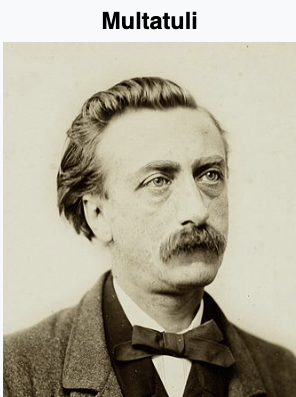
Better known by his pen name Multatuli (from Latin multa tulī, “I have suffered much”), was a Dutch writer best known for his satirical novel Max Havelaar (1860), which denounced the abuses of colonialism in the Dutch East Indies (today’s Indonesia). He is considered one of the Netherlands’ greatest authors.
Eduard Douwes Dekker, Multatuli, 1864
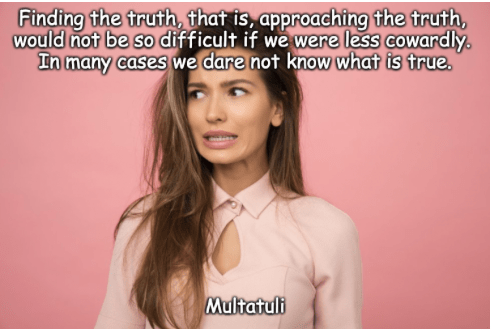
Finding the truth, that is, approaching the truth, would not be so difficult if we were less cowardly. In many cases we dare not know what is true.
Photo by Moose Photos
Lost illusions are found truths.
Photo by Charles “Duck” Unitas
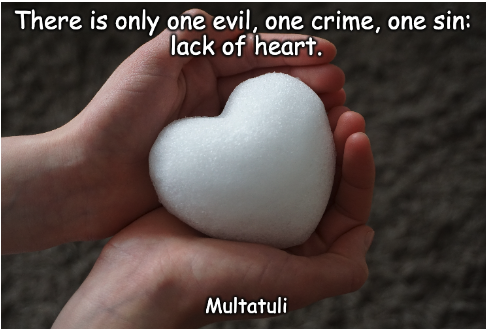
There is only one evil, one crime, one sin: lack of heart.
Photo: Miriam G. Meaning:Essence: The saying emphasizes that the greatest evil in the world stems from a lack of humanity and empathy. Interpretation: It calls for compassion and concern for others. A moral call to act from a sincere heart. Origin:Author: The saying comes from Multatuli, the pseudonym of Eduard Douwes Dekker, a Dutch writer and social critic famous for his advocacy for social justice. Work: The saying comes from his best-known work, “Max Havelaar,” published in 1860. Influence: His work had a significant impact on Dutch literature and social policy. Multatuli is often considered one of the most important writers of the 19th century in the Netherlands. Conclusion: The saying “There is only one evil, one crime, one sin: lack of heart” is a powerful reminder of the importance of humanity. Multatuli’s message remains relevant in contemporary discussions about social justice and empathy. ❤️
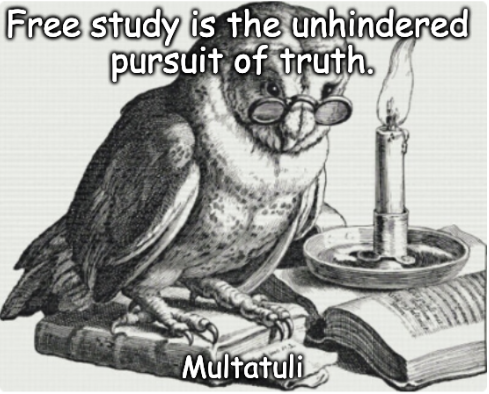
Free study is the unhindered pursuit of truth.
Photo by Gordon Johnson
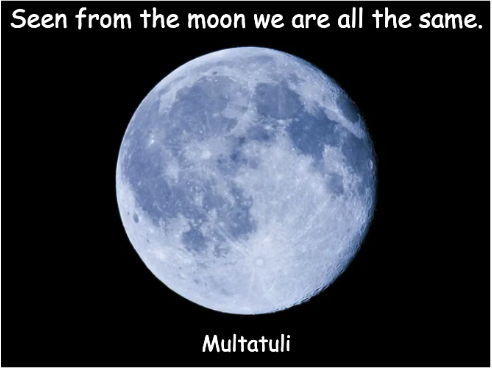
Seen from the moon we are all the same.
Photo by Kei Shooting
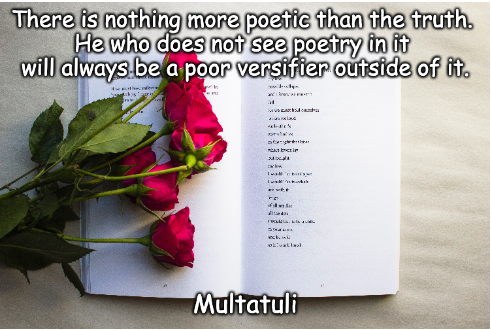
There is nothing more poetic than the truth. He who does not see poetry in it will always be a poor versifier outside of it.
Photo: Thought Catalog. Meaning:Poetry and Truth: The quote suggests that truth is intrinsically poetic. This means that reality, as it is, carries within it beauty and depth. Absence of Poetry: Someone who cannot see the poetic elements in truth is described as a “poor poet.” This implies that this person is unable to appreciate the depth and beauty of reality or translate it into art. Origin:Context: This quote is from Dutch literature and concerns the relationship between truth and art. It emphasizes the value of authenticity and the need to embrace reality rather than distort it. Author:Multatuli: The quote is often attributed to Multatuli, the pseudonym of Eduard Douwes Dekker, an influential Dutch writer and critic from the 19th century. He is best known for his novel “Max Havelaar,” in which he denounces social injustices. Conclusion: This quote from Multatuli emphasizes the beauty of truth and the artist’s role in translating this truth into poetry. It invites reflection on how we perceive and appreciate the world around us.
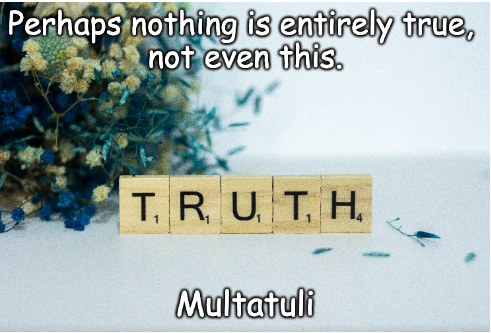
Perhaps nothing is entirely true, not even this.
Photo: Alex-Shute. Meaning:Interpretation: The statement “Perhaps nothing is entirely true, not even this” plays on the relativity of truths and perspectives. It suggests that even the most seemingly fixed truths are not absolute and are subject to doubt and interpretation. Philosophical implication: It raises questions about the nature of knowledge, truth, and the subjectivity of human experience. Origin: Authorship: This statement is often attributed to the Dutch writer and critic Multatuli, pseudonym of Eduard Douwes Dekker. Context: Multatuli was an influential figure in the 19th century, known for his criticism of Dutch colonial policy and social inequality. His work “Max Havelaar” is a classic that addresses these themes. About Multatuli: Life: Born in 1820 and died in 1887, Multatuli was a fervent advocate of social justice. Style: His writing style was often provocative and challenging, with a strong focus on ethical and social issues. Conclusion: The statement invites reflection on what we consider true and how our beliefs can change. It is a powerful example of the depth of Multatuli’s thinking and his influence on literature and society.
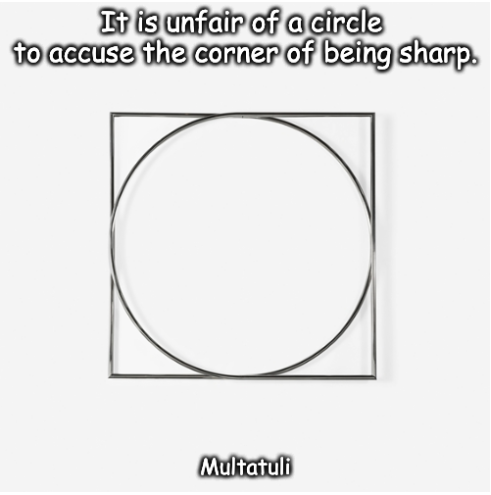
It is unfair of a circle to accuse the corner of being sharp.
Photo: mutualart.com. Meaning:Explanation: This quote refers to how people can use principles as a way to avoid uncomfortable situations. It suggests that principles sometimes serve as excuses for not dealing with reality or unpleasant truths. Origin: The quote appears to be a philosophical insight into human nature and how we can justify ourselves in difficult situations. Author: There is some confusion about the author. The quote is often attributed to Multatuli, a pseudonym of the Dutch writer Eduard Douwes Dekker, who was known for his critical view of society and the hypocrisy of his time. Context: Multatuli was an influential figure in the 19th century, and his work advocated for social justice. This quote reflects his critical approach to moral and ethical issues.
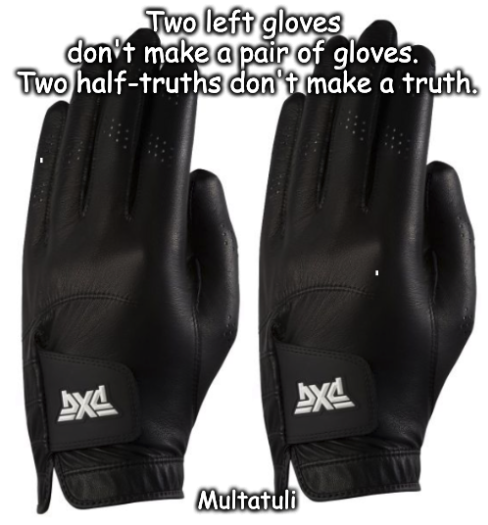
Two left gloves don’t make a pair of gloves. Two half-truths don’t make a truth.
Photo by Peter van Geest
Principles are things which one calls upon to avoid something unpleasant.
Photo: Austin Distel. Signification : Ce proverbe reflète la vision de Multatuli sur la façon dont on instrumentalise les principes pour se justifier ou éviter d’affronter des vérités dérangeantes. Il prônait l’honnêteté et l’authenticité et dénonçait l’hypocrisie de ceux qui invoquent des principes sans les appliquer. Caractéristiques de son œuvre : Critique sociale : Multatuli était un fervent détracteur de l’injustice et de l’hypocrisie au sein de la société. Style : Son style d’écriture, souvent direct et passionné, met l’accent sur les questions éthiques et morales.
One must live all, e’en if life be hell: Crime makes shame, not monetary stricture.
Photo: Setyaki Irham. Meaning:Life in all circumstances: The quote emphasizes that one must continue living, regardless of the difficulties and pain one experiences. Crime and shame: It suggests that crimes often arise from desperation or need and that these actions lead to feelings of shame. No monetary limit: This can be interpreted as a comment on the limitations of money; even without financial resources, one must continue to fight for life. Origin: Author:Multatuli, best known for his book “Max Havelaar,” used his work to denounce social injustices. This quote reflects his critical view of society and life in the 19th century.
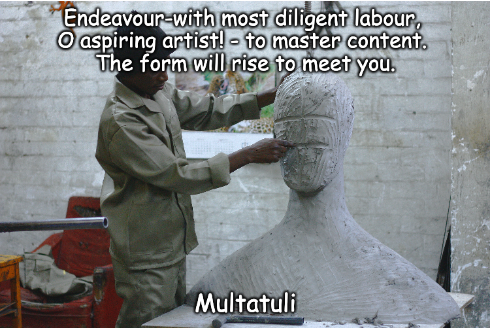
Endeavour-with most diligent labour, O aspiring artist! – to master content. The form will rise to meet you.
Photo by Illi Zolas
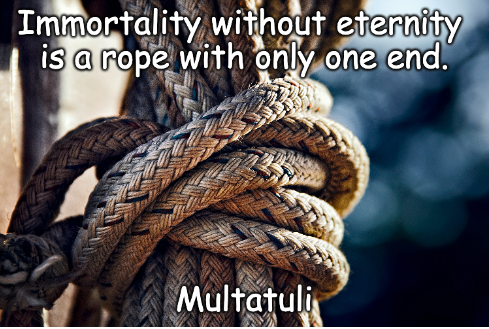
Immortality without eternity is a rope with only one end.
Photo: Robert Zunikoff. Meaning: Philosophical Reflection: Multatuli’s statement highlights the paradox of immortality without an eternal perspective and challenges us to reflect on the value and meaning of our existence. Origin:This statement can trace its origins to Multatuli’s work, in which he often explores deeper questions about life, death, and the human condition. Conclusion: Multatuli’s statement remains relevant and offers food for thought about the concepts of immortality and eternity in the context of our lives. Author: Multatuli: The author is the Dutch writer and thinker Multatuli, whose real name was Eduard Douwes Dekker.About Multatuli: He was an influential figure in the 19th century and is known for his critical and often satirical view of society, especially in his work “Max Havelaar.”
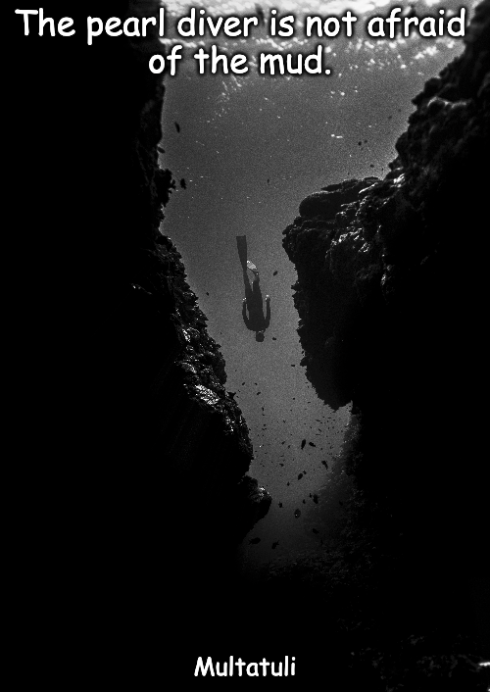
The pearl diver is not afraid of the mud.
Photo by 7inch
Constitutional freedom is a good thing, but it is not worth giving it to a people who restrict themselves where it is not needed. What does it matter if the bird’s cage is opened, if the poor animal was stupid enough to pull out its flight feathers, or if it has no desire to fly?
Photo: G.C.
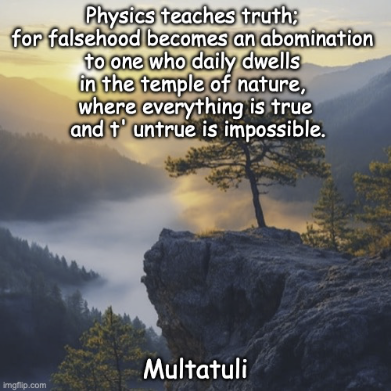
Physics teaches truth; for falsehood becomes an abomination to one who daily dwells in the temple of nature, where everything is true and t’ untrue is impossible.
Photo: Mr.Clean
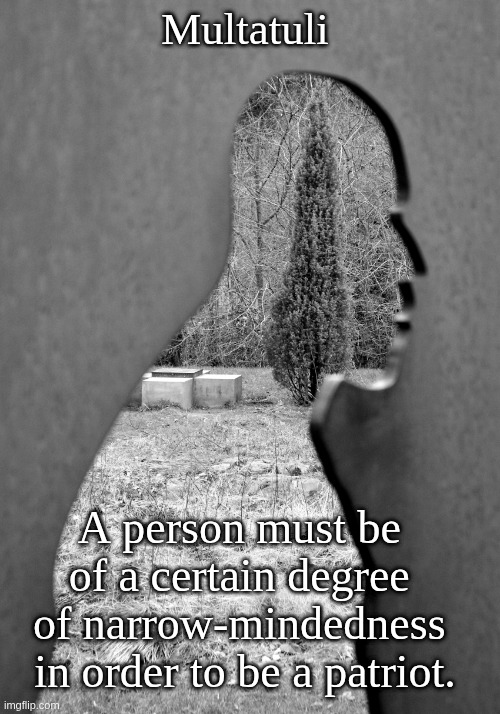
A person must be of a certain degree of narrow-mindedness in order to be a patriot.
Photo: Frank Eiffert. Meaning: The statement reflects scepticism towards nation building and groupthink.
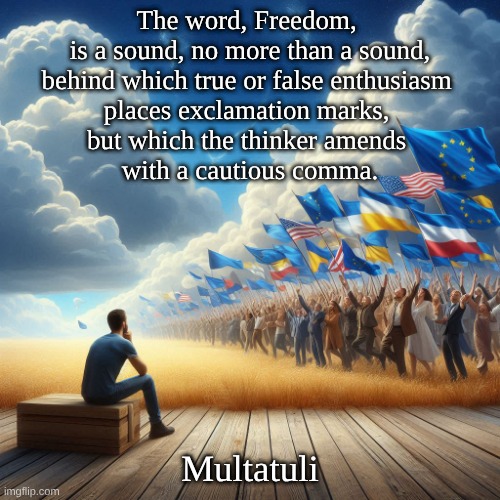
The word, Freedom, is a sound, no more than a sound, behind which true or false enthusiasm places exclamation marks, but which the thinker amends with a cautious comma.
Image: Peter van Geest AI. Meaning:Freedom: The quote reflects on the meaning of the word ‘freedom’. It emphasises that freedom is more than just an emotional or enthusiastic response; it also requires a careful and thoughtful approach. Origin: Multatuli’s works are often imbued with his critical view of society and human nature. He used his writing style to raise important social issues and to encourage readers to think deeply about complex concepts such as freedom. Author:Multatuli, the pseudonym of Eduard Douwes Dekker, an influential 19th-century Dutch writer and social critic. He is best known for his novel ‘Max Havelaar’, in which he denounced the social inequalities of his time.
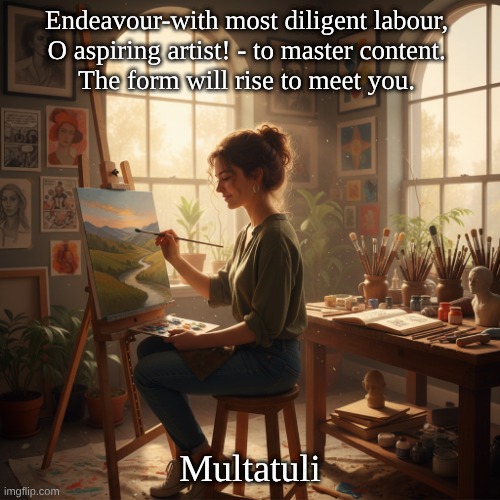
Endeavour-with most diligent labour, O aspiring artist! – to master content. The form will rise to meet you.
Peter van Geest AI. Meaning:Essence: This saying emphasizes the importance of dedication and hard work for aspiring artists. It suggests that with proper effort and mastery of the content, the desired artistic form and results will naturally follow. Interpretation: “Effort – with the most diligent labor”: The need for hard work and determination in the creative process. “O aspiring artist!”: A direct address, making the saying personal and motivating for developing artists. “Control the result”: The idea that artists must have control over their content and technique. “The form will ultimately meet your expectations”: This indicates that if the content is good, the technique and style will naturally adapt to the artist’s expectations. Origin: This saying comes from Multatuli, the pseudonym of Eduard Douwes Dekker. It reflects his views on art and creativity, as seen in his literary works, including “Max Havelaar” and other publications. Author:Multatuli (Eduard Douwes Dekker): Born on March 2, 1820, in Amsterdam. Known for his sharp criticism of social and political injustices, especially regarding Dutch colonial rule in Indonesia. His most important work, “Max Havelaar,” influenced not only literature but also social justice in the Netherlands. Summary: This saying by Multatuli is a powerful encouragement for artists to dedicate themselves to their art. It emphasizes that by working hard on the content, the right artistic form and results will follow naturally. 🎨✨
Door Pieter
Mensenmens, zoon, echtgenoot, vader, opa.
Spiritueel, echter niet religieus.
Ik hou van golf, wandelen, lezen en de natuur in veel opzichten.
Onderzoeker, nieuwsgierig, geen fan van de mainstream media (MSM).