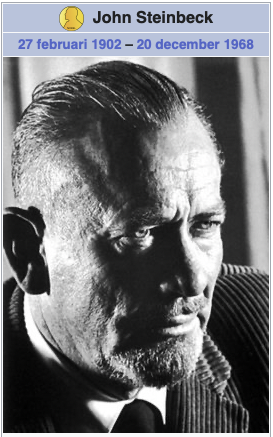
(Salinas (California), 27 February 1902 – New York, 20 December 1968).
American author who won the Nobel Prize in Literature in 1962. Over the course of his career, Steinbeck wrote twenty-seven books: sixteen novels, six non-fiction books and five collections of short stories.
John Steinbeck (1962). Photo: wikipedia.org
But I do feel strange – almost unearthly. I’ll never get used to being alive. It’s a mystery. Always startled to find I’ve survived.
Photo by Vialevo
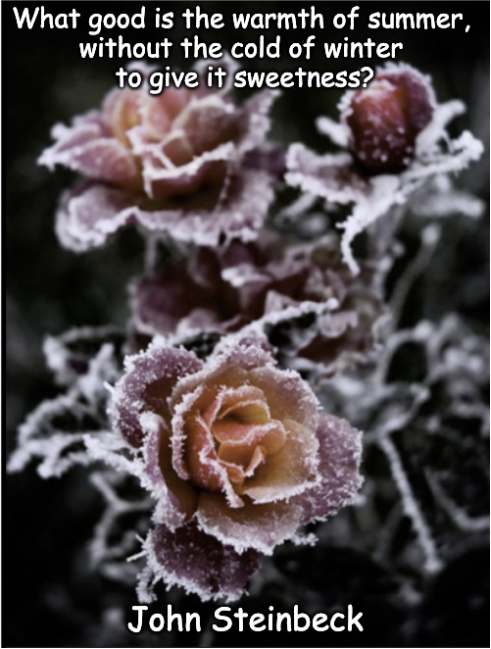
What good is the warmth of summer, without the cold of winter to give it sweetness?
Photo: s-usans-blog. Meaning: This quote revolves around the idea of contrast and appreciation through contrast. Steinbeck suggests that we can only truly appreciate things when we also experience the opposite. The warmth of summer only feels so pleasant and “sweet” because we know how cold and uncomfortable winter can be. Without that cold reference, warmth would just feel neutral – not special or valuable. This is a broader wisdom that goes beyond just seasons. The quote implies that: Hard times give meaning to good times – we value happiness more after sadness, health after illness, peace after conflict. – Contrast creates perspective – without the bad we cannot really recognize or appreciate the good – Life without setbacks would be boring – constant summer would become monotonous; the variety makes life rich and “sweet”. Origin: It also fits the context of Steinbeck’s book “Travels with Charley,” in which he travels across America and reflects on life, change and the human experience. He observes that variation and contrast are essential for a meaningful existence. In essence: we need the shadows to appreciate the light, and the challenges to taste the joy.
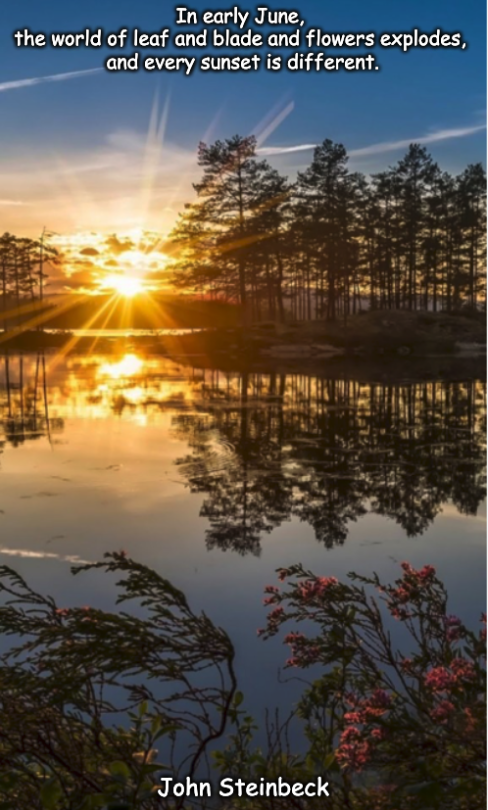
In early June, the world of leaf and blade and flowers explodes, and every sunset is different.
Photo: s-usans-blog. Meaning 🌿 📖 : The quote mainly expresses this: – ‘Early June is a moment of exuberant growth’: – nature is suddenly in full leaf and bloom – everything seems to erupt at once – Every day has something unique: – “every sunset is different” emphasizes: – transience – beauty – changeability of nature – There is also wonder in it: – Steinbeck doesn’t just describe a season – he also points out the idea that you should look carefully at what returns again and again and yet never the same. In short: 👉 ’the quote celebrates the explosive beauty of early summer and the ever-changing nature’. ✍️ Author: 👤 John Steinbeck. – Full name: John Ernst Steinbeck – Lived: 1902–1968 – Known for: – “The Grapes of Wrath” – “Of Mice and Men” – “East of Eden” – “The Winter of Our Discontent” 📚 Origin: 📘 Source: – “The Winter of Our Discontent” – 1961
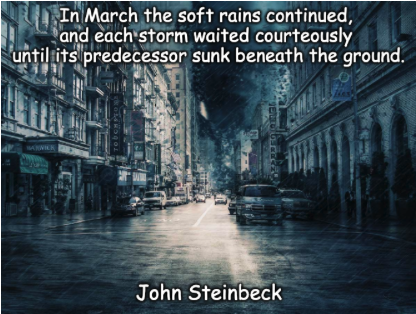
In March the soft rains continued, and each storm waited courteously until its predecessor sunk beneath the ground.
Photo: louisem.com. Meaning 🧐: This quote is a form of personification. It attributes human characteristics to non-living things (in this case, the rain and storms). This is what it means: 🌧️ A persistent period of rain: The sentence describes a month of March in which it rains constantly. 🤝 A ‘polite’ succession: Instead of storming chaotically and haphazardly, the showers seem to wait neatly for their turn. One storm is only truly over (“buried”) before the next begins. 🌬️ A sense of inevitability: It paints a picture of a calm, yet steady and incessant stream of rain showers, one after the other. It is not wild, but it does not stop either. In short, it describes a very wet, but calmly unfolding month of March, where the rain showers line up neatly one after the other. ✍️ The Author: John Steinbeck. Origin: The quote comes from his famous novel *East of Eden* (original title: *East of Eden*), published in 1952. In the original English, the sentence reads: “The spring rains in March are often courteous. They wait until the previous storm is neatly buried before they strike.” (Sometimes also quoted as: “The March rains were soft this year, and each storm waited courteously until its predecessor was buried.”) The Dutch translation is a very beautiful and accurate interpretation of this passage from the book. It is a classic example of Steinbeck’s ability to describe nature in a vivid and empathetic way.
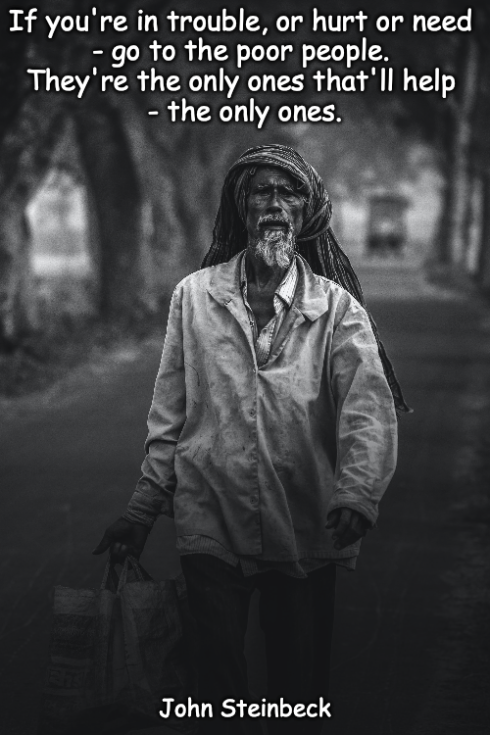
If you’re in trouble, or hurt or need – go to the poor people. They’re the only ones that’ll help – the only ones.
Photo by Tarikul Raana. Meaning: True humanity flourishes not in prosperity, but in need and solidarity. Source: “The Grapes of Wrath” (1939) – John Steinbeck
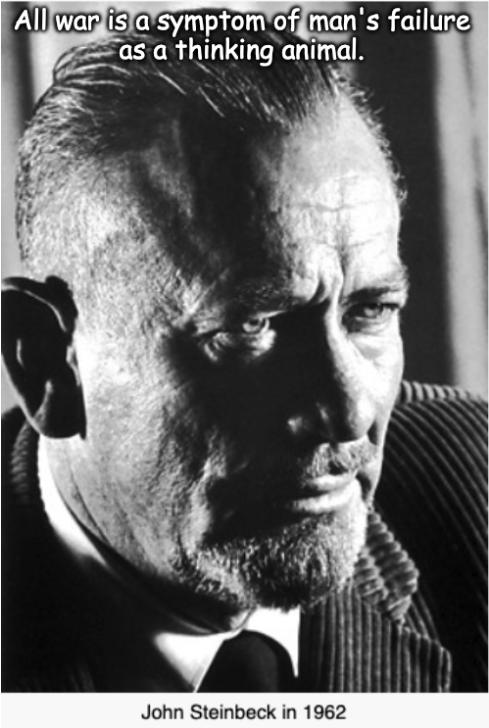
All war is a symptom of man’s failure as a thinking animal.
Photo by wikipedia.org
Door Pieter
Mensenmens, zoon, echtgenoot, vader, opa.
Spiritueel, echter niet religieus.
Ik hou van golf, wandelen, lezen en de natuur in veel opzichten.
Onderzoeker, nieuwsgierig, geen fan van de mainstream media (MSM).