(Lowell (Massachusetts), 12 March 1922 – Saint Petersburg (Florida), 21 October 1969)
American writer.
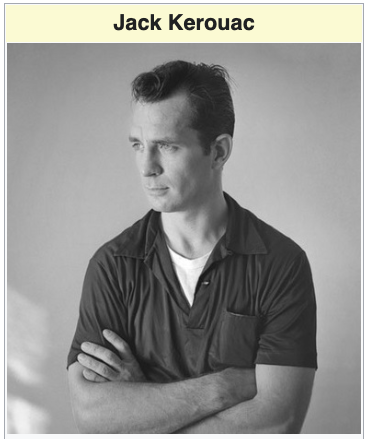
Jack Kerouac by Tom Palumbo, 1956
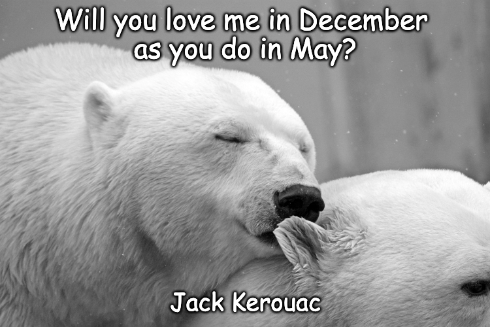
Will you love me in December as you do in May?
Photo: Desiree. Meaning: Seasonal symbolism: May often represents blossoming and joy, while December can represent darkness and challenges. The quote reflects the question of whether love endures through seasons of happiness and sorrow. Origin:Literary work: This quote comes from the work of Jack Kerouac, an influential American writer and poet known for his contribution to the Beat Generation. Context: Kerouac’s work often explores themes of love, loss, and the search for meaning in life. The question in the saying reflects the existential musings that characterise his style. Conclusion: Kerouac’s saying challenges us to think about the durability of love through the seasons of life. It is a poetic reflection on the constant search for connection and understanding in relationships.
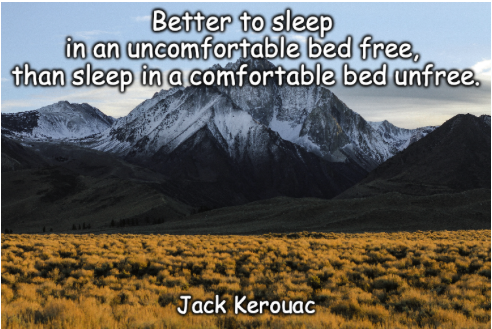
Better to sleep in an uncomfortable bed free, than sleep in a comfortable bed unfree.
Photo: Jeremy Bishop. Meaning: The quote emphasizes the fundamental value of freedom over physical comfort or material wealth. It states that true contentment and human dignity can only be found in a state of freedom, even if accompanied by hardship or discomfort. Unfreedom, on the other hand, is considered so paralyzing that even the most luxurious existence is inferior to it. It is a call for authenticity and independence, and a rejection of the golden cage. Origin: The origin of this quote is complex and somewhat ambiguous: The quote is widely attributed to Jack Kerouac. The specific novel to which it is linked is “On the Road”. However, there is an important nuance: The quote could specifically originate from “On the Road: The Original Scroll”, the 1951 edition of the original manuscript that was not published until 2007. This would explain why the sentence is not always found in the widely known, redacted Viking edition of “On the Road” from 1957. The Original Scroll has different text, tone, and word choice. Author: The author to whom this quote is generally attributed is the American Beat Generation writer Jack Kerouac.
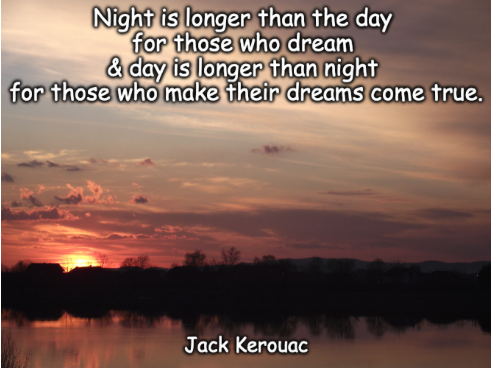
Night is longer than the day for those who dream & day is longer than night for those who make their dreams come true.
Photo by Ankhesenamun
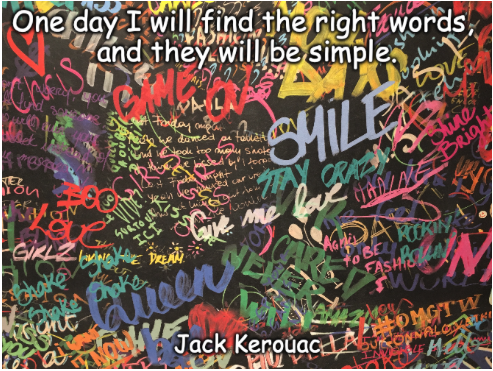
One day I will find the right words, and they will be simple.
Photo by Andreas Fickl
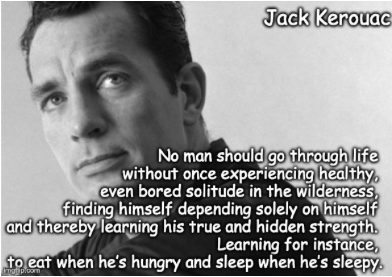
No man should go through life without once experiencing healthy, even bored solitude in the wilderness, finding himself depending solely on himself and thereby learning his true and hidden strength. Learning for instance, to eat when he’s hungry and sleep when he’s sleepy.
Jack Kerouac. Photo: outlawpetegsc
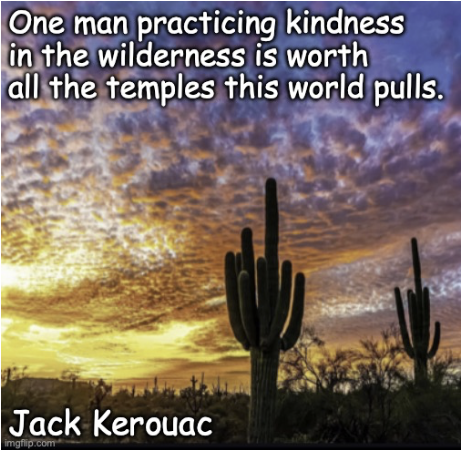
One man practicing kindness in the wilderness is worth all the temples this world pulls.
Photo: Desert Love
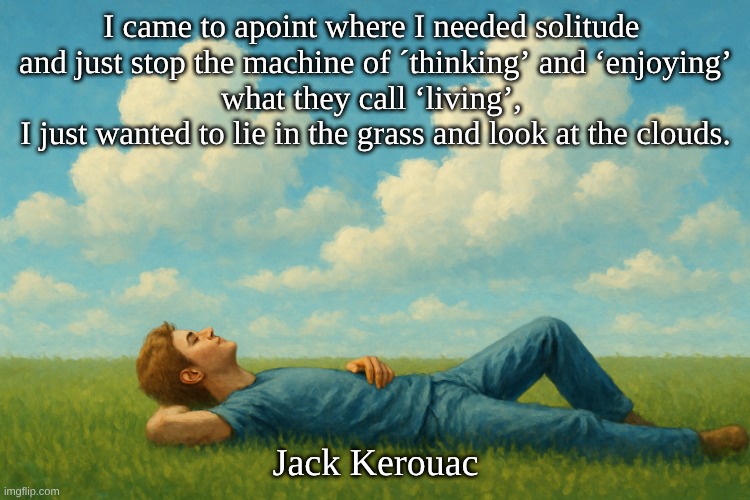
I came to apoint where I needed solitude and just stop the machine of ´thinking’ and ‘enjoying’ what they call ‘living’, I just wanted to lie in the grass and look at the clouds.
Image: Peter van Geest AI. Meaning: The saying emphasizes rest, contemplation, disconnection, and letting go of the automatic “social” urge to live (“thinking,” “enjoying,” “living” as “it should be”) in order to simply be present. It’s a plea for simplicity and inner space. Source: Lonesome Traveler (2007) — a collection of travel stories by Jack Kerouac.
Art is about freedom of expression, and should not be moulded to fit any propaganda or lofty ideal.
Image: Peter van Geest AI. Meaning 🎭:This saying emphasizes the following: Freedom of expression at its core: It states that art, in its purest form, is a means of unfettered expression. Artists must have the freedom to express their thoughts, feelings, observations, and criticisms without external pressure. Rejection of manipulation: The phrase “not be molded to fit any propaganda” means that art must not be misused to spread political, ideological, or commercial messages that distort the truth or are one-sided. Art must not be a tool for persuasion serving an external agenda. Independence from ideals: “Or lofty ideal” implies that even noble or seemingly good ideals should not limit or dictate art. Art must maintain the freedom to explore the complexities of the human experience, including its less desirable aspects, and must not be reduced to a means to serve a specific moral or social purpose. Authenticity over conformity: Ultimately, the quote advocates for authenticity and integrity in art, where the artist’s vision prevails over external expectations or demands. Origin and Author 🤔: The origin of this particular quote is interesting and somewhat more complex than it appears at first glance. Jack Kerouac: It is highly likely that Jack Kerouac is the author of this statement. He was known for his advocacy of spontaneity, freedom, and unfiltered expression in his work and life, characteristic of the Beat Generation. This quote fits perfectly with his philosophy on writing and art. Connection to “The Dharma Bums”: Although the exact formulation above does not directly appear as a single sentence in his famous novel The Dharma Bums (1958), the ideas and principles expressed in the quote are deeply rooted in Kerouac’s thinking and this particular book. The Dharma Bums explores themes such as spiritual quest, nature, friendship, and especially the aversion to societal conformity and materialism. Kerouac’s characters, often alter egos of himself and his friends, frequently express similar thoughts about the need for artistic and personal freedom. General sentiment of the Beat Generation: The Beat Generation, to which Kerouac belonged, fiercely opposed the conformist culture of the 1950s and advocated individuality, rebellion against societal norms, and uninhibited artistic expression. This quote perfectly captures the essence of that movement. Conclusion: The statement is almost certainly attributable to Jack Kerouac. It aptly encapsulates his artistic philosophy and the broader ideals of the Beat Generation, which see art as a beacon of freedom and independence from any form of conditioning or manipulation.
Door Pieter
Mensenmens, zoon, echtgenoot, vader, opa.
Spiritueel, echter niet religieus.
Ik hou van golf, wandelen, lezen en de natuur in veel opzichten.
Onderzoeker, nieuwsgierig, geen fan van de mainstream media (MSM).