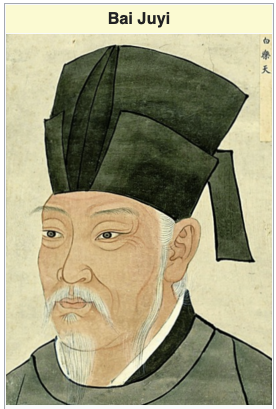
Chinese poet during the Tang dynasty.
(born in 772 A. D. in Xinzheng, Henan, died in 846 A. D. in Luoyang).
His family name (xing or shi) was Bai, his given name (ming) Juyi and his address name (zi) according to Chinese custom was Letian.
‘Juyi’ means ‘he who dwells in the simple’.
Bai Juyi. Photo: wikipedia.org
I was surprised my quilt and pillow were cold. I see that now the window’s bright again. Deep in the night, I know the snow is thick, I sometimes hear the sound as bamboo snaps.
Photo: pexels. Meaning:Surprise and Cold: The speaker experiences an unexpected chill from the bedding, which can indicate a feeling of discomfort or a shocking realization. Clear Window: This can symbolize clarity or insight, perhaps after a period of darkness or confusion. Snow in the Night: The mention of deep snow can convey a sense of isolation or tranquility, and can also be a metaphor for stillness or reflection. Sound of Bamboo: The snapping of bamboo can be a sign of movement in nature, symbolizing a connection with the outside world and the cycle of life. Origin: This passage is a creation of Bai Juyi, a prominent Chinese poet of the Tang Dynasty. He is known for his accessible poetry and his ability to capture human emotions and daily life experiences. Author:Bai Juyi (772-846) One of the most influential poets of the Tang Dynasty, his work often addresses themes of social justice, personal emotions, and nature. He used a simple and direct style, making his poetry widely accessible to the public. Conclusion: The passage reflects the connection between humanity and nature, as well as the emotional depth that can emerge from simple observations. Bai Juyi’s style and subject matter make his work timeless and relevant, even in the modern era.
Door Pieter
Mensenmens, zoon, echtgenoot, vader, opa.
Spiritueel, echter niet religieus.
Ik hou van golf, wandelen, lezen en de natuur in veel opzichten.
Onderzoeker, nieuwsgierig, geen fan van de mainstream media (MSM).