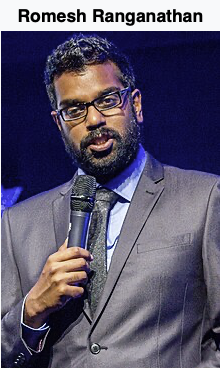
(born 27 March 1978).
British actor, comedian, and presenter. His style of comedy is deadpan and often self-deprecating.
Romesh Ranganathan (2013) Photo: wikipedia
New Year’s resolutions have always been something to beat myself up with by the second week of January. It seems perverse to set yourself up for failure right at the start of the year.
Meaning:New Year’s Resolutions: This refers to the promises people often make at the beginning of the year to improve themselves, such as living healthier, exercising more, or pursuing other personal goals. Failure: The saying suggests that making New Year’s resolutions often leads to disappointment, as many people fail to achieve their goals. Self-Deprecation: The saying reflects a sense of self-deprecation and cynicism about the feasibility of these resolutions. Origin:Cultural Context: New Year’s resolutions are a widespread phenomenon, especially in Western culture, where people reflect on their lives at the beginning of the new year and strive to make improvements. Psychological Aspect: There is a psychological aspect to making New Year’s resolutions; most people have good intentions, but carrying them out often proves difficult. Author:Romesh Ranganathan: This saying is often attributed to Romesh Ranganathan, a British comedian and writer. He is known for his humorous and often honest perspective on life, including making New Year’s resolutions. Conclusion: The quote reflects a relatable and humorous perspective on the pressures of good intentions and their often disappointing results. It uses self-reflection and cynicism to encourage the reader to consider the reality of personal goals.
Door Pieter
Mensenmens, zoon, echtgenoot, vader, opa.
Spiritueel, echter niet religieus.
Ik hou van golf, wandelen, lezen en de natuur in veel opzichten.
Onderzoeker, nieuwsgierig, geen fan van de mainstream media (MSM).