(Somersby, 6 August 1809 – Blackdown, 6 October 1892).
Often referred to as Alfred, Lord Tennyson.
English poet. Tennyson was Poet Laureate (court poet) of the United Kingdom and remains one of the most popular English poets even in our time. He is the second most quoted author in The Oxford Dictionary of Quotations, after Shakespeare.
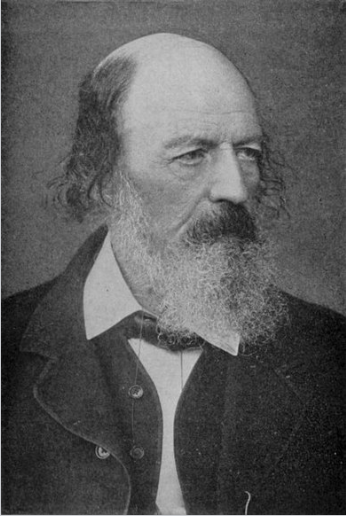
Alfred Lord Tennyson. Photo: wikipedia.org
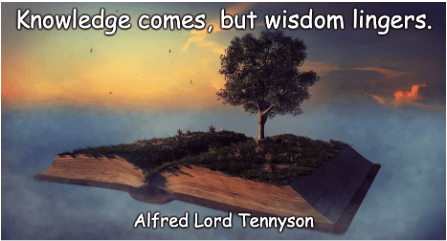
Knowledge comes, but wisdom lingers.
Photo by Mysticartdesign
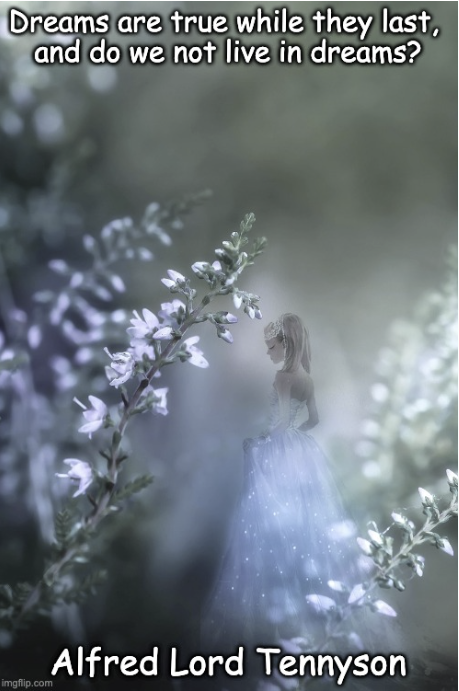
Dreams are true while they last, and do we not live in dreams?
Photo: Willgard Krause
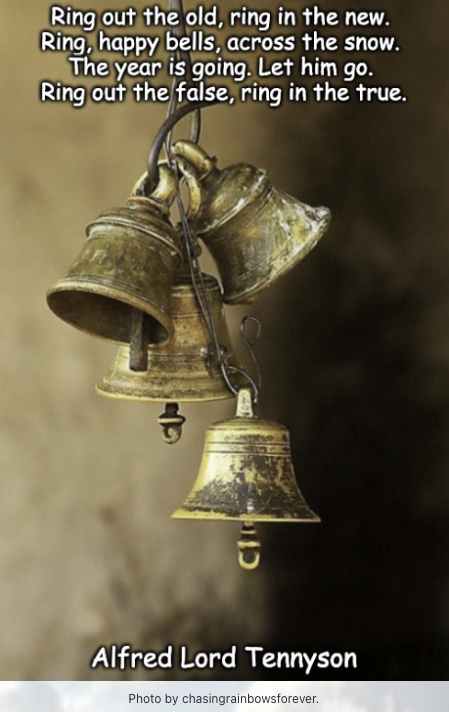
Ring out the old, ring in the new. Ring, happy bells, across the snow. The year is going. Let him go. Ring out the false, ring in the true.
Meaning:Change and Renewal: The quote speaks of saying goodbye to the old year and welcoming the new. This is a symbolic act that often takes place around the New Year. Truth vs. Falsehood: The words “ring out the false, ring in the true” emphasize the importance of embracing truth and shedding lies or negativity. Origin: This quote is taken from the poem “In Memoriam” by the English poet Alfred Lord Tennyson. The specific passage from which this quote comes is section 106 of the poem. Author:Alfred Lord Tennyson (1809–1892) was a prominent English poet often praised for his lyrical style and profound themes. He was also the Poet Laureate of the United Kingdom for much of the Victorian period. Application: The quote is often recited during New Year’s celebrations as a way to express hope and optimism for the coming year.
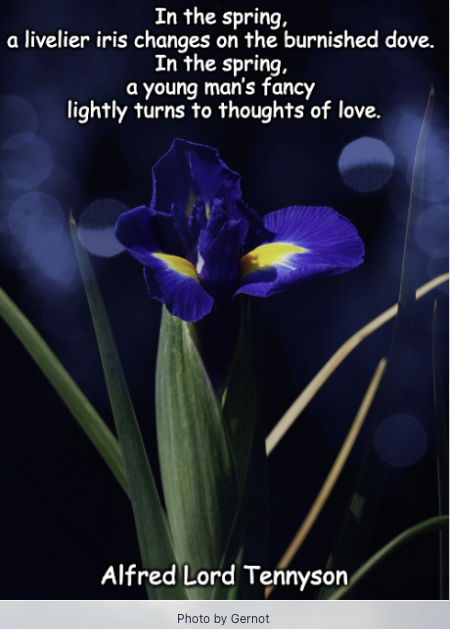
In the spring, a livelier iris changes on the burnished dove. In the spring, a young man’s fancy lightly turns to thoughts of love.
Meaning 🌷: The saying poetically describes the emergence of love and romantic thoughts, paralleling the blossoming of nature in spring. “In spring, a blooming iris turns into a beautiful love.” Here, the iris symbolizes beauty, blossoming, and the fresh, new energy of spring. The phrase “turning into a beautiful love” suggests that the natural beauty and vibrancy of spring create an environment in which love can bud and blossom. It can also refer to the ephemeral beauty of a flower, which is just as magnificent as fleeting, budding love. “In spring, a young man’s imagination slowly turns into thoughts of love.” This part connects the natural cycle directly to human emotions and thoughts. Spring, with its promise of new life and blossoming, awakens romantic feelings in a young man. His imagination, which may have slumbered during the winter, becomes active and focuses on love and relationships. The word “slowly” indicates a gradual process, just as flowers do not come into full bloom all at once, but unfold. Together, it expresses a universal feeling: spring is a time of renewal, growth, and the awakening of love, both in nature and in the human heart. Origin and Author ✍️: The phrase mentioned sounds very strongly like a paraphrase of a well-known quote from one of Alfred Lord Tennyson’s most beloved poems: “Locksley Hall” (1842). The original English lines that most closely resemble this are: “In the spring a fuller crimson comes upon the robin’s breast; In the spring the wanton lapwing gets himself another crest; In the spring a livelier iris changes on the burnished dove; In the spring a young man’s fancy lightly turns to thoughts of love.” Let’s dissect these lines: “In the spring a livelier iris changes on the burnished dove;” Here, “iris” does not refer to the flower, but to the iridescent colors seen on the neck feathers of a dove. “Livelier iris” means that these colors become more intense and vibrant in the spring, indicating the increased activity and display of the birds during the breeding season. “In the spring a young man’s fancy lightly turns to thoughts of love.” This is the most direct match and the core of your quote. The “lightly” emphasizes the playfulness and natural ease with which romantic thoughts arise in the spring. Conclusion regarding the author: It is very likely that the saying you cite is a Dutch interpretation or free translation of the famous lines by Alfred Lord Tennyson from “Locksley Hall.” The “iris” in the Dutch version was probably misinterpreted as the flower, whereas Tennyson meant the iridescent sheen of a dove. However, the poetic intention remains intact, and the flower “iris” also fits the spring theme beautifully. 🌸
Door Pieter
Mensenmens, zoon, echtgenoot, vader, opa.
Spiritueel, echter niet religieus.
Ik hou van golf, wandelen, lezen en de natuur in veel opzichten.
Onderzoeker, nieuwsgierig, geen fan van de mainstream media (MSM).