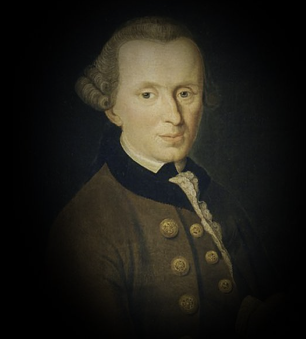
(Königsberg, Prussia, April 22, 1724 – ibid., February 12, 1804). German philosopher during the Enlightenment, whose ideas exerted a great influence on Western philosophy. Kant is sometimes considered the first German idealist. His Critique of Pure Reason (1781), in which he examines the foundations and limits of human knowledge and creates his own epistemology, is considered his most important work. Furthermore, the Critique of Practical Reason (Kritik der Praktischen Vernunft) and the Critique of Ultimate Power complete the trilogy of three critiques, which have had a great influence on Western philosophy. The philosopher Arthur Schopenhauer called this work “the most important book ever published in Europe.”
Immanuel Kant. Foto: azquotes.com
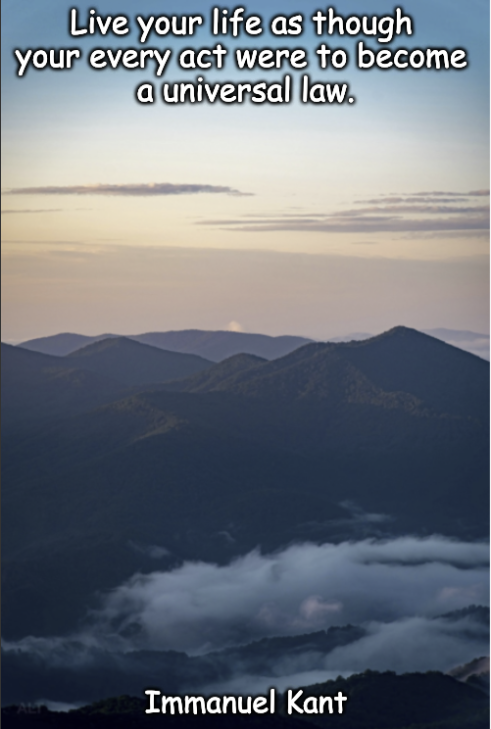
Live your life as though your every act were to become a universal law.
Photo: wenaturelovers.
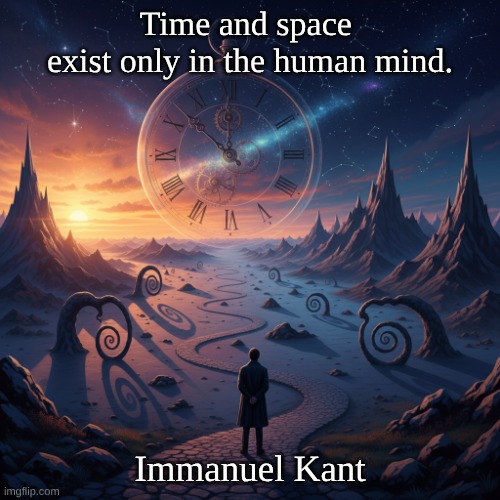
Time and space exist only in the human mind.
Image: Peter van Geest AI. Meaning:Time and space: These concepts are often seen as fundamental dimensions of reality. Human mind: The statement suggests that our perception of time and space is not absolute, but rather a construct of our minds. Interpretation: The idea is that time and space are essentially subjective and dependent on how people experience and understand them. Origin: The statement is often attributed to the German philosopher Immanuel Kant, who argued in his work “Critique of Pure Reason” (1781) that time and space are modes of our perception. The idea that time and space do not exist independently of us, but rather as concepts in our minds, is a central theme in modern philosophy. Author: Hans Peter Roel is sometimes also mentioned, but is not the author of this specific statement. There appears to be a confusion. Immanuel Kant is the correct author, who presented similar ideas in his philosophical works. Conclusion: This statement encourages us to reflect on the nature of our reality and how our minds interpret the world around us. It is an invitation to reflect on the subjective experience of time and space.
Door Pieter
Mensenmens, zoon, echtgenoot, vader, opa.
Spiritueel, echter niet religieus.
Ik hou van golf, wandelen, lezen en de natuur in veel opzichten.
Onderzoeker, nieuwsgierig, geen fan van de mainstream media (MSM).