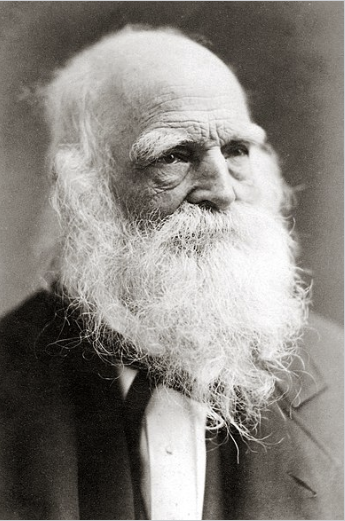
William Cullen Bryant:
(Cummington, 3 November 1794 – New York, 12 June 1878).
American Romantic nature poet and journalist who belonged to the group of the Fireside Poets.
The quiet August noon has come. A slumberous silence fills the sky. The winds are still, the trees are dumb. In glassy sleep, the waters lie.
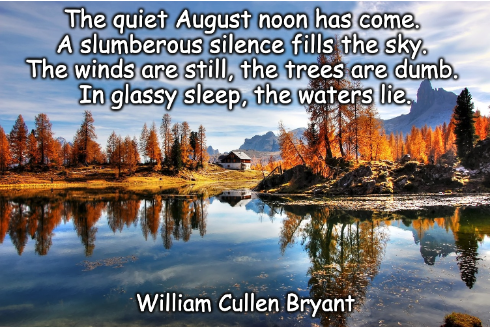
The poem captures the particular, almost sacred stillness of high summer at midday. Bryant builds the opening image through suspended motion:
No wind, no birdsong, water lying “glassy” and undisturbed, as though the whole natural world has fallen into a drowsy trance. This stillness contrasts sharply with the poem’s later description of early June, when “Earth laughs out” and everything is noisy and alive.
That contrast becomes an invitation:
Bryant wants to step away from “toil and care,” from “desk and dust,” and simply rest in nature’s calm rather than labor through the day. Later in the poem, he extends the image further, turning this deep, static hour into a metaphor for the peace that awaits the good “at a happier shore” — a quiet meditation on death and repose, framed through the calm of an August noon.
In short:
It’s a poem about the sacred stillness of high summer, used both as a call to unhurried rest and as a gentle metaphor for peace beyond life’s struggles — fitting Bryant’s recurring themes of nature, mortality, and repose.
Origin:
These are the opening lines of the poem “A Summer Ramble.”
It opens:
“The quiet August noon has come, A slumberous silence fills the sky, The fields are still, the woods are dumb… In glassy sleep the waters lie.”
The version you quoted uses “winds are still, the trees are dumb” instead of “fields are still, the woods are dumb” — a common variant that circulates in August-themed quote collections where it’s given as “The winds are still, the trees are dumb, In glassy sleep the waters lie.” The core wording and authorship stay the same either way.
Author: William Cullen Bryant (1794–1878),
the American Romantic poet, journalist, and longtime editor of the “New York Evening Post”, known for nature-centered poetry exploring morality, mortality, and the natural world.
The linden, in the fervors of July, hums with a louder concert.
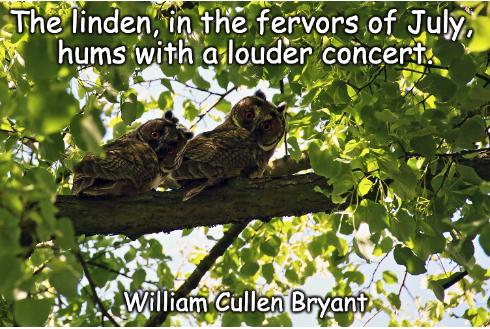
– “The linden, in the fervors of July, hums with a louder concert.” means that ‘in hot midsummer (July)’ the ‘linden tree area becomes more intensely alive with sound’—a ‘stronger “chorus”’ of nature (e.g., ‘insects buzzing, birds, and wind/leaf rustling’). 🌳🎶
Origin:
– This line appears in William Cullen Bryant’s poem “Among the Trees.”
– In the stanza, Bryant is describing a ‘seasonal progression’:
– ‘Spring’ (song-sparrow),
– ‘May’ (orchards, bees, insects, hummingbird),
– ‘July’ (the linden “concert” becomes louder). 🌿➡️🌳
✍️ Author:
– William Cullen Bryant (19th‑century American poet) ✅
Do not the bright June roses blow to meet thy kiss at morning hours?

Original English rendering:
> “Do not the bright June roses blow to meet thy kiss at morning hours?”
Literally, the poet asks whether the bright June roses do not bloom to receive the kiss of the person addressed in the morning. It is a rhetorical question: the answer is assumed to be self-evident.
Figuratively, nature is personified. The roses seem to consciously respond to the presence of the beloved. The image expresses admiration and suggests that the beauty or attraction of the beloved is so great that even nature turns towards her. The June rose and the morning symbolize youth, freshness, beauty, and love.
Origin:
The line stems from the romantic poetry of the nineteenth century, in which poets often established a close connection between human feelings and nature. The blooming rose is a classic symbol of love and beauty, while the morning stands for renewal and joie de vivre. The quote fits entirely within this romantic tradition of idealization and experiencing nature. Author:
The line is attributed to William Cullen Bryant, an influential American poet of the Romantic period. Bryant is best known for his nature-oriented poetry, in which landscapes, seasons, and flowers often take on symbolic meaning and reflect human emotions. Although the line is frequently attributed to Bryant in collections of quotations, the exact reference to the original poem is not always stated.
The August cloud melts into streams of rain.

– A ‘late-summer cloud’ grows heavy and ‘dissolves into rainfall’.
– The word “melts” is poetic:
the cloud seems to soften, break apart, and become flowing rain.
– Figuratively, it can suggest ‘release’, ‘change’, or ‘relief after heat/tension’—as an August storm breaks the oppressive summer stillness.
✍️ Author & Origin 📚:
– The line is ‘commonly attributed to William Cullen Bryant’.
– Bryant was a 19th-century American poet, best known for nature poems such as “Thanatopsis” and “To a Waterfowl.”
– The quotation comes from Bryant’s nature poetry, often cited as a line from “A Summer Ramble.”
📝 It is better described as a ‘poetic quotation’, not a traditional proverb or folk saying.
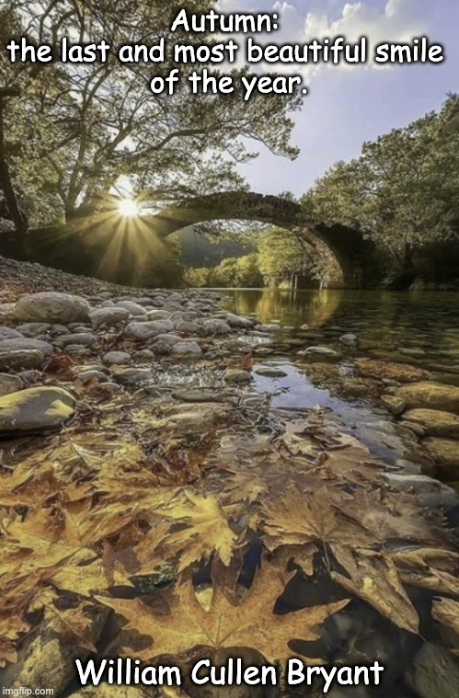
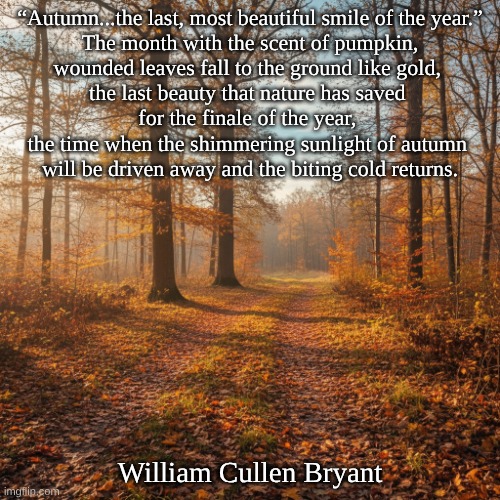
Autumn: the last and most beautiful smile of the year.
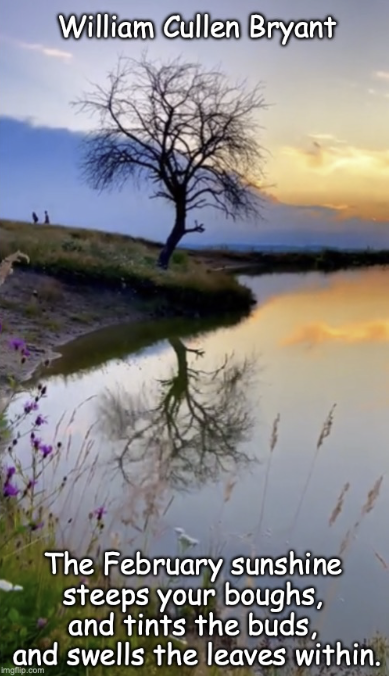
The February sunshine steeps your boughs, and tints the buds, and swells the leaves within.
“Autumn…the last, most beautiful smile of the year.” The month with the scent of pumpkin, wounded leaves fall to the ground like gold, the last beauty that nature has saved for the finale of the year, the time when the shimmering sunlight of autumn will be driven away and the biting cold returns.
The stormy March has come at last, With winds and clouds and changing skies; I hear the rushing of the blast That through the snowy valley flies.
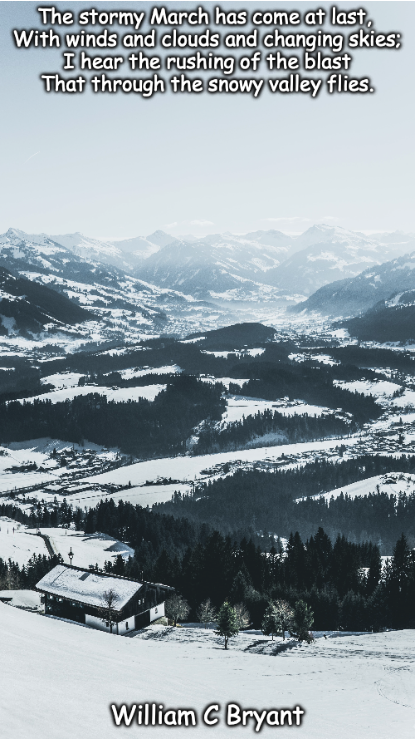
🌬️ The Power of Nature: The words “howling the squall” and “flying through the snowy valley” emphasize the raw, wild beauty and untamed power of nature at this time of year. ❄️ Last Traces of Winter: The mention of the “snowy valley” shows that although March has arrived, winter is not yet completely gone. It is a time of battle between the seasons. In short: The saying celebrates the coming of spring, but acknowledges that this coming comes with its share of storms and struggles. It is a tribute to the dynamics and change in nature. 🖋️ Origin and author: The author of these lines is the American poet William Cullen Bryant (1794-1878). 📖 Poem: The quoted lines form the opening stanza of his poem entitled “March”. 🗺️ Context: Bryant was an important figure in 19th century American literature, known for his nature poetry. His poems often reflect the vicissitudes and beauty of the American landscape. 🗣️ The poem “March” is a beloved work in English-language literature and is often cited to capture the essence of this heady month.
