Gaius Sallustius Crispus:
(1 October 86[1] – between 39 and 35 BC).
Roman historian. His main works are historical monographs on the ‘War against Jugurtha’ (Bellum Iugurthinum) and the ‘Conspiracy of Catilina’ (De Coniuratione Catilinae). Antique sources report his political engagement on the side of the populares, but also his moral failures in his personal and public life.
Sallustius was an important witness to the gradual demise of the Roman Republic and its impotence in the face of the ambitions of powerful personalities such as Marius and Sulla, Caesar and Pompey.
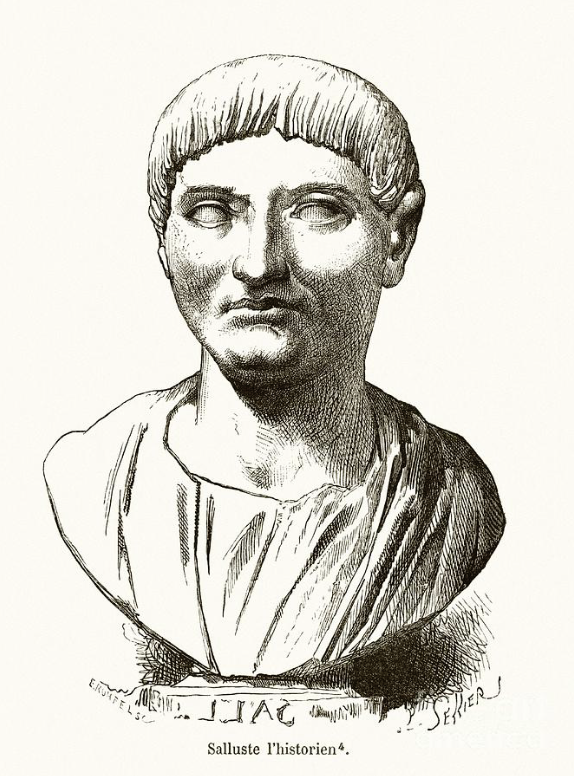
Only a few prefer liberty- the majority seek nothing more than fair masters.

In the highest state one has the least freedom.
✍️ Author: who “said” it? Literary author (source): Sallust (86–35 BC), Roman historian. Speaker within the text: the sentiment is often linked to the “speech of Julius Caesar” in the Senate debate (Sallust gives this as a historical-literary speech). > So: Sallust is the author who reports it; Caesar is usually the “voice” on which it hangs in the text. 📜 Latin formulation (and why “51” is not the year): The English sentence is a paraphrase/translation of a Latin idea often quoted as: (Literally: “With the greatest happiness/highest position there is the least freedom/play.”). “51” here almost certainly refers to chapter/paragraph 51 of Sallust’s “Bellum Catilinae”, not to the year 51 BC. 🔎 Citation (how to cite it):
“Sallustius, Bellum Catilinae 51” (speech in the Senate debate; often associated with Caesar). Please note: in editions/translations the “exact Latin phrase” or wording may differ slightly (and sometimes it is summarized as “sententia” instead of verbatim).
The Gods being good and making all things, there is no positive evil, it only comes by absence of good; just as darkness itself does not exist, but only comes about by absence of light.
Agreement in likes and dislikes—this, and this only, is what constitutes true friendship.