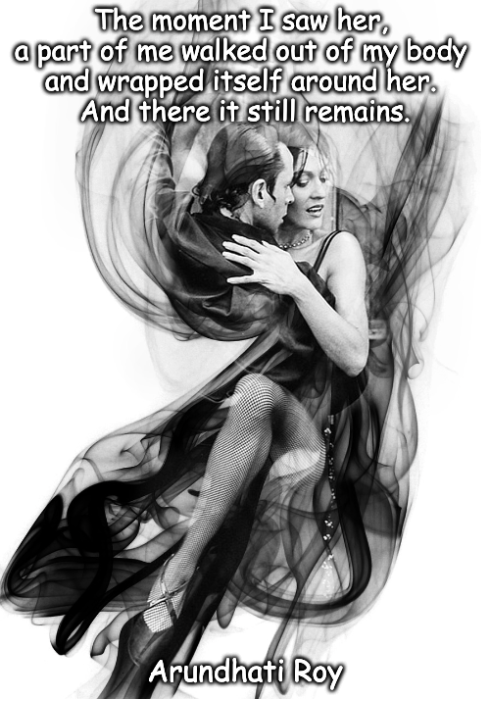
The moment I saw her, a part of me walked out of my body and wrapped itself around her. And there it still remains.
Photo by Sarah Richter
She wore flowers in her hair and carried magic secrets in her eyes.
Photo by xusenru
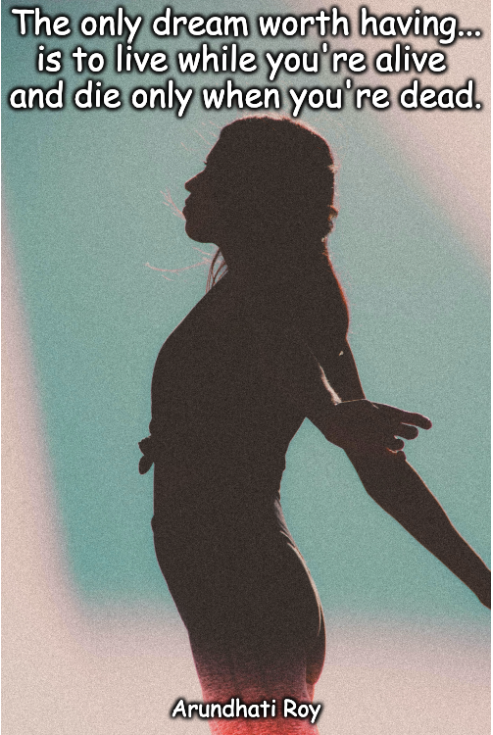
The only dream worth having…is to live while you’re alive and die only when you’re dead.
Photo: Stephanie Greene. Meaning 📌🧠: “Carpe diem / living life to the fullest”: it’s about being truly present in your life, not “on autopilot.”“Don’t give up mentally”: “dying while you’re living” figuratively means becoming numb, putting away your desires, living from fear or conformity. Authenticity: choose a life that you experience for yourself, instead of one that you merely “undergo.”Provocative paradox: the second part (“only die when you’re dead”) emphasizes that “death belongs only at the end,” not as an inner attitude halfway through. 📚 Origin & author: ✅ Most common attribution: The quote is “very often” attributed to Arundhati Roy. It is usually stated that it comes from her novel “The God of Small Things (1997)” (the original English wording circulates online in several variations). 🔎Note: Reliability of the attribution:“Many variants” exist online (with omissions, different punctuation, slightly different words), making it difficult to identify a single “definitive” formulation. Without an exact edition/page reference, it’s difficult to say with 100% certainty whether it’s literally in Roy’s novel, or whether it’s a “popular paraphrase” that later became associated with her name.
Door Pieter
Mensenmens, zoon, echtgenoot, vader, opa.
Spiritueel, echter niet religieus.
Ik hou van golf, wandelen, lezen en de natuur in veel opzichten.
Onderzoeker, nieuwsgierig, geen fan van de mainstream media (MSM).